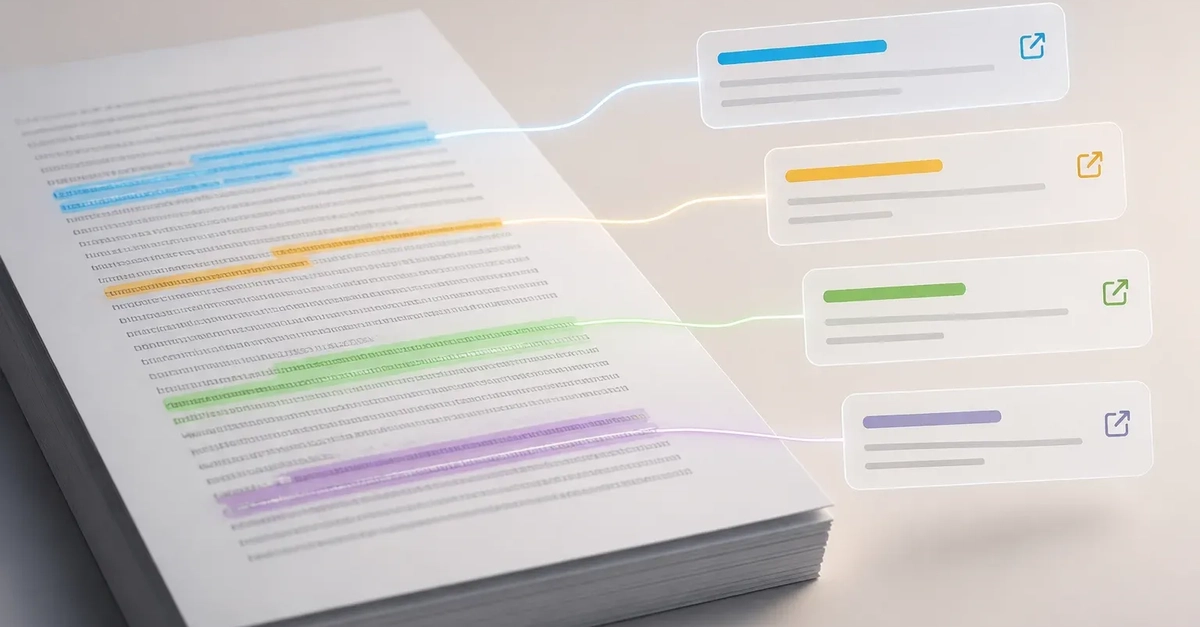
Google AI Mode appears to be treating the passage, not the full web page, as a central unit of citation. A year-long Pillarbase analysis of 15.7 million AI Mode citations across 148 industries found that nearly half were scroll-to-text highlights. The study identified about 4.6 million unique highlighted passages from 2.7 million pages, with heavily reused passages appearing across hundreds of queries.
That pattern matters because a citation can do more than point readers toward a domain. It can elevate a specific sentence or short section as the textual evidence behind an AI-generated answer. For publishers, the practical implication is that a strong page may not be enough on its own. Its individual passages need to be clear, self-contained, and useful in the context of a query.
The evidence does not mean Google has publicly disclosed a new formal citation policy or changed the underlying mechanism in a documented way. Google’s May 2026 discussion of AI Mode focused on expanding usage and changing user behavior. But the available third-party research consistently indicates that AI Mode visibility is substantially shaped by extractable sections of content.
What the research says about AI Mode citations