Academia
Democracy does not require citizens to think alike. But it requires something more fundamental: disagreement cannot become a justification for denying equal citizenship.
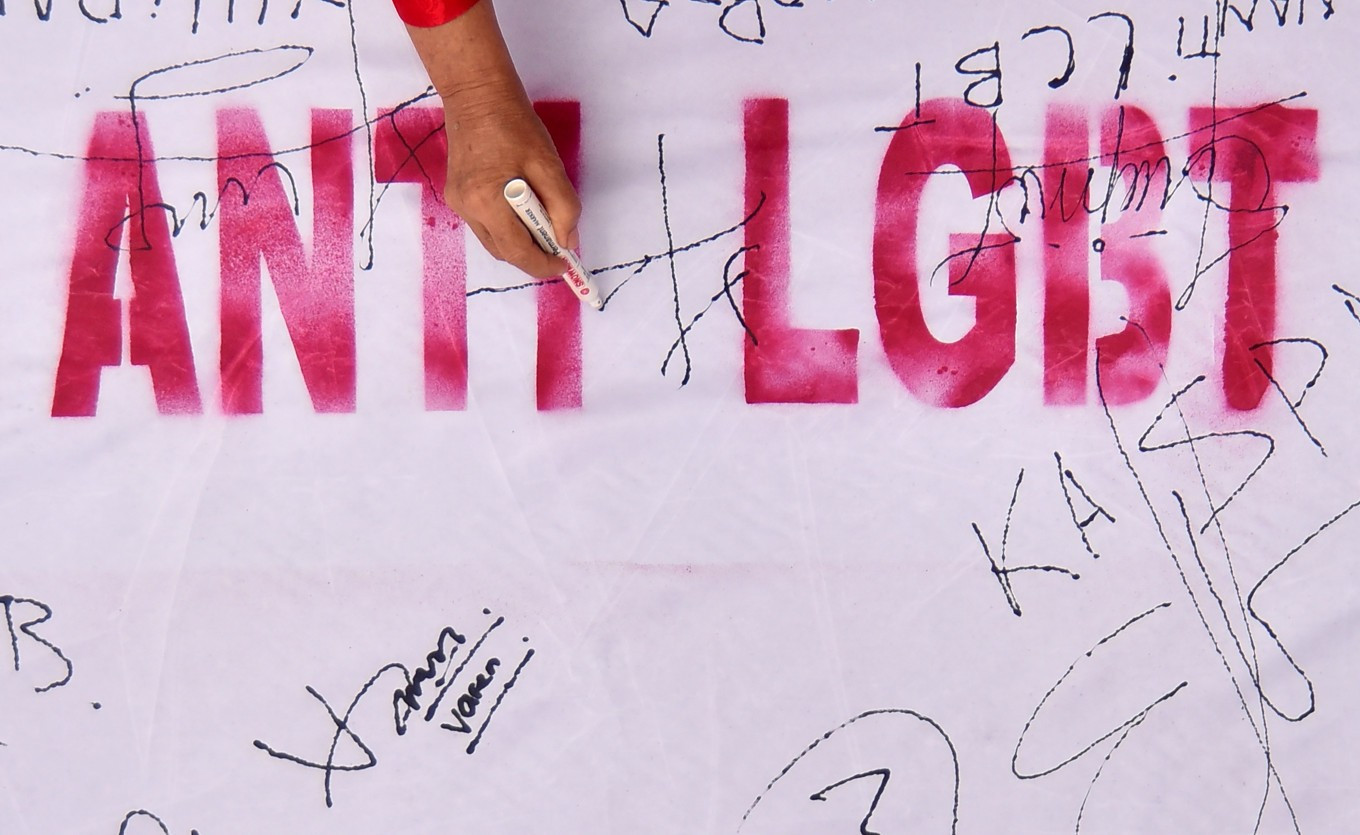
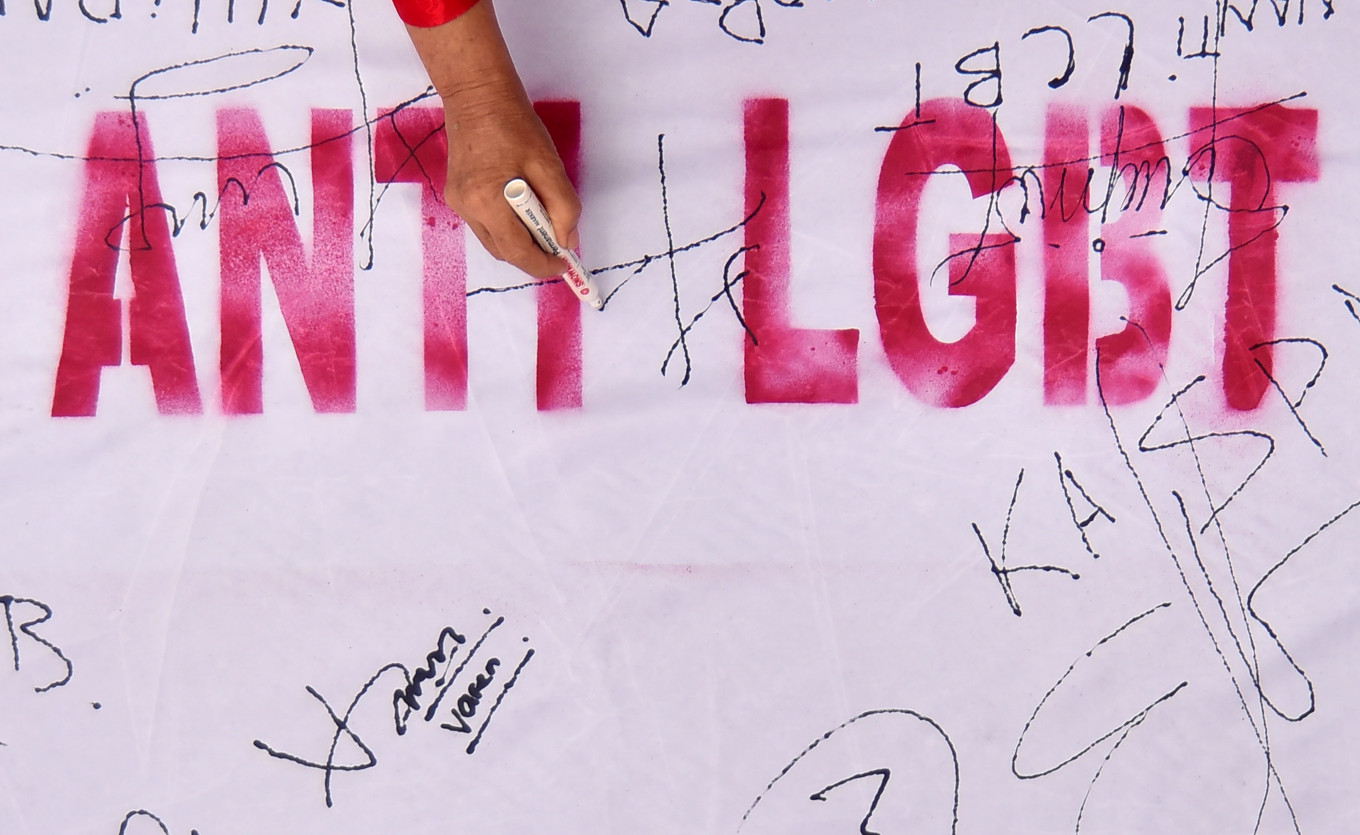
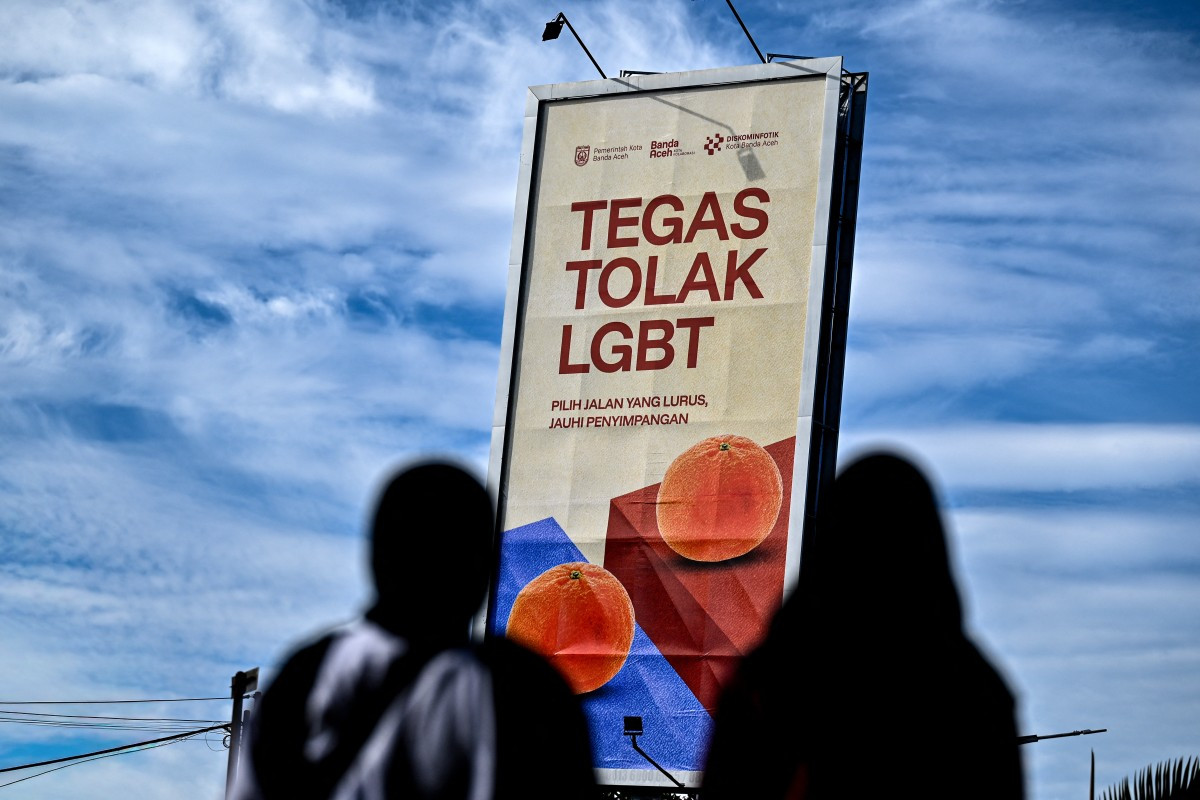
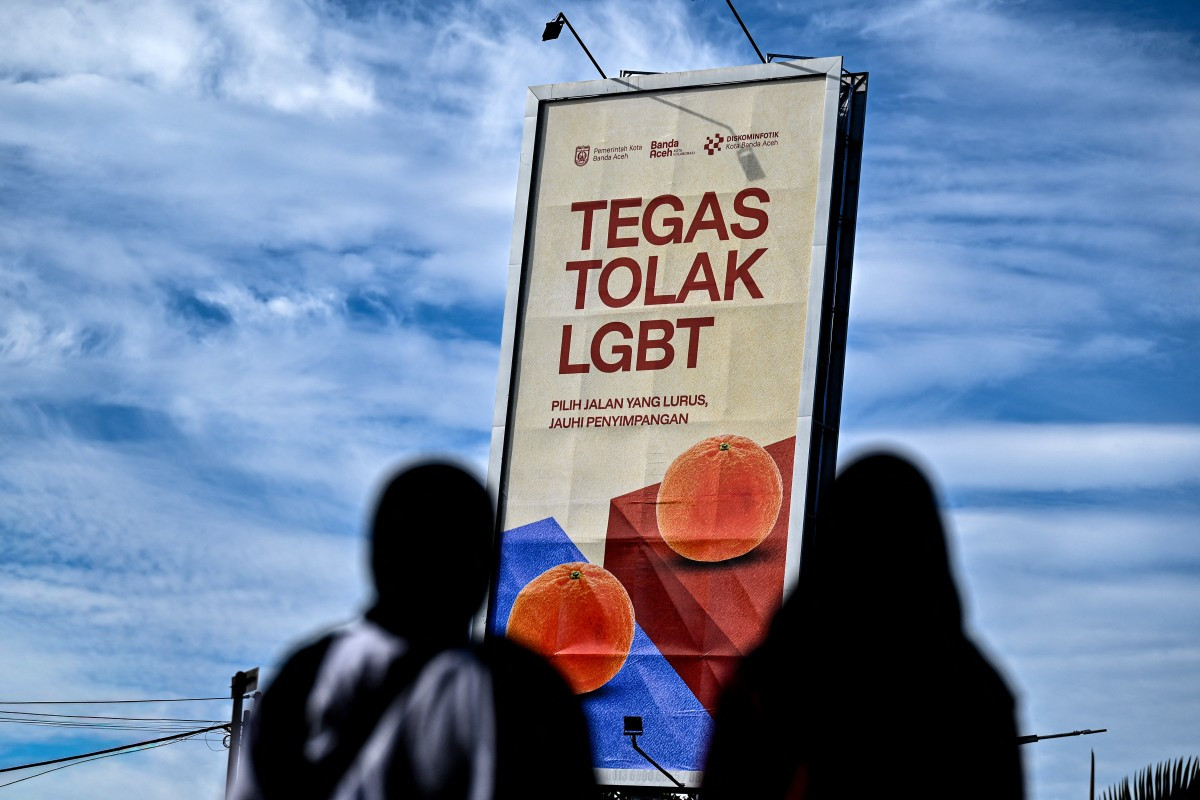
Pedestrians walk past a billboard that reads “Firmly reject LGBT“on July 27 in Banda Aceh, Aceh. Anti-LGBT sentiment is rising in Indonesia, with claims that food, vaccines and drugs can affect one's sexual orientation circulating online. (AFP/Chaideer Mahyuddin)
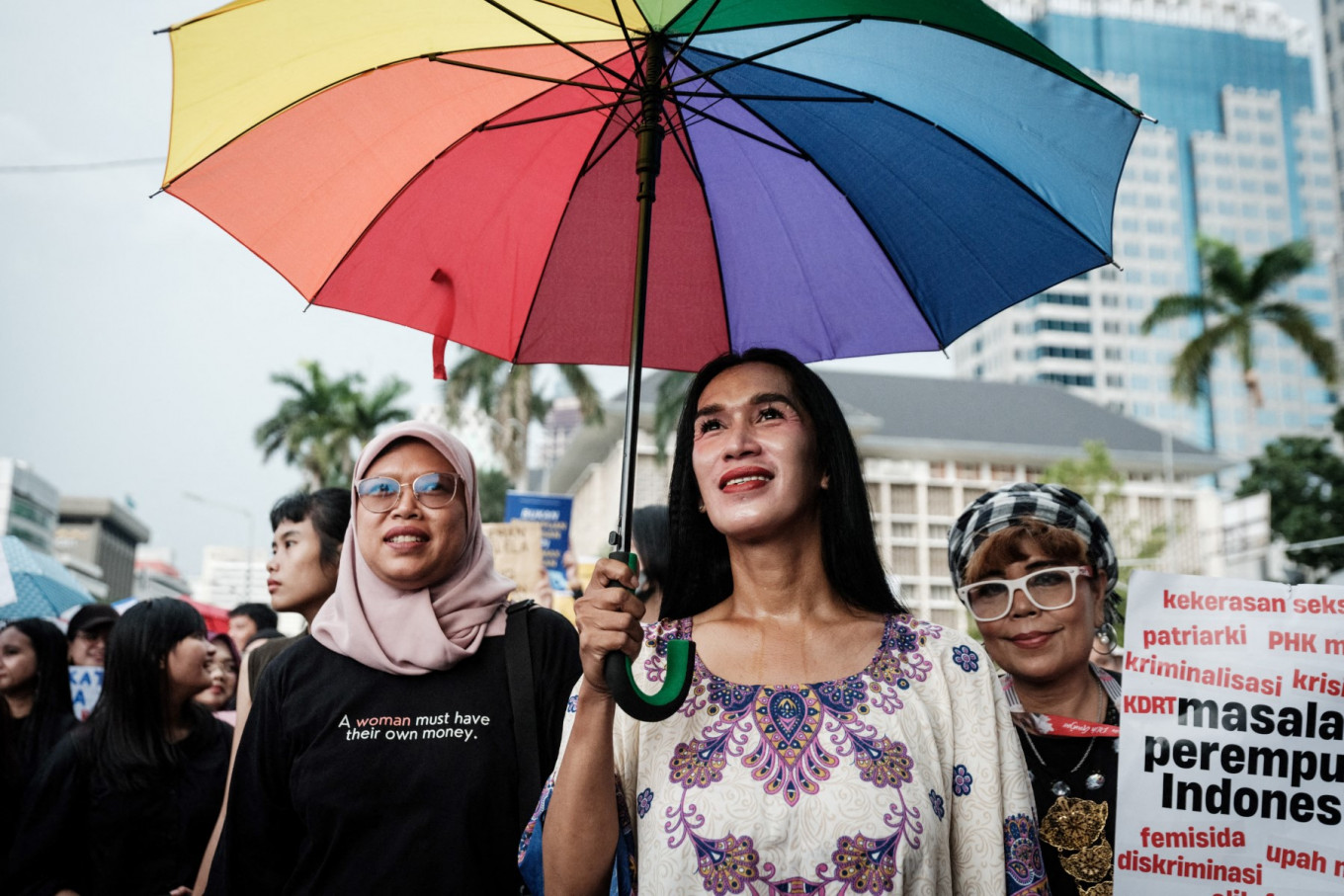
The growing hostility toward transgender Indonesians and the broader LGBT community is often farmed as a debate about morality, culture or social values. In a plural society, disagreement is inevitable. Indonesians will continue to hold different religious, cultural and moral perspectives. Democracy does not require citizens to think alike. But it requires something more fundamental: disagreement cannot become a justification for denying equal citizenship.The concern today is not simply that prejudice exists, but when it becomes embedded in public institutions, policies and official narratives. Recent harassment against LGBT students in Indonesia, restrictions on discussions on gender and sexuality and hostile public rhetoric, show that stigma is no longer confined to private beliefs; it is shaping whose identities are recognized as legitimate.