Academia
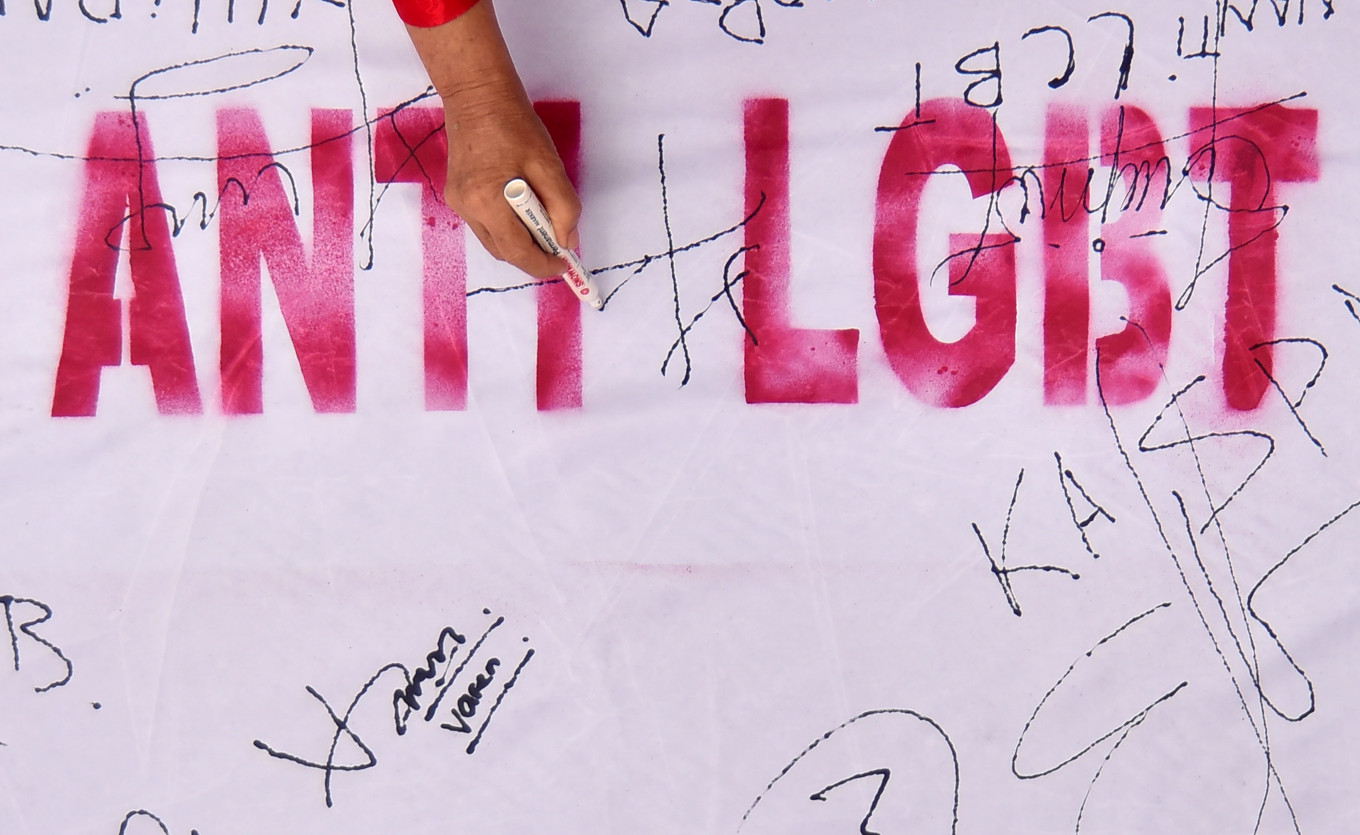
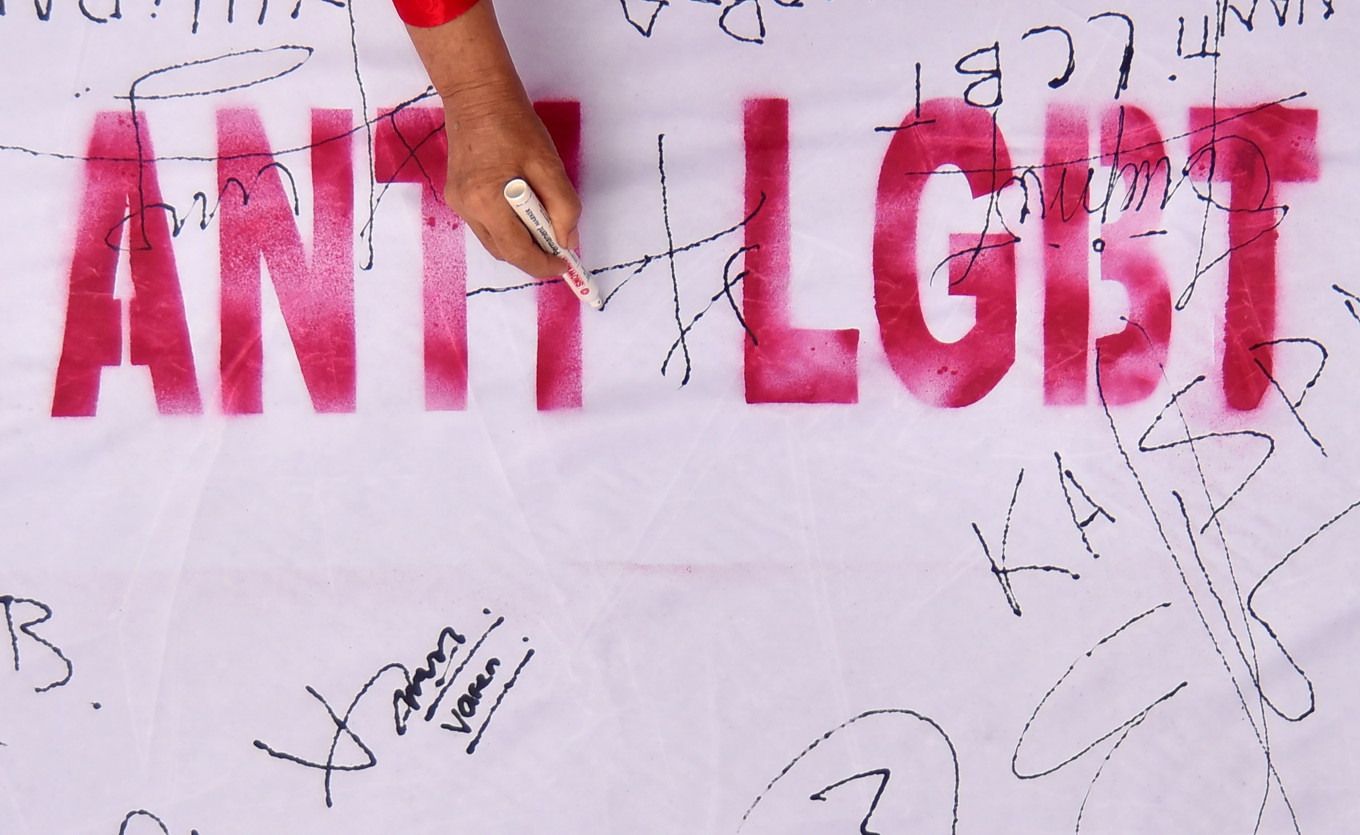
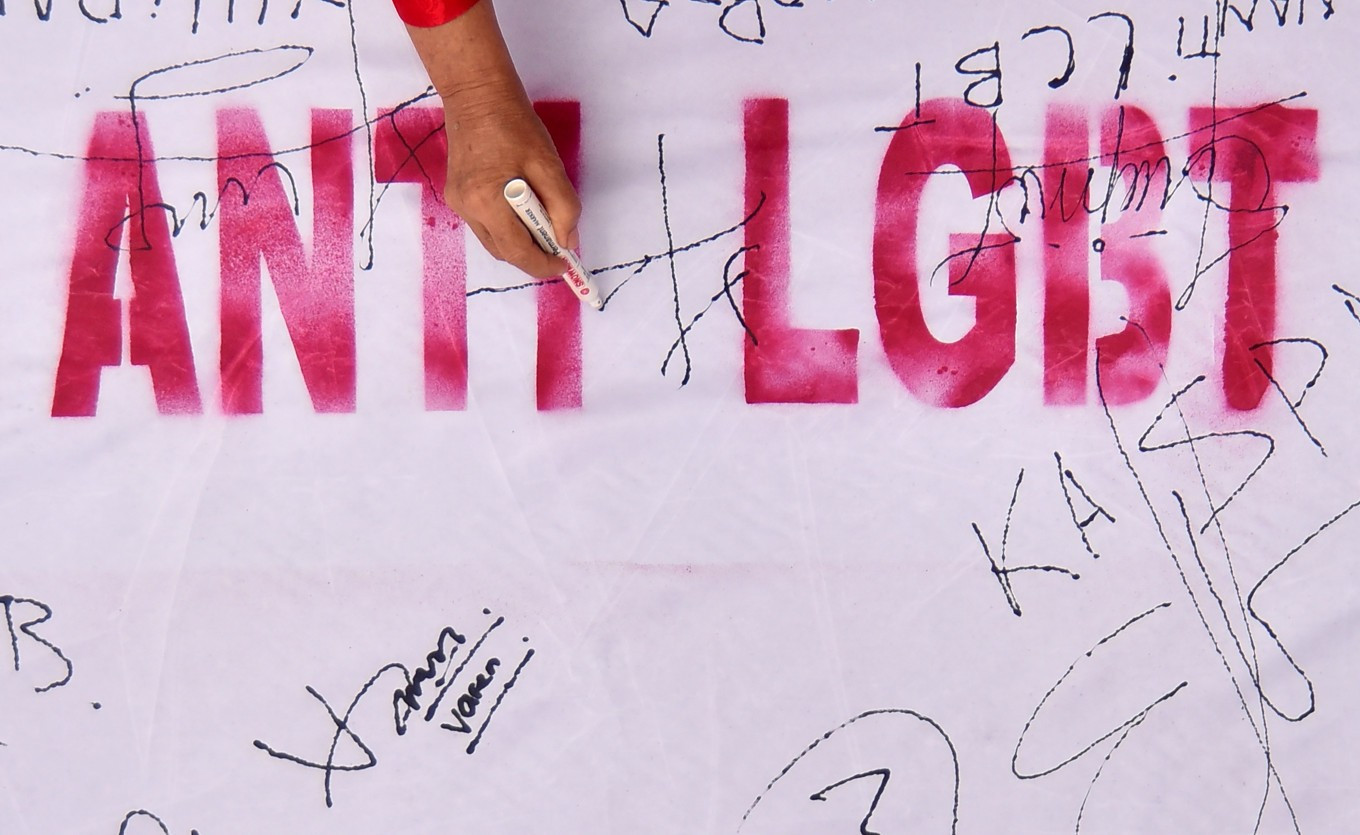
Residents sign a white banner during an anti-LGBT rally on June 21 in Padang, West Sumatra. The event, organized by the West Sumatra administration, the West Sumatra Police and the Minangkabau Traditional Council (LKAAM), invited participants to sign a one-kilometer-long white banner as part of a declaration opposing the LGBT community. Organizers also pledged to take action against LGBT individuals through customary law and called for them to be “eradicated” or expelled from Minangkabau land. (Antara/Fitra Yogi)
Lesbian, gay, bisexual, transgender and queer (LGBTQ) issues have once again surged to the forefront of Indonesia's political and social discourse. Two recent, overlapping developments warrant close examination: the formal classification of the "spread of LGBTQ culture" as a nonmilitary threat under the national defense policy, and a concerted legislative push to introduce criminal sanctions targeting LGBTQ people and advocacy.While these systemic tensions have existed for years, they gained renewed momentum following the global observance of Pride Month in June. Public discussions have since intensified across national media and digital platforms, prompting a critical reevaluation of the state's role in policing identity, the boundaries of national security and the preservation of constitutional liberties.