Editorial
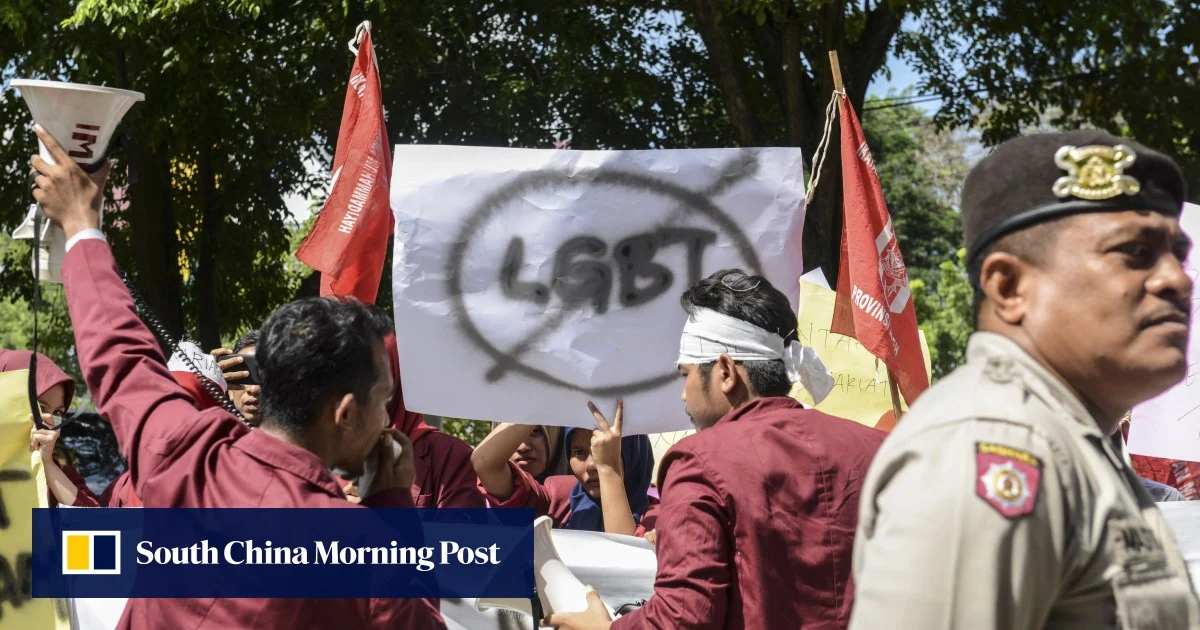
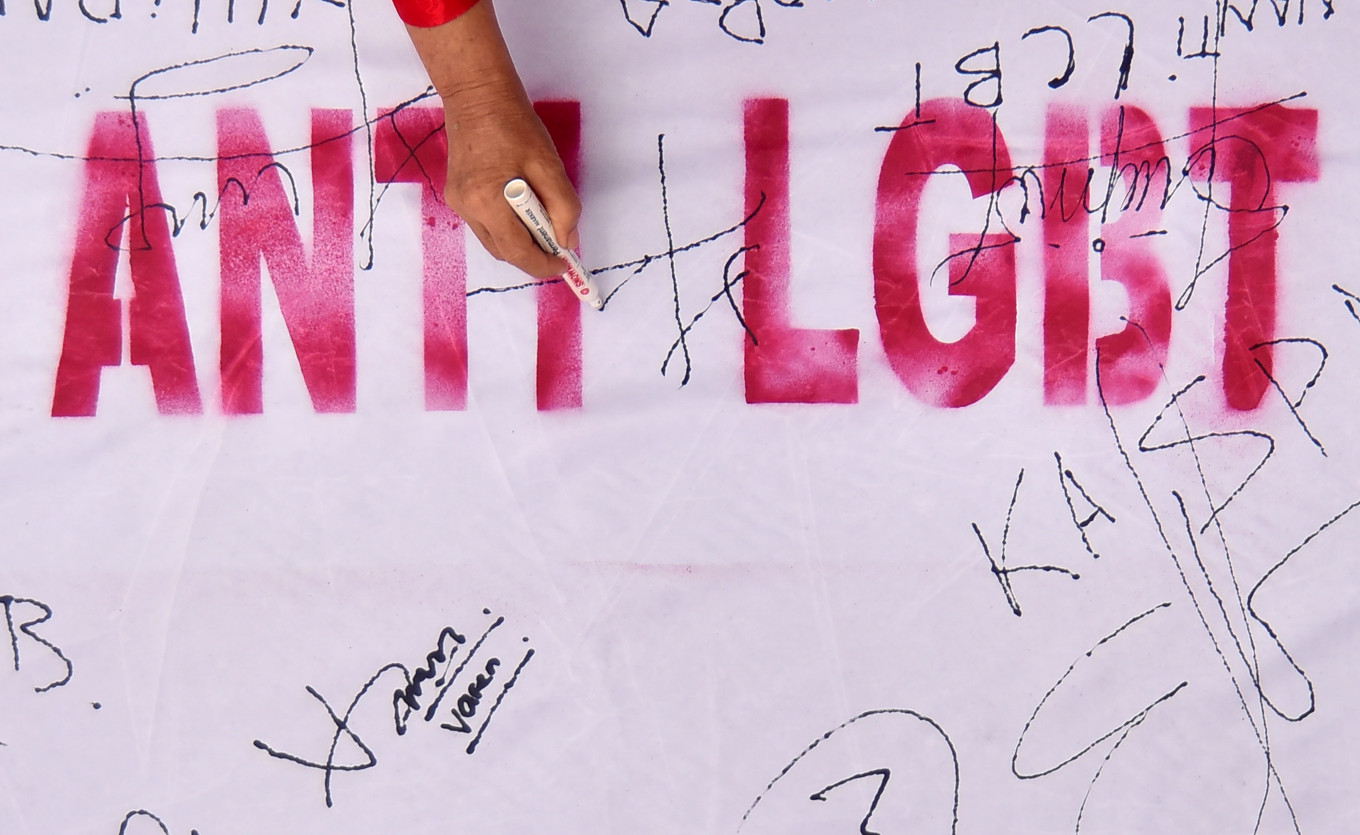
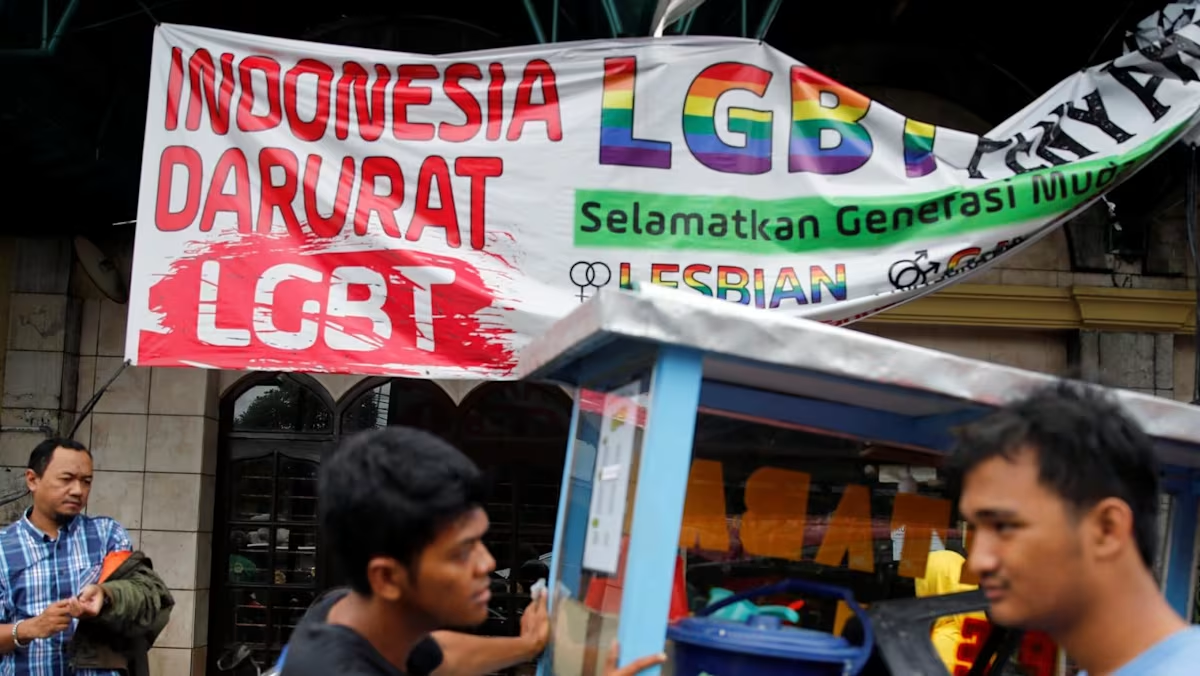
By classifying "the spread of LGBTQ culture" as a threat to national security, Perpres No. 111/2025 has codified informal hostility into state-sanctioned persecution, declaring a minority group as a public enemy.
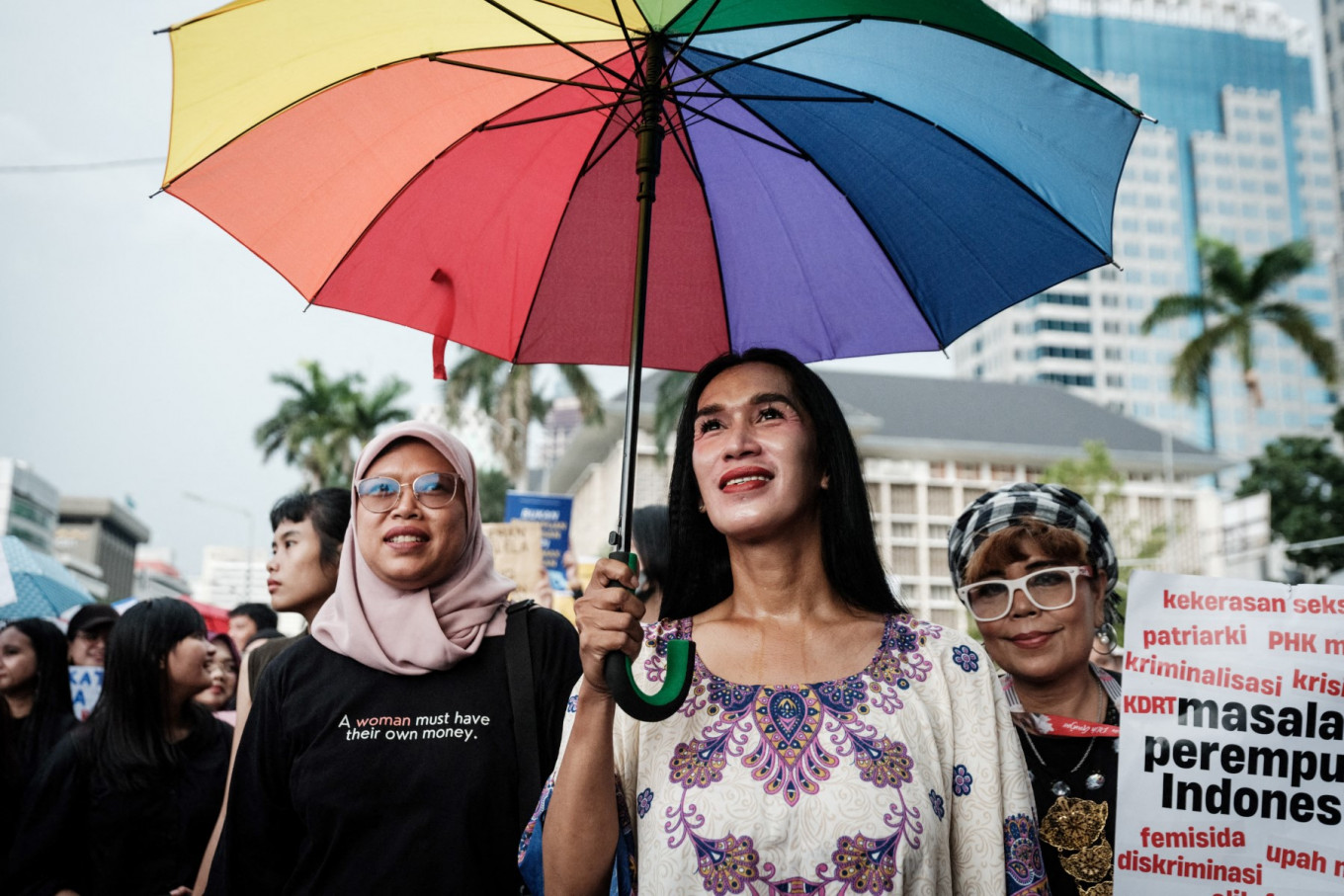
Echa Wa’ode (center), an activist from LGBTQ+ rights organization Arus Pelangi, joins a march in Jakarta organized by the Indonesian Women's Alliance (API) on March 8, 2025, calling for labor rights, gender equality and protections to mark the 50th International Women's Day. (AFP/Yasuyoshi Chiba)
The LGBTQ community has never had it easy: online harassment and offline raids have long been recurring features of public life. But under Presidential Regulation No. 111/2025, which places "the spread of LGBTQ culture" among the state’s catalog of nonmilitary threats alongside terrorism, separatism and drug trafficking, that persecution carries something new: the state’s imprimatur.The regulation doesn't create new crimes, but laws rarely need to criminalize something explicitly for people to feel empowered to punish it. The presidency’s labeling a group of citizens a threat to "national sovereignty" and "the erosion of nationalism" is essentially a blank check: for police to treat suspicion as patriotism, for local administrations to treat discrimination as defense and for vigilantes to treat intimidation as duty.