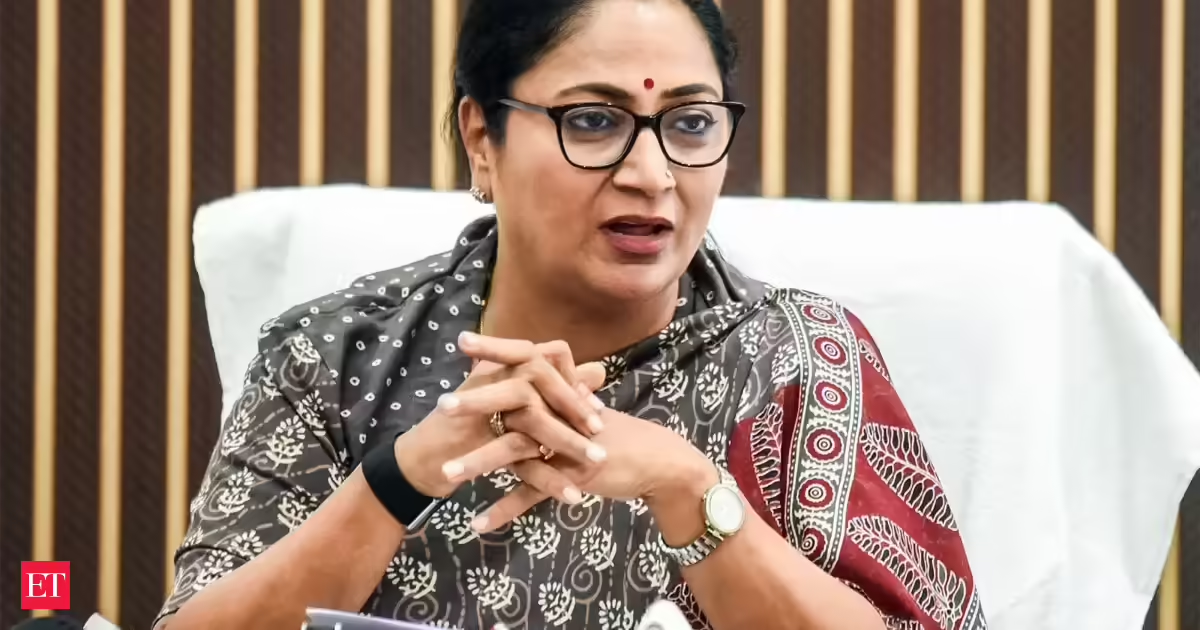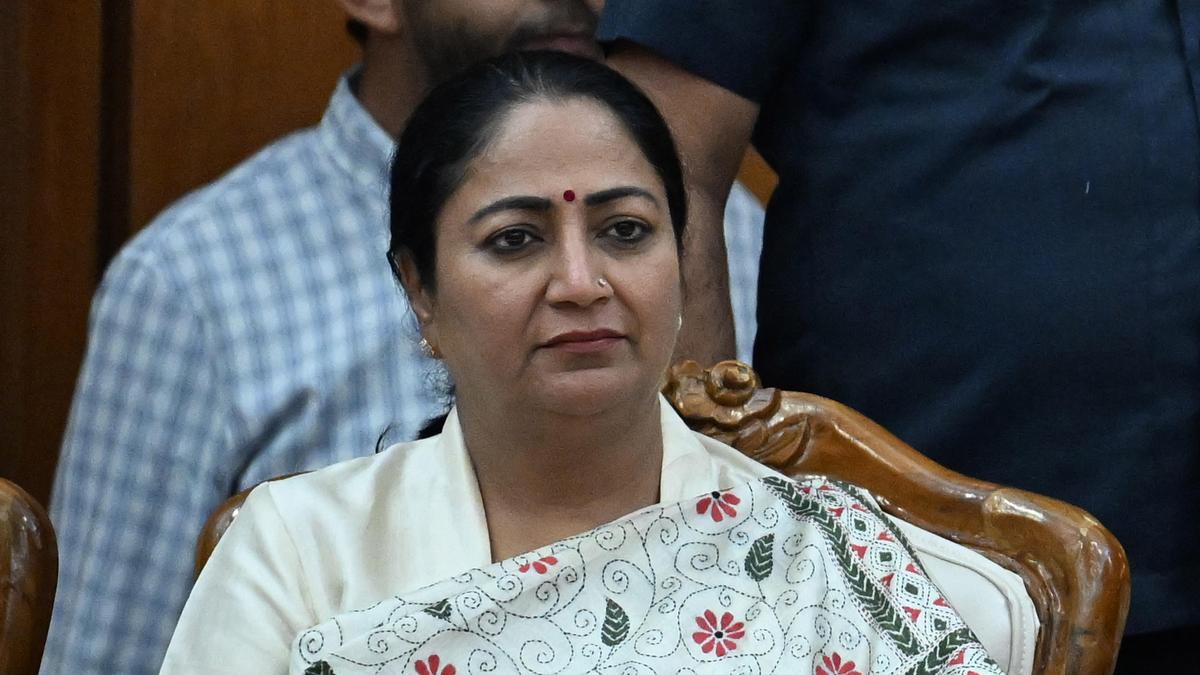
Delhi Chief Minister Rekha Gupta during an event at Delhi Vidhan Sabha on Tuesday.
| Photo Credit: Sushil Kumar Verma
Chief Minister Rekha Gupta on Tuesday said the Delhi government’s EV Policy 2.0 goes beyond purchase incentives, laying out a clear road map for structural reforms and strengthening the institutional framework in the transport sector.On Monday, the Delhi Cabinet approved the new policy with a ₹7,000 crore budgetary allocation for its implementation and an overall investment outlay of ₹15,000 crore, aimed at accelerating the transition to electric mobility through a mix of incentives and infrastructure expansion. “While the previous government introduced an EV policy in 2020 to promote electric vehicles in Delhi, the new policy is more comprehensive and will gradually transform the entire transport system towards electric mobility,” Ms. Gupta said.She said the adoption of electric vehicles remained entirely voluntary under the previous framework. “Building on that, the new policy focuses on phased and mandatory compliance across different vehicle categories, along with incentives,” she said.The Chief Minister said besides purchase incentives, the government has introduced scrapping incentives. For electric two-wheelers, a purchase incentive of ₹30,000 will be provided. The policy offers ₹10,000 for scrapping old two-wheelers. The government will allow registrations only for electric two-wheelers from April 1, 2028.“Another important feature of the new policy is that it brings school transport within its ambit for the first time. It sets a target of making 30% of the school bus fleet electric by 2030,” Ms. Gupta said.While the previous policy focused on developing charging infrastructure, the government has expanded the approach by appointing Delhi Transco Limited (DTL) as the nodal agency, she said. A single-window clearance system, a digital monitoring platform, a grid planning framework, and a dedicated administrative mechanism for the large-scale expansion of charging infrastructure will also be put in place, she added.Dedicated EV cellMs. Gupta said the institutional framework under the new policy has also been significantly strengthened. The new framework includes the Delhi EV Apex Committee, chaired by the Transport Minister, a high-powered committee headed by the Chief Secretary, and a dedicated EV cell with PMC support.She said the policy also provides for battery traceability from manufacturing to recycling through digital tracking. “Battery collection centres will be set up, and compliance for recycling will be governed under Extended Producer Responsibility,” she added. Published - July 01, 2026 12:52 am IST