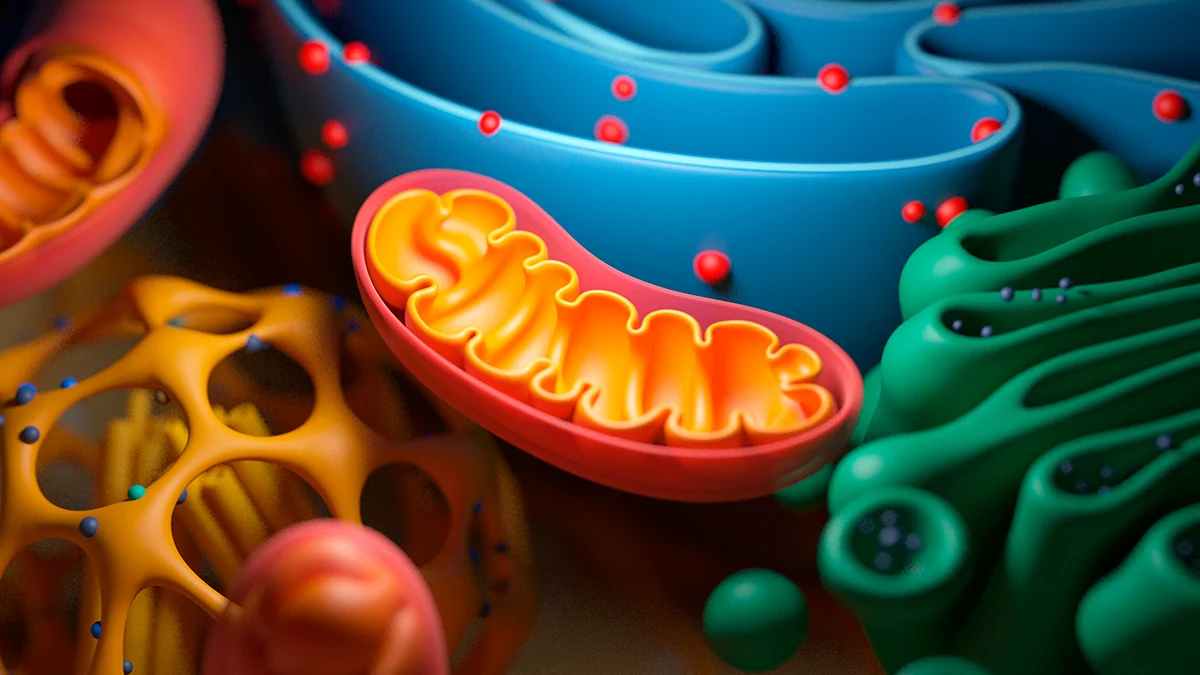
Every cell contains hundreds of mitochondria, the evolved descendants of what were once symbiotic bacteria. Much of the original mitochondrial DNA has migrated into the cell nucleus, and mitochondria have become essential components of the cell, subject to quality control mechanisms that recycle malfunctioning and worn mitochondria, as is the case for other organelles. Nonetheless, mitochondria still behave very much like bacteria. They divide to make up their numbers, fuse together, and readily exchange component structures and proteins. Mitochondria are vital to cell function in a number of ways, the most important of which is their production of the chemical energy store molecule adenosine triphosphate (ATP). Cells rely upon ATP to power the chemistry of life.
With advancing age, mitochondria throughout the body change in size, structure, and function. They generate a greater amount of damaging oxidative molecules in the course of making ATP, and the production of ATP declines. Quality control is impaired and malfunctioning mitochondria accumulate. Some are made to malfunction as a result of damage to the remnant mitochondrial genomes, other dysfunction appears to be a consequence of age-related changes in the level of expression of critical mitochondrial genes found in the cell nucleus. This mitochondrial dysfunction also generates continual inflammatory signaling via maladaptive interactions between damaged mitochondria and their debris and defense mechanisms in the cell.