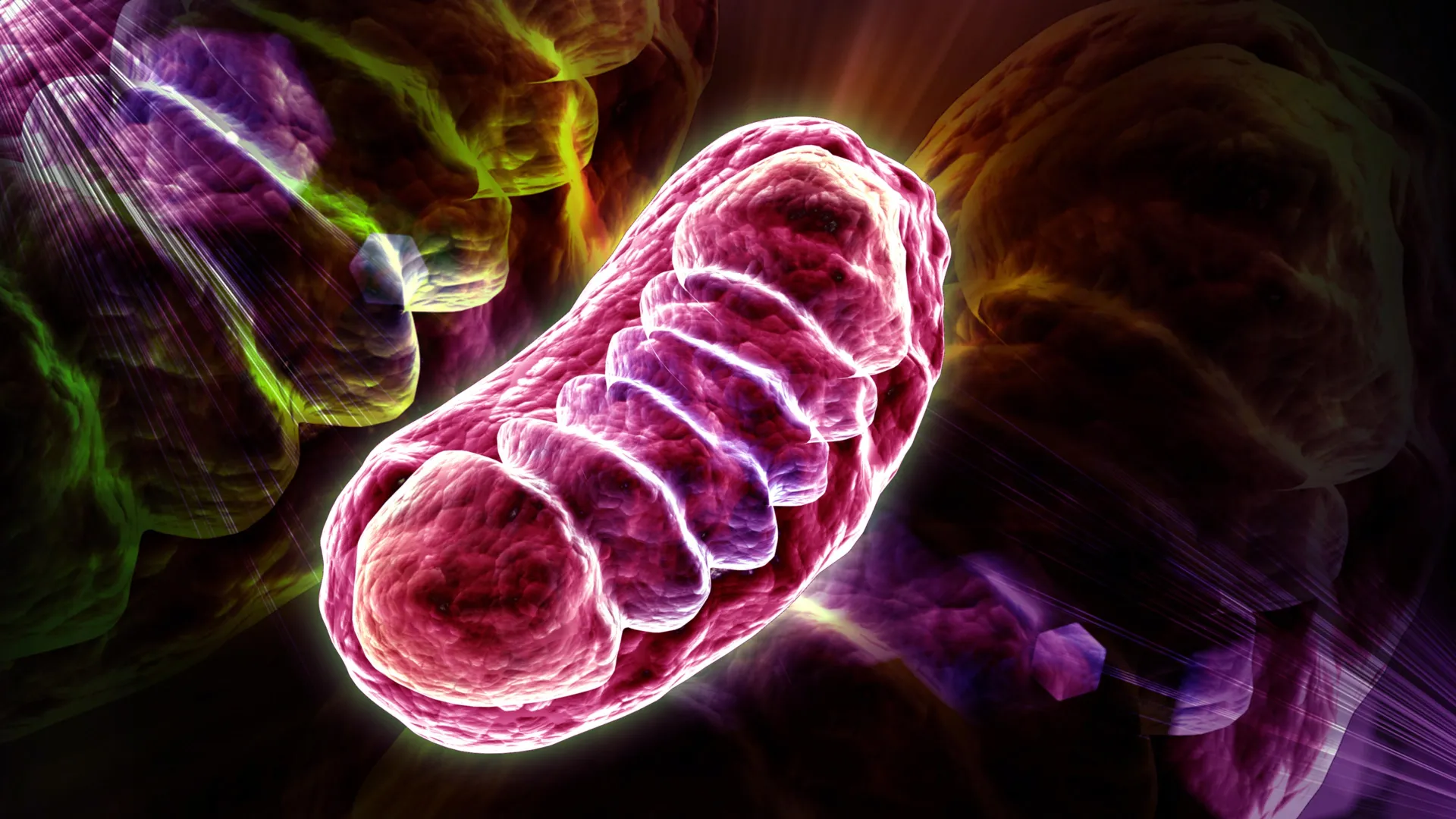
Every cell contains hundreds of mitochondria, the descendants of ancient symbiotic bacteria that have by now evolved into components of the cell. Much of their original bacterial genome has migrated into the cell nucleus to become incorporated into nuclear DNA, leaving behind only a small remnant mitochondrial genome. The primary role of mitochondria is to supply the cell with adenosine triphosphate (ATP), a chemical energy store molecule used to power cell operations. Mitochondria interact with a range of important cellular processes beyond this, however. They continue to act much like bacteria in many other ways: they replicate, fuse together, swap component parts between one another.
The behavior of mitochondria is complex and incompletely understood, as are the contributing causes and fine details of the changes that take place in mitochondria with age. In aged cells, mitochondria exhibit reduced ATP production, greater production of oxidative molecules, altered structure, leakage of DNA fragments into the cell body where they can provoke inflammation, impaired responsiveness to quality control processes that work to remove damaged mitochondria, and so forth. Their dynamics of fusion and fission change. That all of this is important to the progression of degenerative aging is well demonstrated; numerous approaches to slowing aging in short-lived species involve improvement in mitochondrial function in aged individuals.