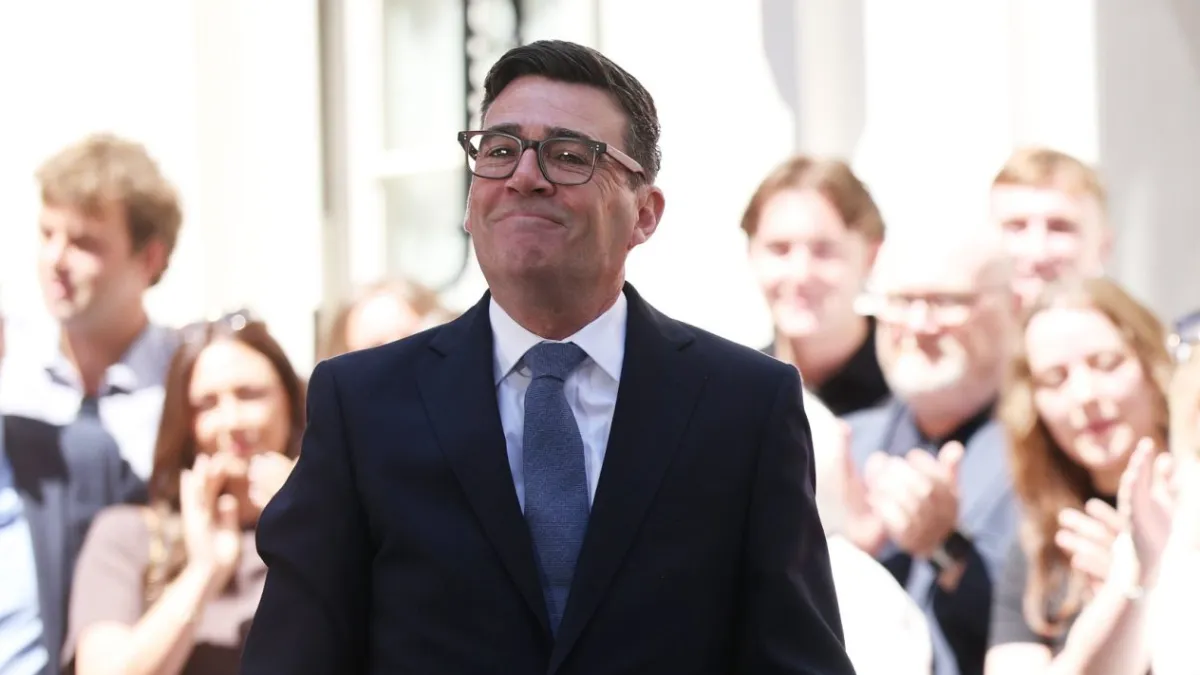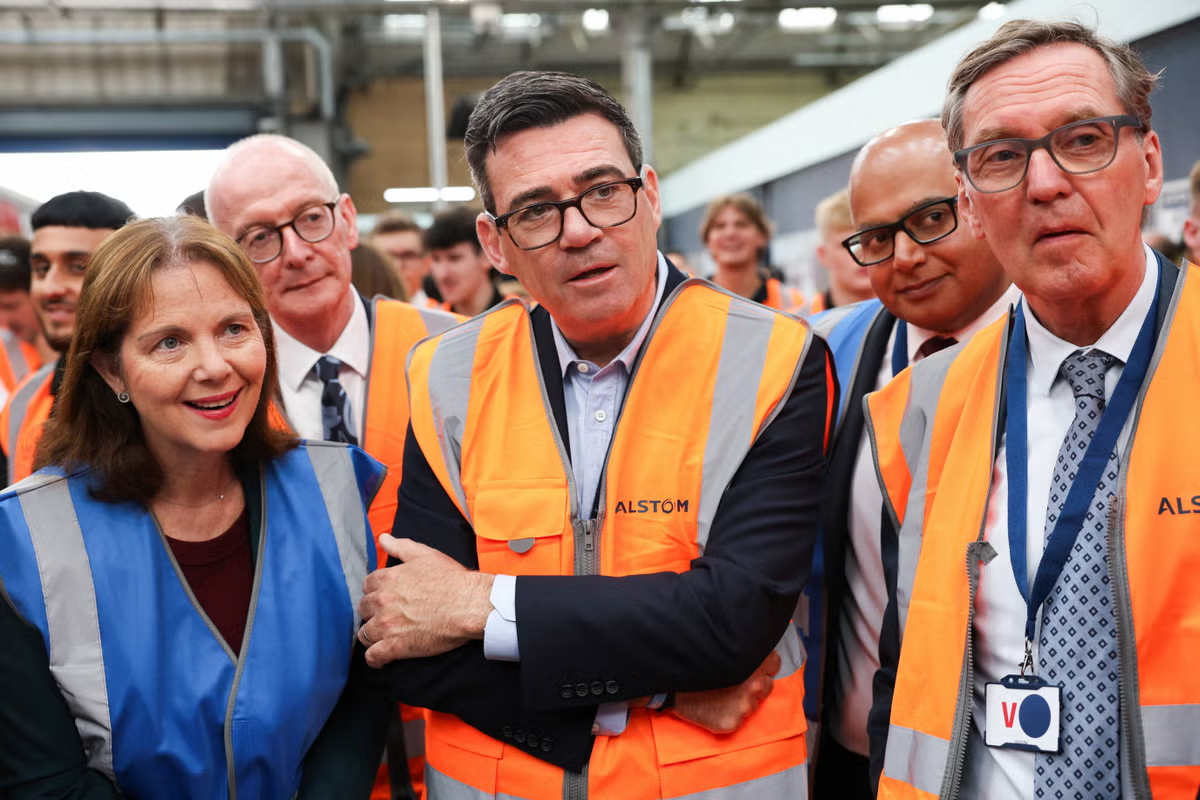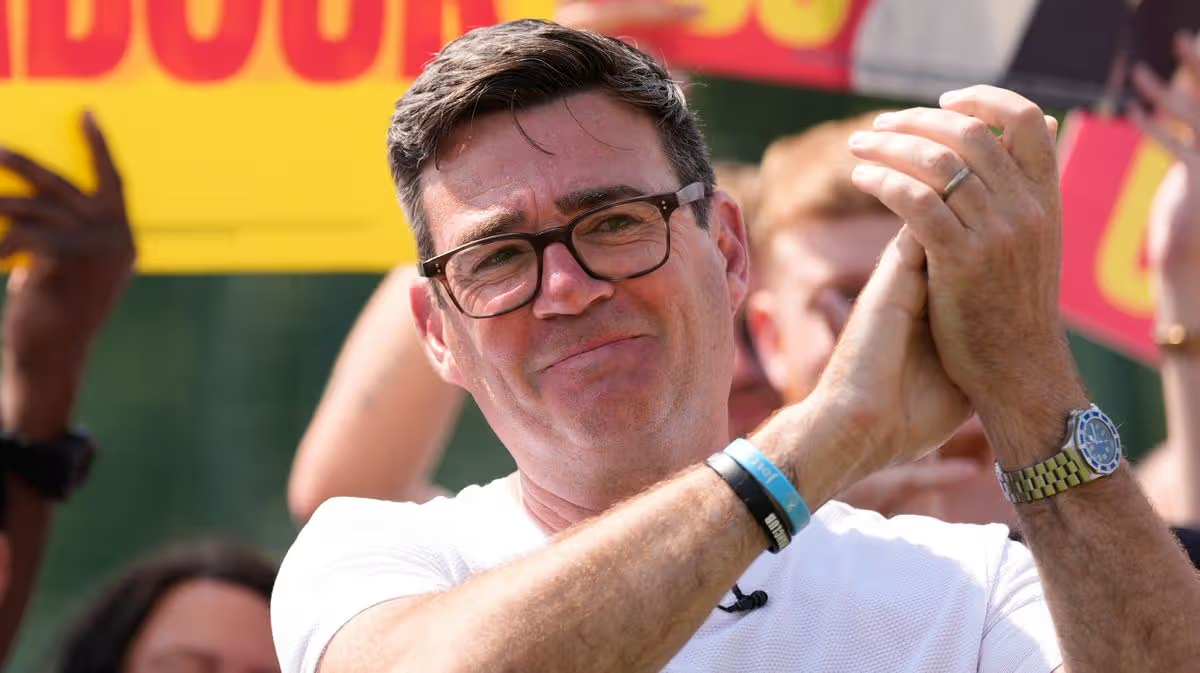
A little over a week since he was appointed prime minister, Andy Burnham has his very own “bounce”. The boing in his personal ratings in the opinion polls has been more pronounced than that of his party, and it is undeniably dramatic. Truth be told, his immediate predecessor’s approval ratings were never that high, even while Labour was running double-digit leads over its rivals; but by the time Sir Keir Starmer left office, they were running at dismal, historical lows.Now, Mr Burnham is the most popular of the party leaders – and while Burnhamania has not yet quite gripped Britain, he has made the change in mood he promised. Unless something strange happens, on Thursday, he will cement a solid debut with an emphatic Labour victory over a floundering Reform UK in the Greater Manchester by-election for a new mayor. Quite the transformation from the May elections. As is now universally accepted, perhaps even by Sir Keir himself, Mr Burnham does indeed possess superior communication skills. His critics, notably Kemi Badenoch, dismiss the appeal of Mr Burnham as mere long-lashed, Manc “vibes”, and some certainly are tiring of “government by TikTok”.Yet Mr Burnham has brought a confidence and a rare fluency to No 10 – the one in Westminster, as well as his new North branch office. Even more impressive, where Sir Keir made the error of being so downbeat as to depress the nation in his early days in power – endless gloom about the notorious “black hole” – Mr Burnham has restored hope.He is by nature a brighter, more relaxed personality than most front-line Labour politicians, and more at ease in front of a camera. In terms of his command and understanding of the essential media skills of his age, he is comparable only to Boris Johnson, Tony Blair and Harold Wilson over the last half century or so. He knows, however, that this is not enough, and will not by itself propel either him or his party to victory at the next general election. He cannot rely either on Reform UK or the Greens always making the kind of disastrous misjudgements they have in recent months to boost his popularity.What he needs are policies and, as he claimed he had during his leadership election, a plan. He needs to imbue his administration with a sense of purpose, and one clearly visible to the electorate. Sir Keir got tangled up in an incoherent matrix of missions, pledges and phases that even his own advisers struggled to keep up with. Without a compelling narrative, Mr Burnham will in due course struggle just as badly as Sir Keir did to hold public trust and support.Rishi Sunak and Sir Tony Blair, among many others, have publicly counselled their successor that a prime minister enjoys maximum leverage during their first days in power. That is the moment to expend political capital and the best moment to make a mark on history.In terms of his choice of personnel, Mr Burnham has selected some excellent lieutenants to be by his side, notably John Healey in the Treasury, Shabana Mahmood pursuing crucial reforms on asylum at the Home Office, and the redoubtable Pat McFadden to deal with the highly combustible challenge of welfare reform – whose failure sank Sir Keir’s premiership.Mr Burnham may have marginalised the Starmerites, but his cabinet feels better balanced than Sir Keir’s team. The appointment of Bridget Phillipson as party chair is at least a gesture of reconciliation to the ancien régime. The policy decisions taken in the early days of power can define a premiership, for good or ill. Some get it right, as in 1997, when the Blair administration in its first week decided to make the Bank of England operationally independent. John Major took the first step to abolishing the poll tax.Others misjudge recklessness for bravery, as when Liz Truss assured the country on her first day that: “I have a bold plan to grow the economy through tax cuts and reform.”Others do something right and symbolic, but which achieves limited resonance with the public, which is what happened with the cancellation of the Rwanda plan for migrants by Sir Keir as his first act – now forgotten even by him as part of his “legacy”. Mr Burnham’s early days can be characterised as small actions and big talk. As a former mayor, and now a seasoned politician, he responded to public concerns about the cost of living with modest moves that nonetheless showed that he has indeed been listening in recent weeks.Bringing in a temporary cut in VAT on domestic electricity bills, cutting bus fares to £2 a ride and the 20 per cent reduction in business rates for pubs and clubs were eye-catching and popular. In macroeconomic terms, they were irrelevant. In the political calculus, they yielded a far more lucrative return – the Burnham Bounce. Now, Mr Burnham has an opportunity to do something big, something to match the soaring rhetoric we sometimes hear from him. He is to pick up where he left off when he was health secretary under Gordon Brown and relaunch nothing less than his “National Care Service”. It is a fitting project for a Labour government, an echo of the foundation of the National Health Service – and an attractive one for him because he could succeed where predecessors in all parties have had to abort their plans to “fix” the issue. That includes Sir Keir and the former health secretary, Wes Streeting, who spoke the same sort of language, but, rather than taking action, chose to postpone it during yet another review of the system, this time by Dame Louise Casey.That work is being brought forward by Mr Burnham, and he at least is trying to build a cross-party consensus on the way forward. It will take time, as he is sensible enough to admit – but at least something is being done.A real sense of momentum is at last being sensed, in Whitehall and beyond. If Mr Burnham keeps it up, he’ll deserve a great deal of credit.
Let’s see what the ‘Burnham bounce’ can do for us all
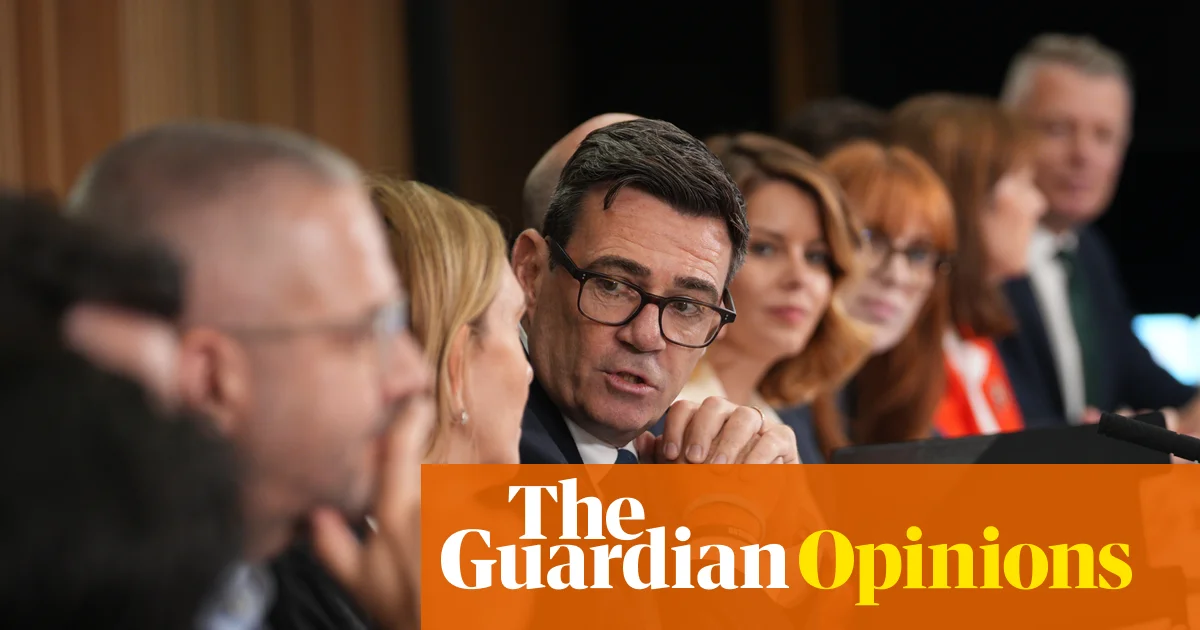
Editorial: A prime minister enjoys maximum leverage during their first days in power. Labour’s new poll lead should convince Andy Burnham that now is the moment to make bold policy decisions that will come to define his premiership
1,010 words~5 min read