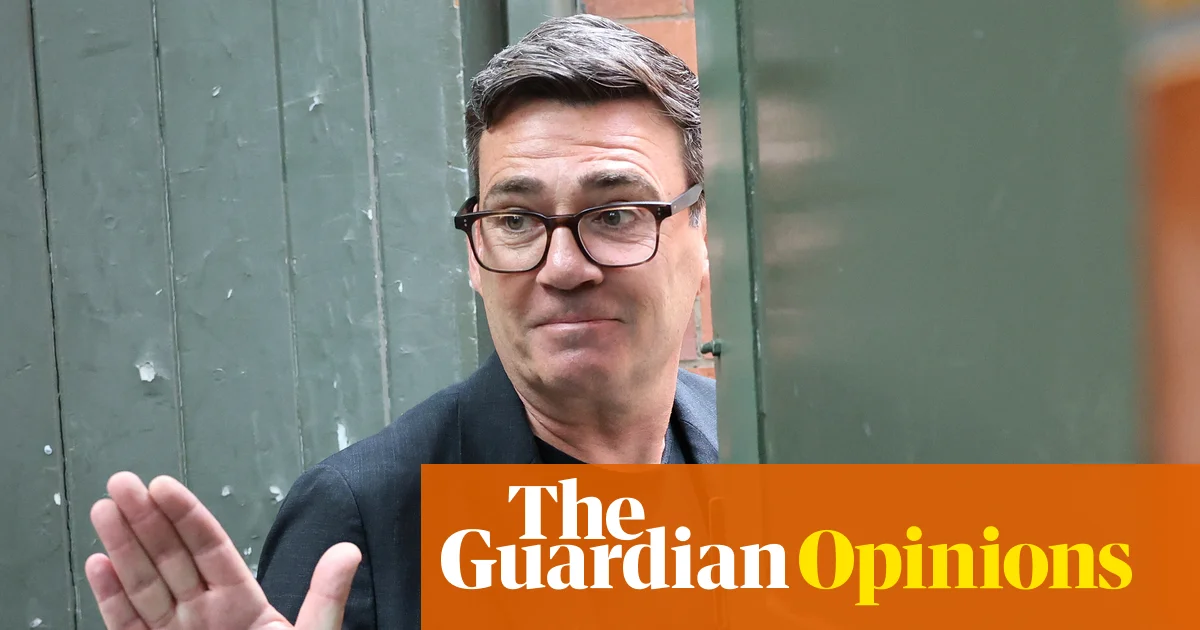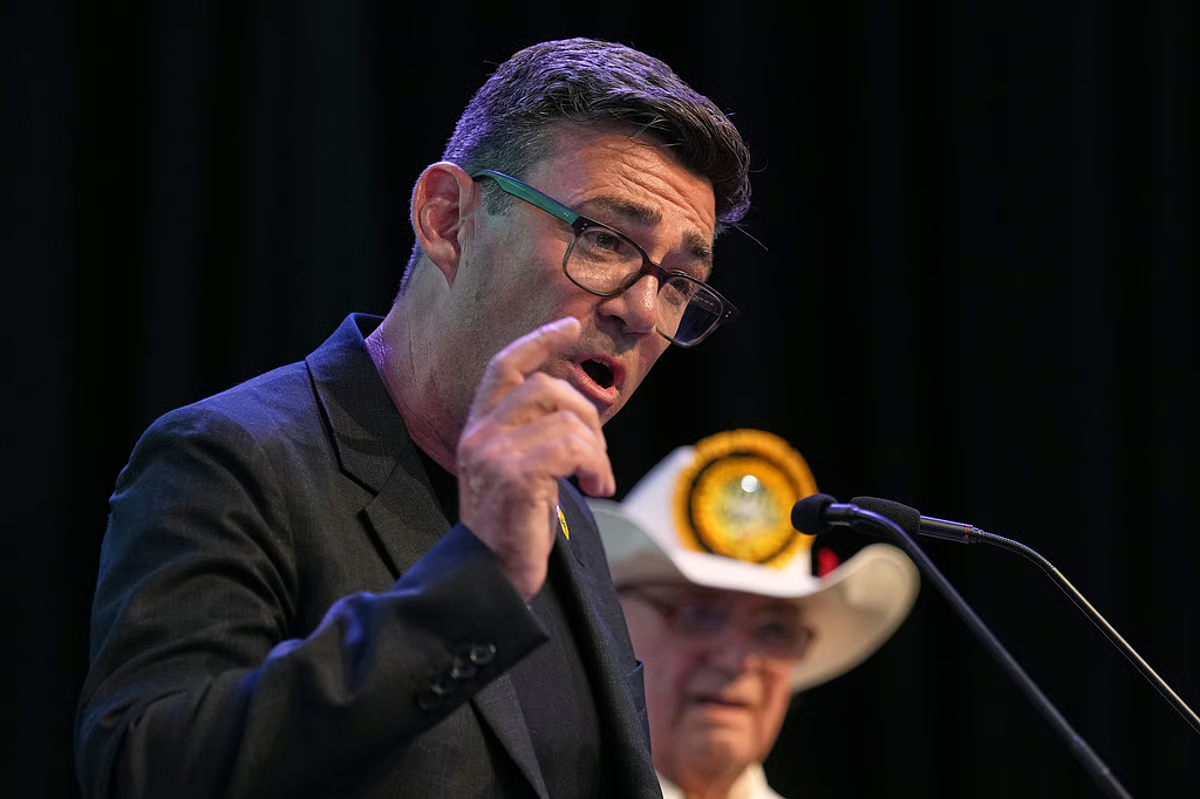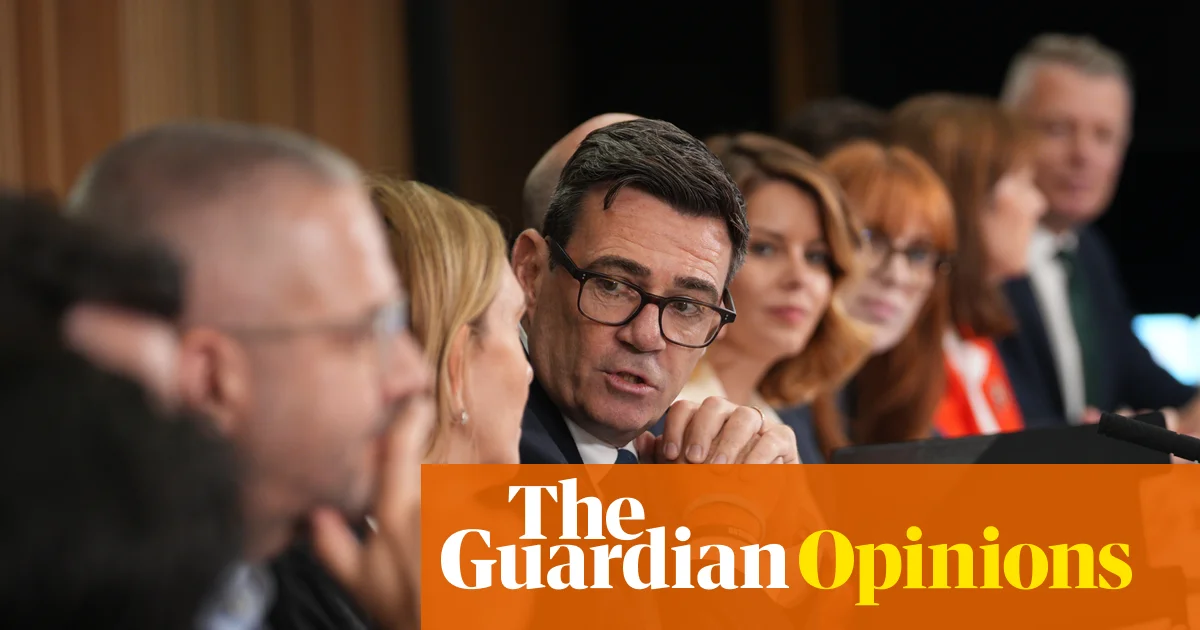
This is the danger zone. The period when one prime minister leaves office and the next takes over can inspire either dread or delight: a few days in which the country forms a gut reaction to the new government.One week on, Andy Burnham has well and truly ditched the slow fatalism that marked Keir Starmer’s early days in power, in favour of the message that help is on the way: from cost of living support to a pledge to end rough sleeping and Monday’s commitment to fix the social care system.But listen closely, and what’s striking about Labour 2.0 isn’t how quickly change may come or even what it might entail – it’s the idea that change is possible at all. While Starmer responded to an era of social and economic crises with the futile pessimism of a man who appeared not to realise he was in fact prime minister, Burnham has spent his first week in Downing Street challenging the orthodoxy that certain problems are just too big to solve. As he pointedly said about rough sleeping in his first email to Labour members as PM: “This is something a government can fix if it chooses to, and today, on day one, I’m choosing to.”As political oratory goes, that’s a pretty brave window to open, and once ajar it is hard to close. Unequal capitalist societies – and many governments, for that matter – survive on the premise that certain things are inevitable. Millions of people in a rich nation will always struggle to afford to eat regular meals, even after they have worked all day, the story goes. Some people just have to sleep on the streets, while others get spare mansions. When you’re old or sick, unless you have huge wads of cash, it’s natural you might not have help to get washed and dressed.To admit that any of this is a political choice is a cardinal sin – if only because that means more of the public might start to demand politicians redistribute wealth and power to fix it.The pushback to Burnham’s agenda is, predictably, already starting. The new PM had barely had chance to unpack his black T-shirts in No 10 before the Daily Mail announced he was backing a “death tax” with social care reforms he hasn’t yet announced. Meanwhile, the Conservative shadow chancellor, Mel Stride, accused Burnham of wanting “to go back to the 1970s”, as if cheaper bus travel was a gateway drug to a three-day week.Such interventions are laughable, sure, but they also do a good job of feeding into the hopelessness of an electorate who have learned – through years of expenses scandals, £350m Brexit buses and Covid parties – to distrust politicians and their promises.That valid cynicism is only perpetuated by an increasing wave of disinformation. This is not just the outright lies that have become the norm on social media (and legacy media, for that matter) but the more subtle, disingenuous rhetoric that chips away at a leader’s credibility if they dare propose a policy that might improve the lives of ordinary people.Just look at how, before Burnham has made any substantive spending commitments, recent days have been dominated by cries of: “How will he pay for that?” Expect to hear more of this phrase in the coming weeks and months, as well as blocks on ideas for funding. Within hours of Burnham announcing on Monday that he will take on social care, Reform and the Tories had said they would oppose any plans that involved a tax rise.It is not that it is not valid to ask Burnham to cost any significant plans, but that the question is rarely levelled at the right with the same energy, despite the Conservatives having a long history of financial mismanagement. It was not a socialist who spent tens of billions of taxpayer cash on a colossally wasteful Brexit, Covid PPE contracts, or devastatingly costly austerity.Andy Burnham is interviewed for the BBC at No 10 North in Manchester, 24 July 2026. Photograph: Jeff Overs/ReutersBesides, such framing wilfully ignores the fact short-term spending on social welfare is often an investment in long-term savings. Take Burnham’s pledge to end rough sleeping. Economic analysis for the charity Crisis in 2018 estimated that permanently ending homelessness in Britain would cost £9.9bn over 10 years. But it would save £26.4bn by reducing pressures on the NHS, criminal justice system and benefits.None of this, of course, is to say Burnham’s words will be backed up with sufficient action. His chatty form of communication, often praised as making him authentic to voters, along with the novelty that he has not come into office with a clear policy platform, can create a habit of overpromising or misunderstanding. In the past week, it has already opened him up to accusations of U-turns on rent controls and income tax thresholds.Meanwhile, progressives will have seen red flags in some of his cabinet picks, with fears that keeping Shabana Mahmood as home secretary will mean continuing her hardline immigration stance, and appointing John Healey as chancellor could lead to prioritising the military over other spending.skip past newsletter promotionafter newsletter promotionThat’s the thing about a Burnham premiership: while the right is scared he will fulfil his promises, the left is afraid he won’t.The difference is that the left has got a point, not least because polling shows the electorate is also impatient for progress: 83% of British adults want significant reform to tackle cost of living pressures, including 51% who state that radical change is necessary, according to new research by Ipsos. And yet six in 10 of those surveyed are not confident that any of the major national political parties have a good plan for changing Britain.This is the paradox of our times. The public is desperate for change but never less convinced that the political class will deliver it.Much has been said about the vast challenges the new government inherits, from housing, to living standards, defence, climate breakdown and energy, social care, benefits and prisons. All of them will be uphill battles; complex issues often with eye-watering price tags that have for far too long been ignored or mismanaged. But Burnham’s greatest task will be one that has long weighed down the left: convincing the public – if not the media and markets – that something better is actually possible.That’s the real danger zone Starmer’s exit should warn Burnham he must avoid. Having power and not grasping the chance to use it.
Andy Burnham has made a bold start – but convincing people that change is possible will take much more | Frances Ryan
The new PM’s greatest task has long weighed down the left: convincing voters there are actually better days ahead, says Guardian columnist Frances Ryan
1,086 words~5 min read