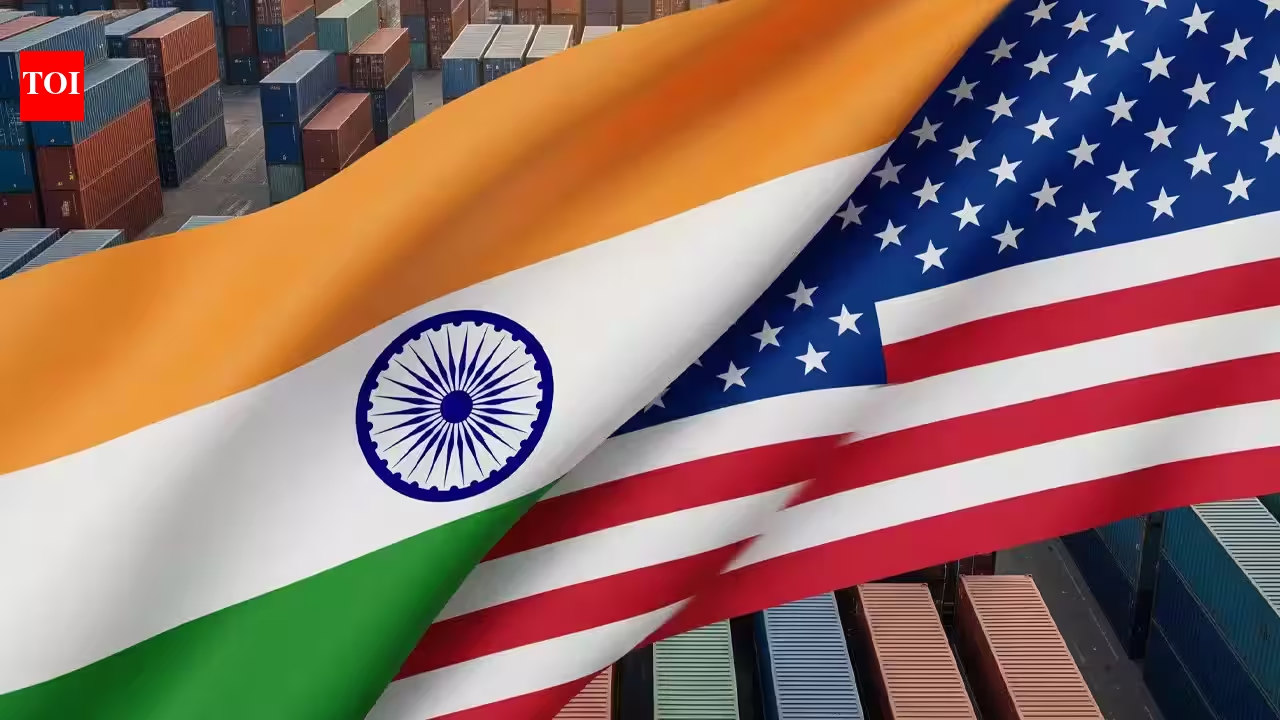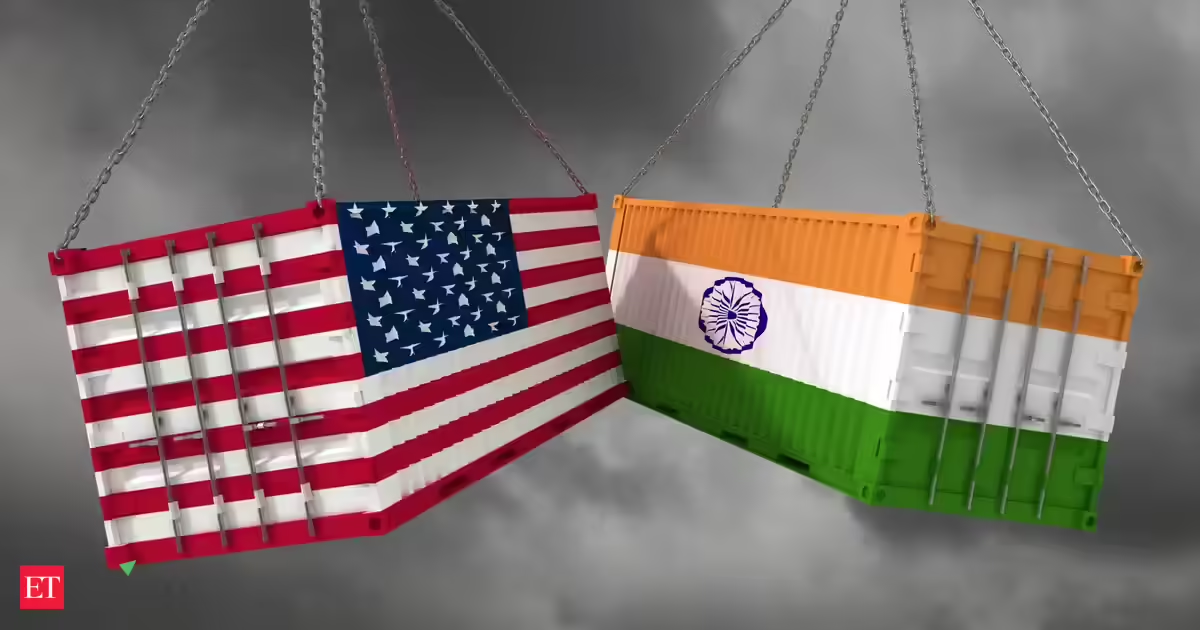
The US’ decision to impose an additional 10 per cent Section 301 tariff on most imports from India has understandably created concern among exporters. Yet, while the measure is undoubtedly a setback, it should not be viewed as a blow to India’s export prospects. Compared with several competing countries, India could even emerge with fresh opportunities in a number of sectors.It must be noted that this is not a country-specific penalty against India, nor is it a finding that Indian products are manufactured using forced labour. The tariff forms part of a broader US trade action under Section 301 following its assessment of how trading partners prohibit and prevent the import of goods produced through forced labour. India has been placed in the lower 10 per cent tariff category after taking policy measures to strengthen its legal framework in this area, while several competing countries have been subjected to a higher tariff of 12.5 per cent.Commercial realityFor exporters, however, the commercial reality is straightforward. The new levy generally comes in addition to the existing US customs duty. Thus, if an Indian product currently attracts a normal US import duty of 5 per cent, the new Section 301 tariff could raise the total duty incidence to around 15 per cent. Naturally, this increases the landed cost of Indian products in the US market and may make price negotiations more difficult. Since customs duties are paid by the US importer, buyers are likely to seek price reductions, renegotiate contracts, or ask exporters to share part of the additional burden. Industries operating on narrow profit margins will feel this impact much more sharply than sectors supplying specialised or high-value products.At the same time, looking only at the additional 10 per cent tariff can create a misleading impression. India competes with dozens of countries in the US market, and the real question is whether those competitors face lower, similar or higher duties.Many of India’s principal competitors, including Bangladesh, Cambodia, Indonesia, Malaysia, Pakistan, Sri Lanka, Mexico, Canada, the UK and Jordan, have also been subjected to the same 10 per cent tariff. This means that in sectors such as textiles, garments, leather products and several labour-intensive industries, Indian exporters do not become less competitive merely because of the new tariff. Buyers comparing Indian products with those from Bangladesh or Sri Lanka, for example, will find both facing similar tariff treatment.Interestingly, India may actually gain a modest competitive advantage over several important exporting nations. Vietnam, Thailand, China, Türkiye, Singapore, Brazil, South Africa, Australia, New Zealand, Saudi Arabia and the UAE have all been placed in the higher 12.5 per cent tariff category. Although the difference is only 2.5 per cent, it could become significant in highly price-sensitive industries. US buyers looking to diversify away from suppliers facing higher tariffs may increasingly consider Indian manufacturers, provided they can offer competitive prices, consistent quality, reliable delivery schedules and adequate production capacity.The picture becomes less favourable when India competes with developed economies. The European Union and Taiwan have been granted a much more favourable capped-duty arrangement under which the combined customs duty generally does not exceed 10 per cent. Japan, South Korea and Switzerland also enjoy a similar arrangement with a cap of 12.5 per cent. Consequently, Indian exporters may find themselves at a slight disadvantage in machinery, electrical equipment, engineering goods, speciality chemicals, medical devices and other technology-intensive sectors where European and East Asian suppliers are India’s principal competitors. This underlines an important lesson: there is no single answer to the impact of the tariff. Every product has to be examined individually after comparing the tariff treatment applicable to competing supplier countries.The impact will also vary considerably across sectors. The gems and jewellery industry, where competition is intense and margins are often low, may face considerable pressure. Textiles and garments, on the other hand, may witness a more balanced impact because most competing South Asian suppliers face the same tariff. However, the proposed US tariff-rate quota for countries importing American cotton and textile inputs could potentially provide Bangladesh, Cambodia, Indonesia and Malaysia with an additional advantage if implemented favourably.Pharmaceuticals appear comparatively insulated because several pharmaceutical products and ingredients fall within the exemption framework, although exporters should verify product-specific classifications rather than assuming blanket exemptions. Similarly, certain agricultural commodities, fertilizer inputs, seeds and essential products have also been kept outside the scope of the new tariff.Greater scrutinyAnother consequence of the new measure is likely to be greater scrutiny of supply chains by American buyers. Exporters should therefore strengthen documentation relating to labour practices, wages, employment conditions, supplier declarations, raw material sourcing, social audits and traceability. Businesses with transparent supply chains and strong environmental, social and governance practices are likely to inspire greater confidence among overseas buyers.The immediate response of exporters should be to obtain confirmation of the precise US tariff classification applicable to their products and verify whether any exclusions are available. They should calculate the total landed duty, taking into account the normal customs duty, the Section 301 tariff, any applicable Section 232 duties and other trade remedies wherever relevant.Existing export contracts should also be reviewed carefully to determine who bears the additional duty burden and whether price revisions are permissible under the contract. Instead of immediately offering a 10 per cent reduction in prices, exporters would be better advised to negotiate balanced commercial solutions such as partial cost sharing, larger order commitments, improved logistics, revised specifications or longer-term supply arrangements. Most importantly, exporters should assess every product on a tariff-line-by-tariff-line basis and compare their position with the principal competing countries rather than drawing broad conclusions.The new US tariff undoubtedly increases the landed cost of Indian products. Businesses operating on margins of only 3-8 per cent will find it difficult to absorb an additional 10 per cent tariff without affecting profitability. Nevertheless, the overall picture is more balanced than it appears at first glance.The writer is Director General and CEO, FIEOPublished on July 28, 2026
US’ new tariff needn’t rattle exporters
Section 301 tariff on many of India’s principal competitors is either higher or similar. Our competitiveness hence may not get affected
987 words~4 min read