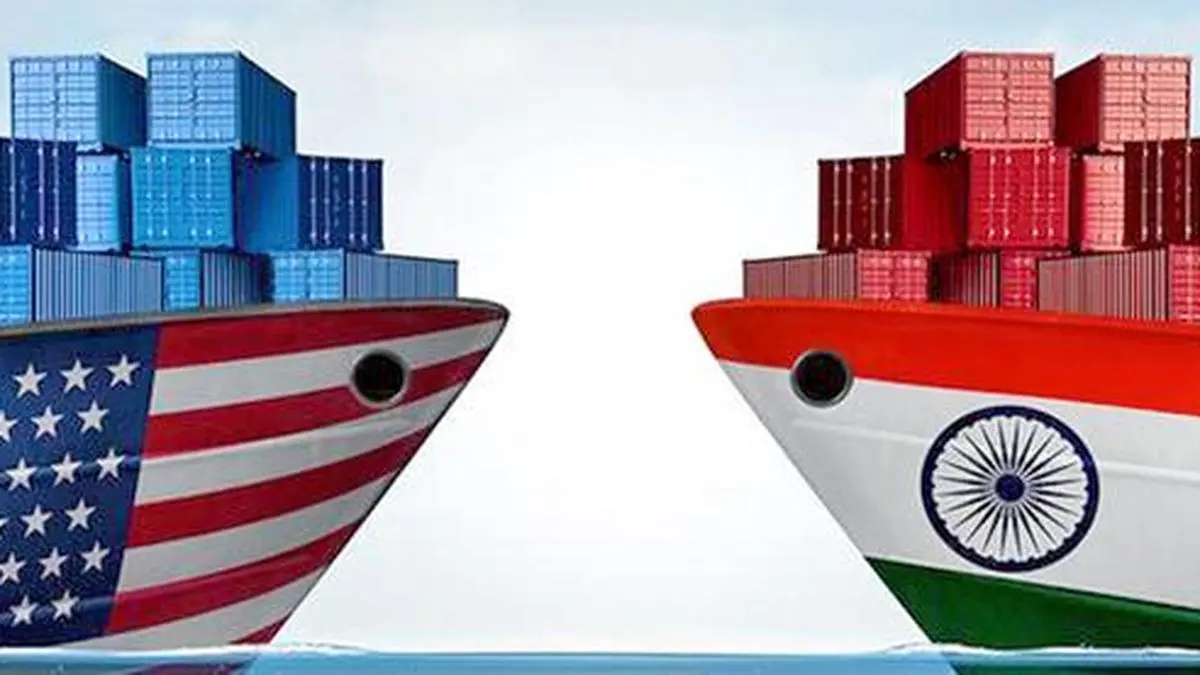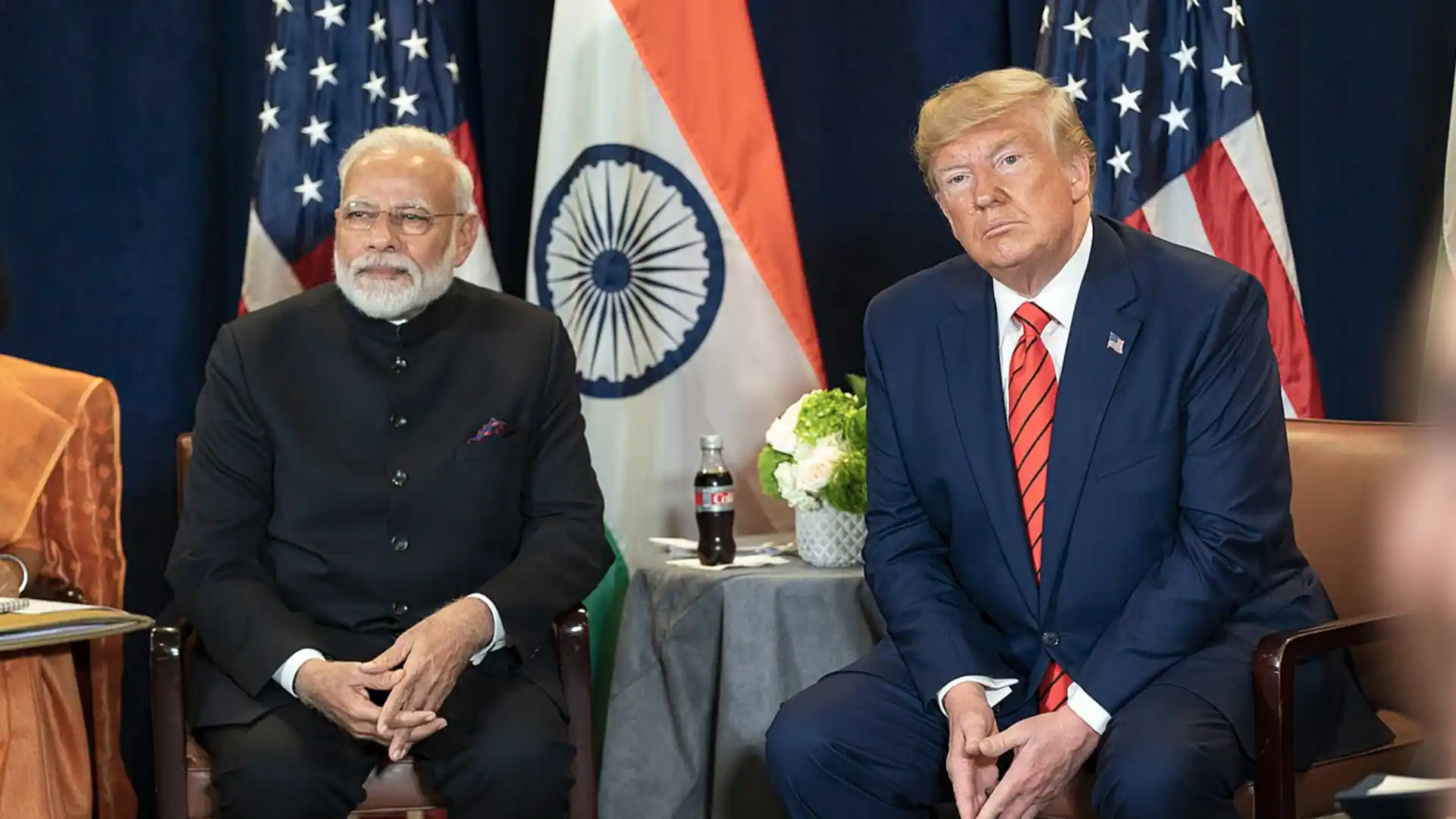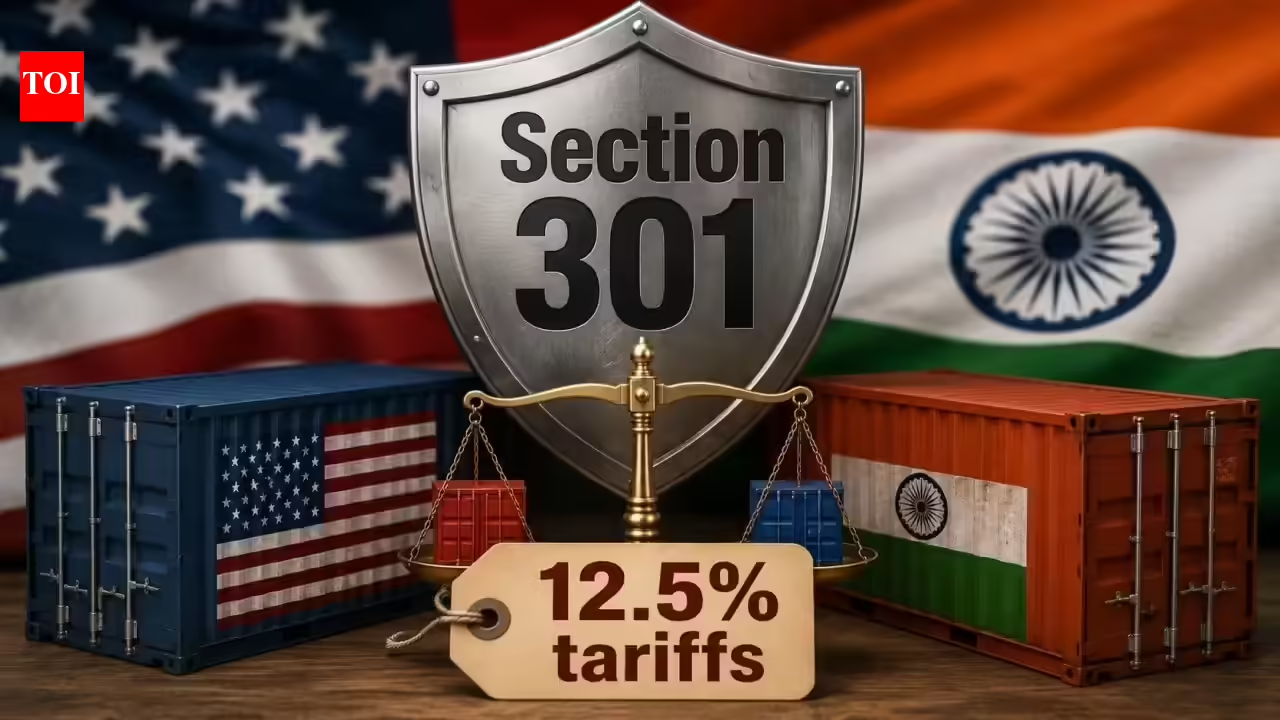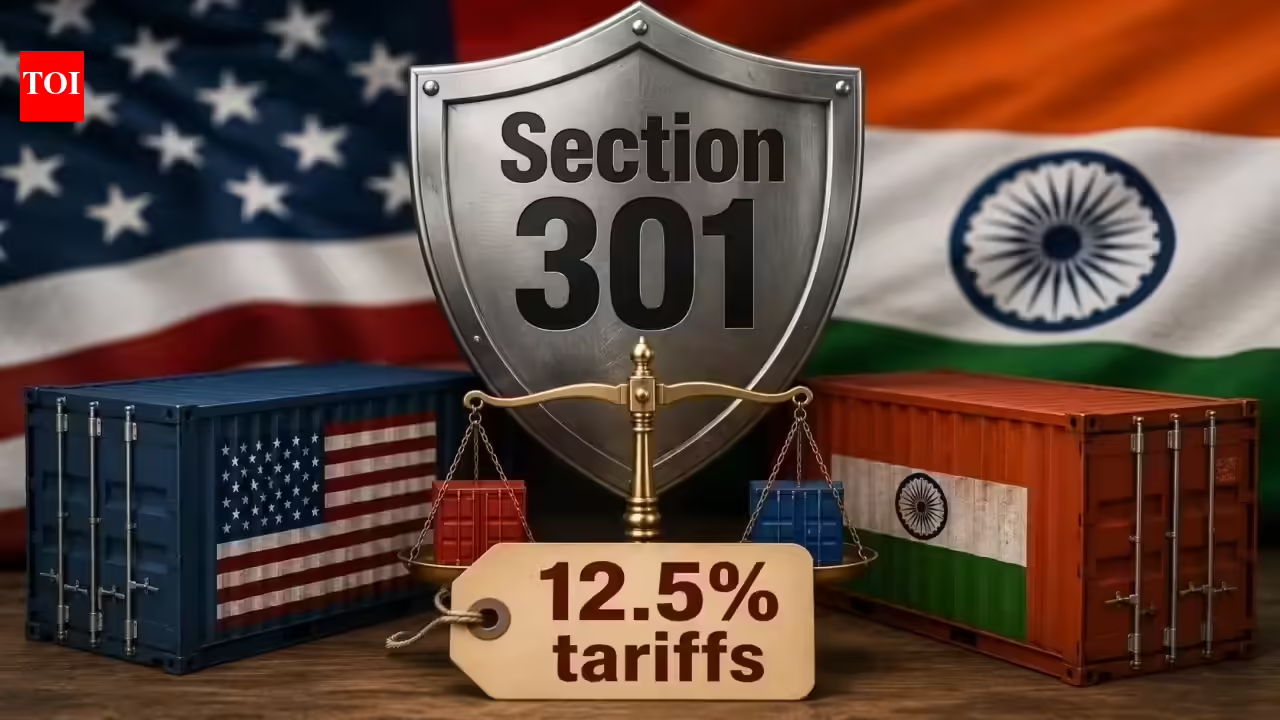
The Trump administration’s latest move to initiate a Section 301 investigation, which could result in an additional 12.5% tariff on imports from India, is generating concerns across sectors. Industry stakeholders are of the views that the proposed action is inconsistent with the spirit of strengthening bilateral economic ties between New Delhi and Washington.Trade experts and industry leaders argue that the investigation appears to be another lever being deployed by Washington, as trade negotiations with India enter a decisive phase.Notably, the United States Trade Representative (USTR) has completed its initial review and concluded that 54 of the 60 economies under investigation, including India, have failed to adequately prohibit imports linked to forced labour from third countries.Based on these findings, the US has formally proposed an additional 12.5% tariff on imports from the affected economies, moving the matter beyond a preliminary investigation into an active policy proposal. Stakeholders wishing to participate in public hearings must submit requests and testimony summaries by June 22, 2026. The deadline for written comments is July 6, 2026.This proposal is economy-wide rather than product-specific. Indian sectors with significant exposure to the US market include engineering goods, auto components, textiles and apparel, chemicals, electronics, pharmaceuticals, and certain renewable energy supply chain products.The USTR has scheduled public hearings for July 7, 2026, with affected countries and industry stakeholders invited to make representations before a final decision is expected later this summer. The development has spiked concerns among the domestic industry, which increasingly sees the probe as a tariff threat rather than merely a negotiating instrument.In its findings under the Section 301 investigation titled “Failure to Impose and Effectively Enforce a Prohibition on the Importation of Goods Produced with Forced Labour”, launched on March 12, 2026, the USTR says India had “failed to impose and effectively enforce a forced labour import prohibition”, describing the policy framework as an unreasonable burden on US commerce. The allegation forms the basis for the proposed tariff action against Indian exports, even though the investigation does not accuse Indian manufacturers of using forced labour in the production of goods exported to the US.According to Ajay Srivastava, Founder of the Global Trade Research Initiative (GTRI), the proposed action raises serious questions regarding its legal basis and timing. “The investigation is not based on allegations that Indian exports are produced using forced labour. Instead, the USTR action focuses on whether countries prohibit imports made with forced labour in third countries,” he says.Notably, the USTR launched two separate Section 301 investigations in March, covering 60 economies: one focused on forced labour-related import restrictions and the other on excess industrial capacity. The recent development has already triggered concerns among Indian exporters, many of whom were hoping for a more stable trade environment as both countries work towards a bilateral trade agreement (BTA).US tariff rationale faces scrutinyStakeholders in the country’s cotton textile sector, one of India’s largest export segments to the US with 28% share in total exports to the US, believe that the proposed tariff framework overlooks critical differences in sourcing patterns among exporting nations. According to Siddhartha Rajagopal, Executive Director of TEXPROCIL, the Cotton Textiles Export Promotion Council, India has been unfairly grouped with countries that import significant quantities of cotton and textile inputs from regions identified by the US as high-risk sources of forced labour.“India’s cotton supply chain is fundamentally different. India is one of the world’s largest cotton producers and maintains a largely domestic cotton ecosystem. Unlike several competing textile-exporting countries, India does not depend on cotton imports from Xinjiang, China,” says Rajagopal.USTR’s own report identifies countries like Bangladesh, Cambodia, Indonesia, and Vietnam as major destinations for Chinese cotton and cotton-based products that are subsequently processed into downstream textile and apparel exports. Yet Bangladesh has been proposed for a lower 10% tariff after committing to implement a forced-labour import regime, he points out.According to TEXPROCIL, the proposed tariff structure creates an uneven competitive landscape by imposing a higher tariff burden on India's largely domestic cotton value chain than on some competing exporters whose textile sectors have historically depended more heavily on imported Chinese cotton and textile intermediates.Rajagopal underlines that any trade measure aimed at addressing forced labour concerns should be based on actual supply-chain risk and sourcing patterns rather than broad classifications that place fundamentally different countries in the same category. “The proposed 12.5% tariff appears disproportionate, inconsistent with the facts presented in the USTR's own report, and detrimental to fair competition among global cotton textile exporters,” he says.GTRI’s Srivastava further argues that the investigation stretches the traditional boundaries of Section 301. He flags that the provision has historically been used to address market-access barriers faced by American companies overseas rather than scrutinising another country's import-control framework. “The US is attempting to impose its preferred import-control framework on other countries through unilateral trade measures. This is outside the scope of Section 301,” he says.He highlights that broad country-wide tariff actions are difficult to justify when concerns over forced labour are often linked to specific products or supply chains rather than entire national economies. According to Srivastava, even the US continues to import several products that have periodically been associated with such concerns, making sweeping tariff actions an inappropriate response.High-exposure sectors see rising risksIndustry officials believe the latest move reinforces a perception that Washington remains determined to maintain a baseline level of tariffs regardless of ongoing negotiations.Pankaj Chadha, Chairman of the apex body of engineering exporters, EEPC India, says the timing of the investigation suggests it could eventually become a substitute mechanism for maintaining tariffs after legal setbacks faced by the Trump administration's earlier trade measures.“The latest USTR decision may also be intended to provide leverage during trade negotiations with India. The US Supreme Court nullified the reciprocal tariff levied by the Trump administration. In response to that, the US government came up with a 10% tariff on all its partners and also announced plans to raise it to 15%," Chadha says.According to Chadha, the engineering sector, which accounts for 20% in India’s total export to the US, is already grappling with considerable pressure. While the overall US reciprocal tariff on Indian goods was reduced to 18% under the February 2026 interim trade agreement, sector-specific duties continue to apply to certain products, including steel, aluminium, automobiles and auto components.“USTR’s latest move does not bode well for the Indian engineering sector,” he says. Chadha believes the impact could be particularly significant for engineering segments with high exposure to the US market, including industrial radiators, auto components, industrial machinery, electrical equipment and metal products. According to him, exporters in these categories are already contending with elevated tariffs, rising logistics costs and volatile energy prices, and any additional duties could further erode their competitiveness in one of India's most important export destinations.Kartik Daftari, Managing Director and CEO of Hi-Tech Radiators Pvt. Ltd, says exporters have begun reassessing their exposure to the US market, with changes emerging in order flows, pricing strategies and shipment planning. “Exporters have increasingly adopted a wait-and-watch approach amid frequent policy shifts and evolving tariff regimes,” Daftari says. According to him, many firms, particularly MSMEs, are shifting towards shorter-term contracts and more flexible pricing arrangements amid limited demand visibility. Geopolitical disruptions have further complicated trade flows, pushing up freight and insurance costs and adding to the pressure on exporters already grappling with an increasingly unpredictable trade environment, he adds.The growing industry-wide concerns extend beyond traditional manufacturing sectors.Solar industry sees compliance challengeFor India's solar industry, the investigation introduces fresh uncertainty around supply-chain compliance and sourcing transparency, even though companies do not yet expect immediate disruption to exports. Hanish Gupta, Founder and Managing Director of Sunkind Energy, says the probe signals that supply-chain scrutiny may become as important as tariff discussions in determining access to the US market.“The investigation has clearly introduced a new dimension of uncertainty in global solar trade,” Gupta says. The focus is likely to shift increasingly towards the traceability of upstream inputs such as polysilicon, wafers and solar cells. Manufacturers seeking access to the American market will need to demonstrate transparent sourcing across their value chains, he adds.At the same time, Gupta believes the development should not be viewed solely as a threat. “India has been investing aggressively in domestic solar manufacturing, and companies that build clean, transparent and integrated supply chains will become more credible partners in global markets,” he says. Highlighting that global buyers are increasingly prioritising ethical sourcing and supply-chain visibility, Gupta says companies adapting early may gain a competitive advantage over rivals.Trade talks enter a more complex phaseDespite the latest friction, most industry stakeholders are not advocating a pause in trade engagement with Washington. Gupta believes India should continue pursuing trade discussions with the US. “Pausing negotiations would only prolong uncertainty for industry,” he says, adding that the US will remain one of the largest solar markets in the world for the next decade. He maintains that the country’s policymakers should work towards securing clearer compliance rules, predictable tariff structures and fair market access while emphasising its role in diversifying global clean-energy supply chains.The broader concern among trade observers is that the Section 301 action may increasingly become intertwined with ongoing bilateral trade negotiations.GTRI calls the proposed tariffs “part of a wider strategy:” by Washington to increase pressure on India through multiple trade instruments. “India should treat the BTA negotiations and the Section 301 investigations as separate matters,” Srivastava suggests, emphasising that New Delhi should avoid allowing tariff threats to influence its negotiating position. According to him, India must be prepared to contest the Section 301 action and, if necessary, absorb the tariffs like other affected countries rather than allowing them to shape the outcome of trade negotiations.Notably, the forced labour investigation is one of two broad Section 301 probes launched by the USTR in March. A separate investigation into alleged excess manufacturing capacity across sectors such as steel, aluminium, automobiles, batteries, semiconductors, electronics, chemicals, and solar products is underway and could potentially result in additional trade actions against several exporting economies, including India.Srivastava asserts that India must be prepared to challenge the legal validity of the tariffs. According to him, the proposed duties exceed US commitments under the World Trade Organization (WTO) rules because they go beyond bound tariff rates. He says the rationale for the proposed BTA has weakened significantly following the US Supreme Court’s February ruling against the reciprocal tariff framework. He suggests that New Delhi should reassess its participation in the proposed agreement if negotiations become increasingly one-sided, pointing to countries such as Malaysia that have stepped back from similar arrangements. Despite the latest trade friction, negotiations on the proposed bilateral trade agreement seem to be nearing completion. US Ambassador to India Sergio Gor said on June 4 that 99% of the negotiations had been completed, with only a few technical and legal issues remaining. He expressed hope that the agreement could be signed in the coming weeks.For now, exporters are largely adopting a wait-and-watch approach.Meanwhile, the Commerce Ministry has stated that the country remains engaged with the US on the Section 301 proceedings while continuing discussions on the proposed bilateral trade agreement. The ministry officials have maintained that the tariff proposal remains under consultation and that affected countries will have an opportunity to present their views before any final determination is made.
India Inc wary of fresh trade headwinds as US weighs additional 12.5% tariff
The United States is proposing a 12.5% tariff on Indian imports. This action stems from an investigation into forced labor import prohibitions. Indian industries express concern, viewing it as a tariff threat during ongoing trade negotiations.
1,876 words~9 min read