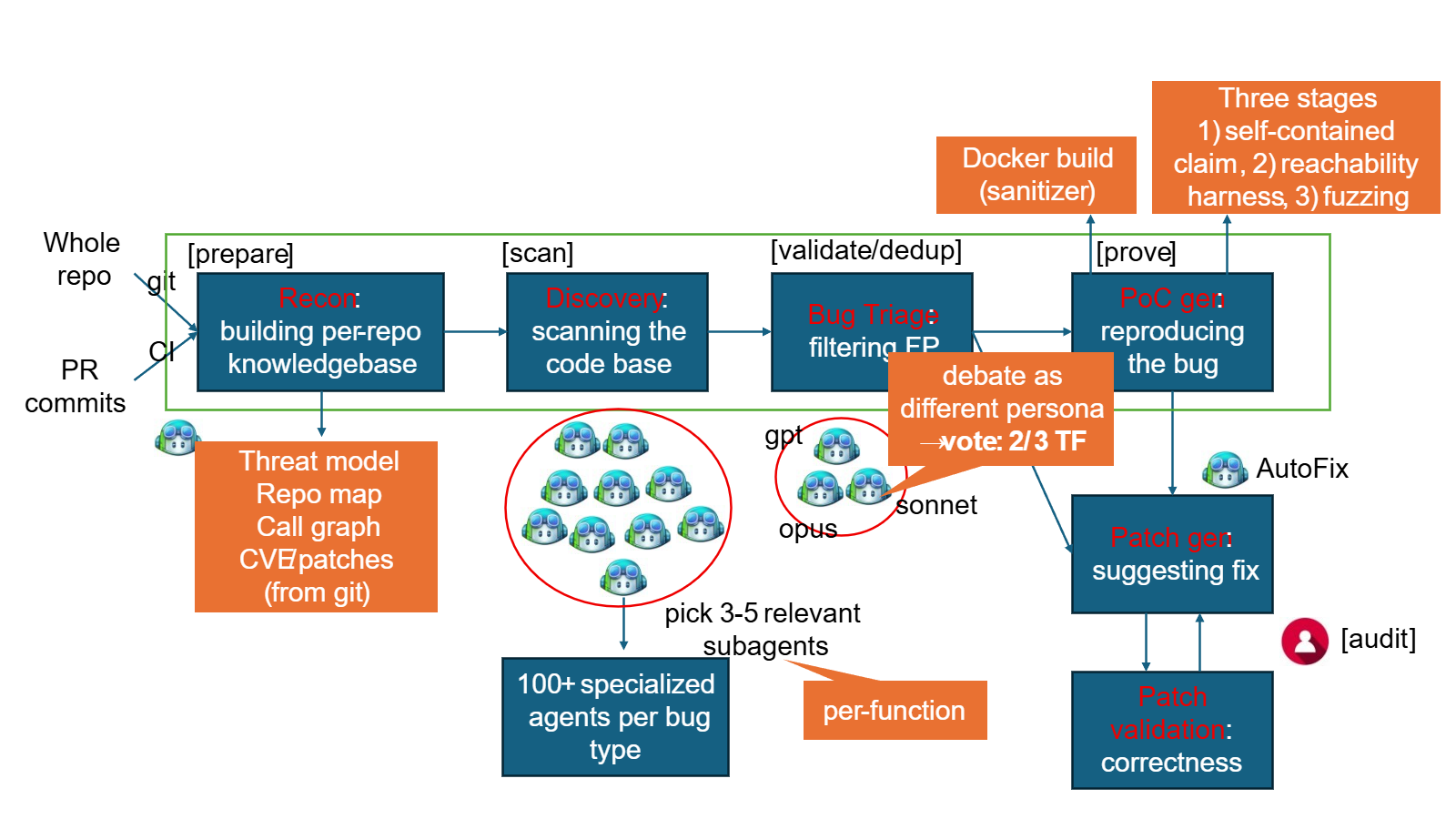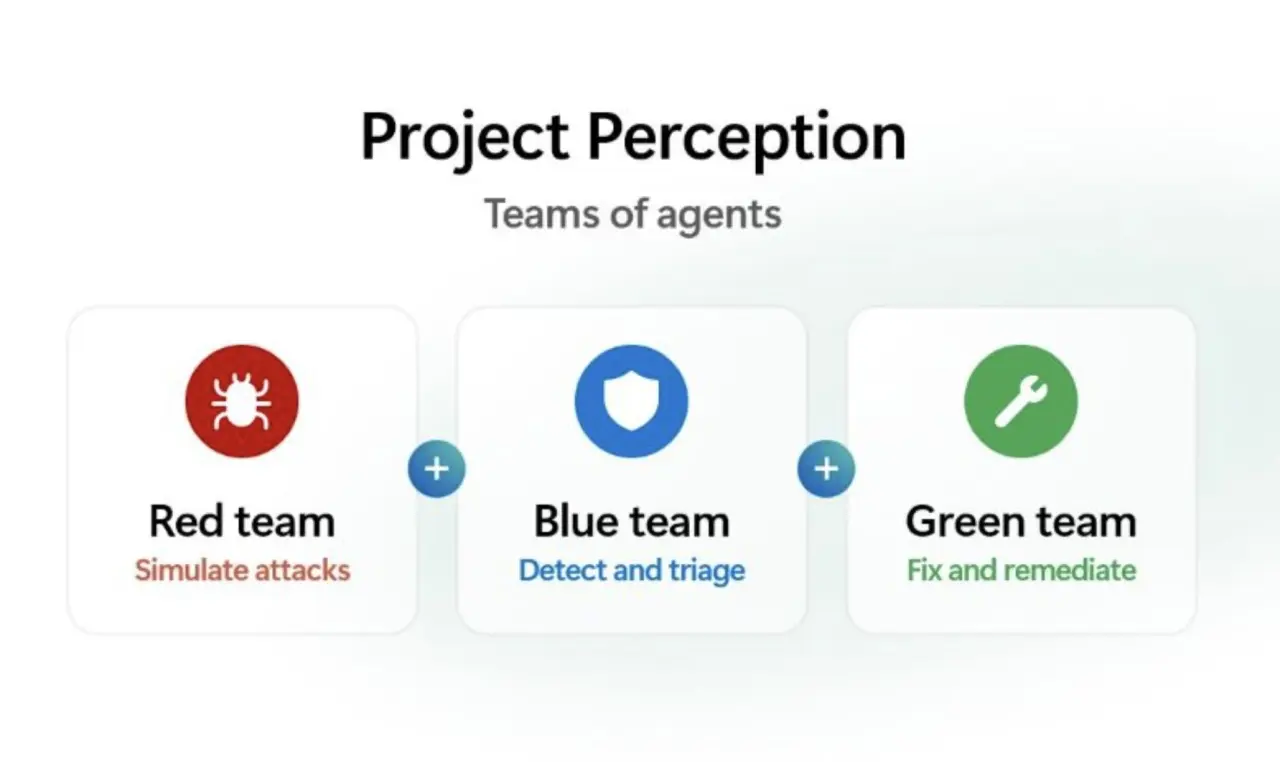
Today Microsoft announced a major step forward in AI-powered cyber defense: our new agentic security system helped researchers find 16 new vulnerabilities across the Windows networking and authentication stack—including four Critical remote code execution flaws in components such as the Windows kernel TCP/IP stack and the IKEv2 service. They used the new Microsoft Security multi-model agentic scanning harness (codename MDASH) which was built by Microsoft’s Autonomous Code Security team. Unlike single-model approaches, the harness orchestrates more than 100 specialized AI agents across an ensemble of frontier and distilled models to discover, debate, and prove exploitable bugs end-to-end.
The results speak for themselves: 21 of 21 planted vulnerabilities found with zero false positives on a private test driver; 96% recall against five years of confirmed Microsoft Security Response Center (MSRC) cases in clfs.sys and 100% in tcpip.sys; and an industry-leading 88.45% score on the public CyberGym benchmark of 1,507 real-world vulnerabilities—the top score on the leaderboard, roughly five points ahead of the next entry.
The strategic implication is clear: AI vulnerability discovery has crossed from research curiosity into production-grade defense at enterprise scale, and the durable advantage lies in the agentic system around the model rather than any single model itself. Codename MDASH is being used by Microsoft security engineering teams and tested by a small set of customers as part of a limited private preview.