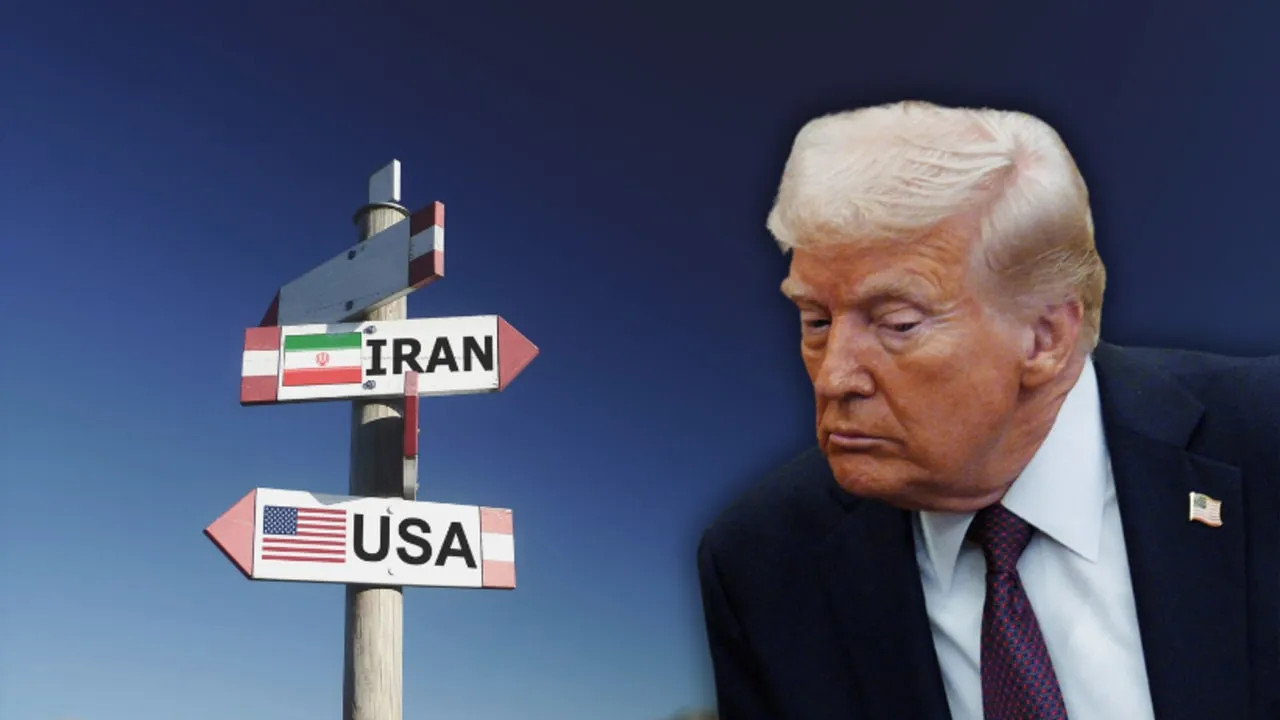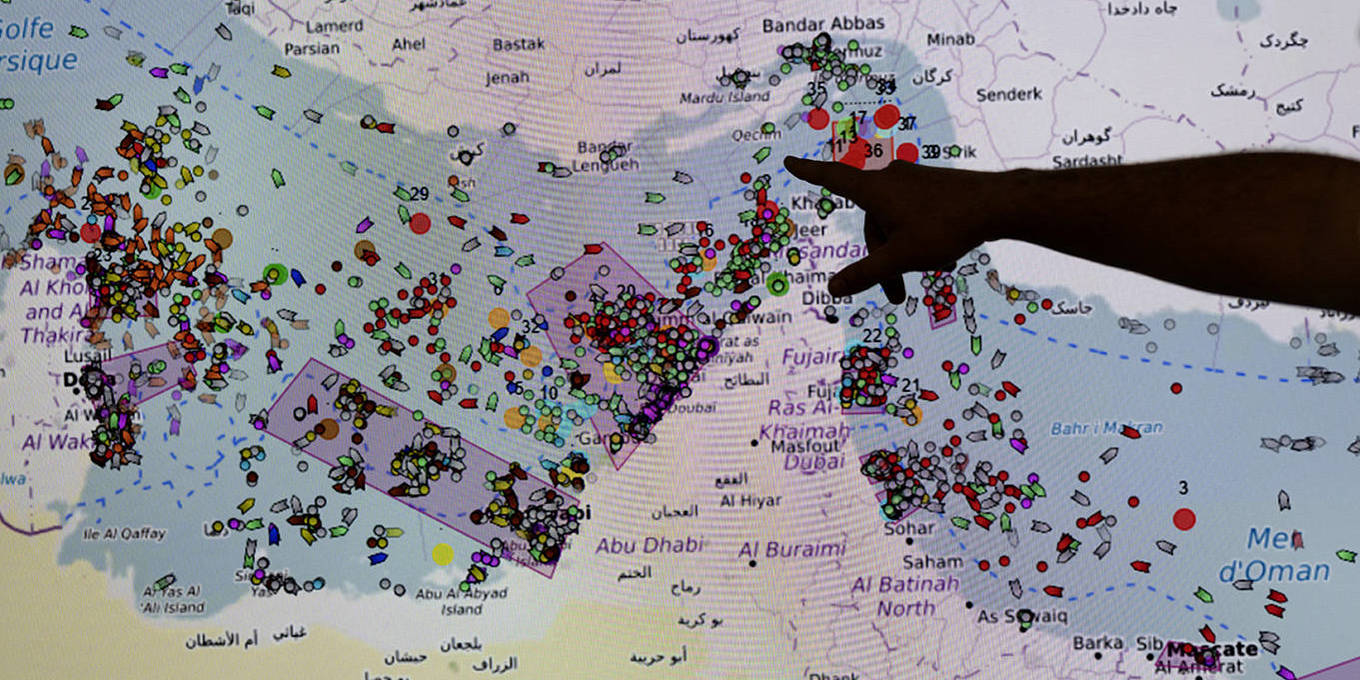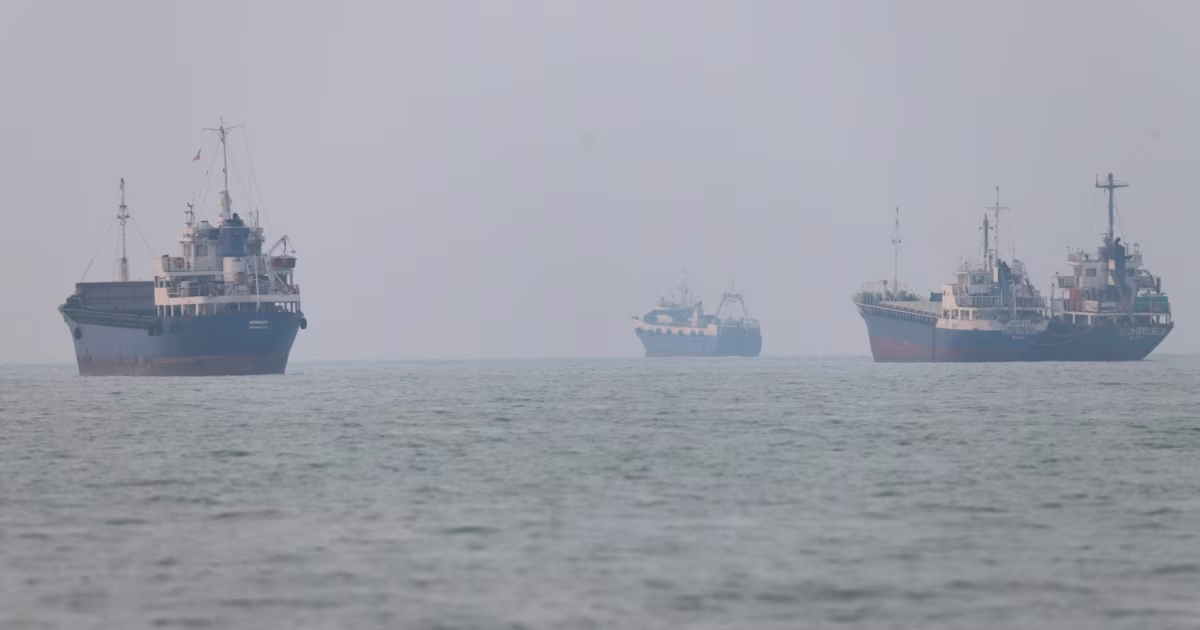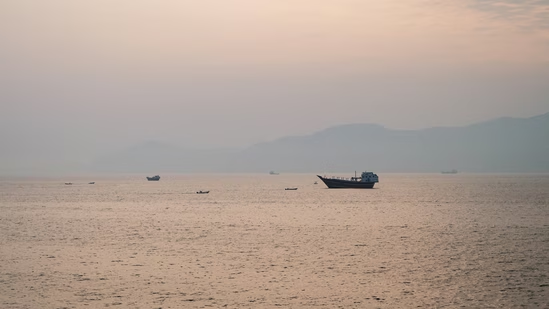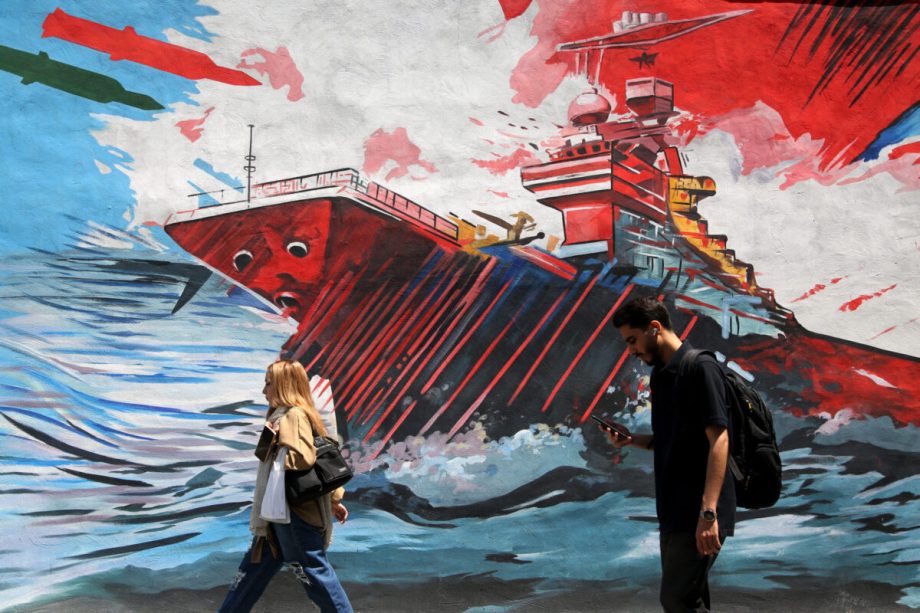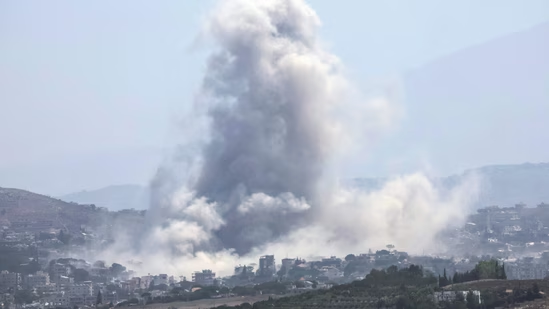
This is how the latest episode of the Iran war seems to be moving, it is being dragged into a more challenging terrain of deeper risks for American power’s ultimate test. The US-Iran war (AFP)Robert Koehane’s bestseller After Hegemony already indicates that the days of hegemony in the sense of supremacy of any superpower are over. Instead, we need a global leader-led cooperation regime. Yet America’s increasing unilateralism, aggressive intransigence, especially under Trump 2.0, seems to refute the theory. From a benign stewardship, it has turned into a power showing its coercive teeth through sabre-rattling more and more on tiny or middle powers like Venezuela in Latin America or Iran in West Asia. But when it comes to offending China, then it thinks twice before engaging, especially in the South China Sea or in the Taiwan Strait. Russia is a massive land power. So, here also the US is cautious. Even NATO’s jitteriness insofar as the Ukrainian issue is concerned indicates its inner turmoil. But remember a year ago when Syrian president Bashar Azad was ousted, the signal it exuded resembled a sense of cascading victory as if a long curtain had been finally removed. That was the beginning of a future US onslaught on the Iranian regime. After more than 140 days of the conflict, dotted by pauses and mediation, the damage is enormous. Even now, the looming shadow of insecurity and dread engulfs commercial vessels transiting through the Hormuz Strait. The US is back in the Gulf of Oman, the critical shipping lane of entry into the oil-rich Gulf. The blockade on Iranian ports has been reimposed. But what about the proportional gain from this huge pressure campaign, the front in which the US fails to make much headway plainly and visibly.On the contrary, different estimates of staggering American cost are being put on the table. One source says that the US has already spent around $37 billion as direct military costs. Some sources argue that US has used and exhausted its stockpile of expensive munitions that can’t be replenished within a short time. It implies an emerging vulnerability scenario not only in the Persian Gulf where the regional States are panicked but also more looming insecurity for the Far East where the US engagement could be weakened.After days of persistent air strikes on Iran, resuming since July 7, the US now turns to Congress for more than $10 billion as additional funding. Needless to say, it is going to compound the burden on average US taxpayers. Already the US has spent around $195 billion for assisting Ukraine and also for bolstering its military deployment in Europe. Now that the US appeals for more funds means the war is going to drag on. It signals that the US administration treats this episode of renewed hostilities as the beginning of another period under the War Powers Resolution. In the US presidential system, war means more power to the executive, but whether a legal reset is a cover to safeguard the executive’s ad-hoc thinking or whether congressional or judicial scrutiny prevails and proves harsher can’t be ascertained decisively. Either way, it signals Washington’s desperation regarding this campaign. It is because as the intensity of the US strikes is increased amidst possible deploying of land forces on Kharg island, it will also strengthen IRGC’s resolve and that of its proxies to mount aggressive counter-offensives in different forms from threatening shipping lanes, taking hostages and strategically targeting critical infrastructure. Needless to say, invading Kharg Island would be a different kind of operation entirely, to holding territory under heavy firing from the mainland shore. This raises the question of how far Iran’s military was actually degraded despite repeated US claims to the contrary. If not, can’t we conclude that the US was fighting in a most unprofessional manner, harming its reputation against an adversary which is not only a well-organised regime but perhaps a player with the rare power to absorb huge shocks. According to a rough estimate provided by the Foundation for Defence of Democracies, the US blockade of Iranian ports and the Hormuz Strait is going to cost Iran approximately $435 million daily. Although that figure is difficult to verify, the department of treasury’s Office of Foreign Assets Control confirmed on July 14 that it sanctioned more individuals, entities, and vessels, now amounting to 200, tied to a network run by Mohammad Hossein Shamkhani. This action was part of the treasury’s ongoing efforts to ramp up economic pressure on the Iranian regime. Here another point abounds. Much like European powers’ refusal to contribute forces to America’s ongoing Iran campaign, its regional allies in the Gulf have refused to send troops to salvage America’s position in the war. Several of the Gulf nations currently absorbing Iranian strikes from Bahrain to Kuwait, Qatar, are important from an American perspective because their cooperation would be crucial in case of unleashing sustained ground operations. But here again the scenario is uncertain. As such, this war is a test of American capability because the war objectives are far from being won. Now the question is how America can sustain its high-intensity engagement on its own because the turf is almost 6,3300 miles away from the American mainland. In the middle of hostilities, another revelation emerged. It relates to reports of detention of Dena Karari, a dual US-Iranian citizen whose passports were not only confiscated but who was also barred from leaving Iran under a coercive exit ban since December 2024. She was interrogated repeatedly and suffered a heart attack shortly before her release. Although Trump publicly credited the release as a goodwill gesture on the part of Iran, its judiciary disputed such a claim. Indeed, small steps like that hold the potential to do miracles, but given the trust deficit between the warring sides, it is perceived to be highly unlikely that a diplomatic backchannel is still alive. (The views expressed are personal)This article is authored by Gouri Sankar Nag, professor & head, department of political science, S-K-B University, West Bengal.
Deconstructing the direction of the Iran conflict
This article is authored by Gouri Sankar Nag, professor & head, department of political science, S-K-B University, West Bengal.
1,005 words~5 min read