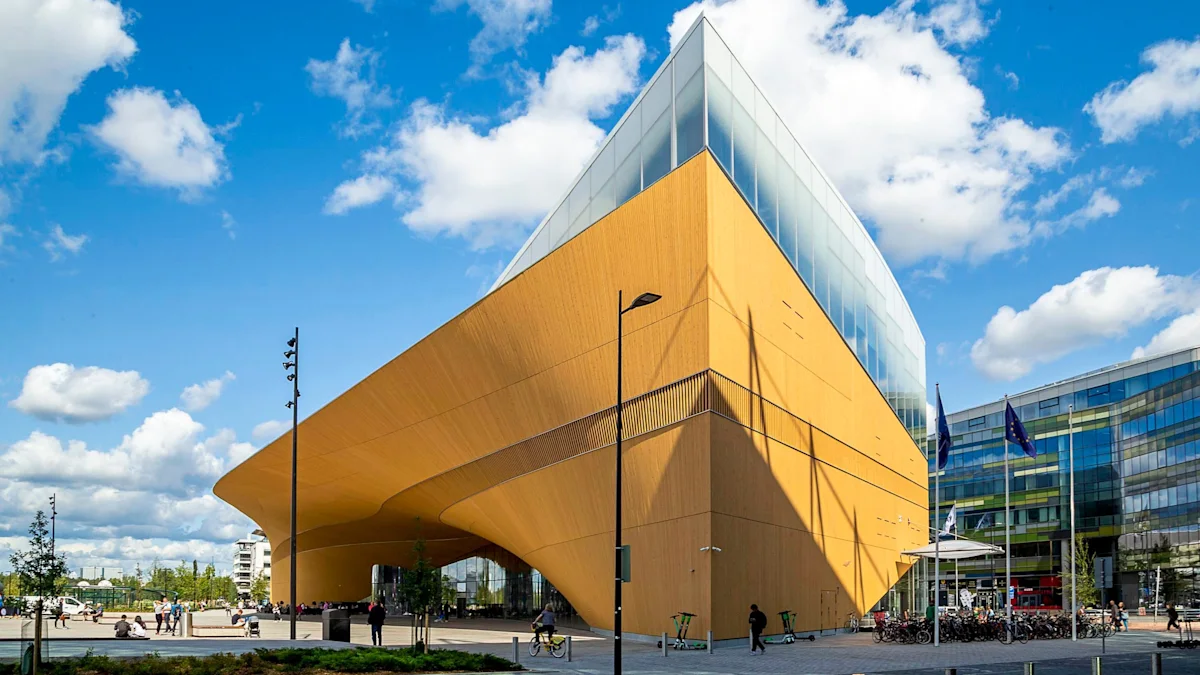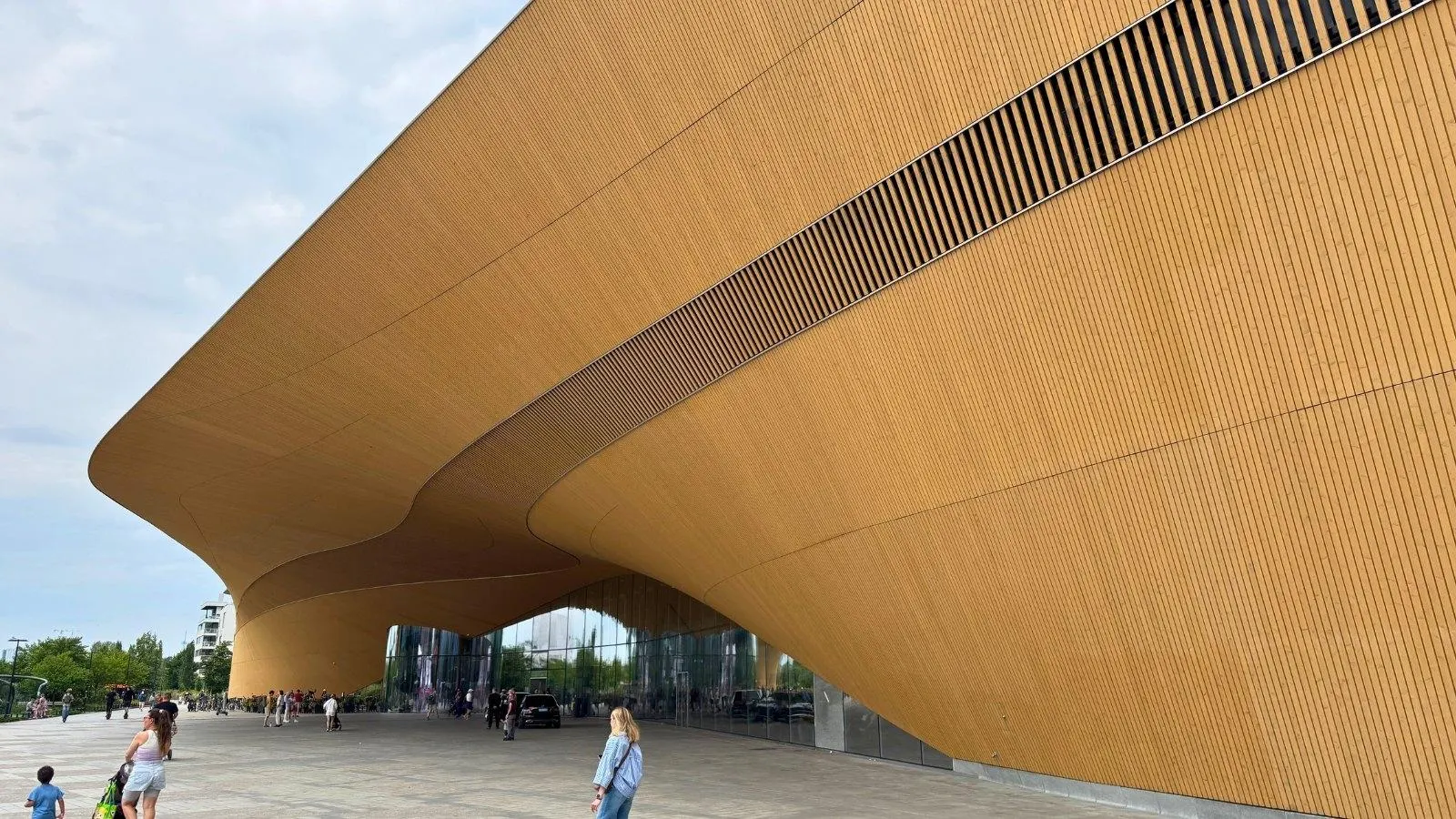
The entrance to Oodi, Helsinki's Central Library, has a wow factor.David NikelLibraries do not usually appear near the top of a city break itinerary. Helsinki’s Oodi Central Library is a persuasive argument that they should.Its sweeping wooden exterior has made Oodi one of the Finnish capital’s architectural landmarks, yet the building becomes more interesting after stepping inside and seeing how residents use it.Children play beneath trees on the upper floor. Friends gather over coffee. People work, sew, record music, play video games and even operate 3D printers. Others simply sit by the windows and watch Helsinki pass by.Oodi contains books, but describing it only as a library misses the point. It is Helsinki’s public living room.Nordic Design Beyond AppearancesNordic design is often reduced to pale wood, clean lines and an abundance of natural light. Oodi has all three, but it also demonstrates the more important principle behind the style: design should improve everyday life.Designed by Helsinki-based ALA Architects, the building opened in December 2018. Its spruce-clad exterior rises in a broad curve, creating an entrance canopy that appears to pull the adjoining Citizens’ Square into the building. Oodi sits directly opposite Finland’s Parliament House, a location that reinforces its civic role.The exterior is dramatic, but the architecture does not compete with the people inside. Generous open spaces and carefully separated activity zones make the building relatively easy to understand without studying a floor plan.Three Floors With Different PurposesEach of Oodi’s three floors has a distinct character.Oodi library offers this outdoor terrace that helps the building feel like a public lounge.David NikelThe ground floor is the busiest, functioning almost like an extension of the city streets outside. It includes a café, information services, event spaces and Kino Regina, a public movie theater. Visitors making a quick stop can also return books or browse recent releases.The middle level rethinks what a library can provide. Its studios, meeting rooms, gaming spaces and urban workshop support learning through participation rather than observation.Equipment available for use includes sewing machines, recording studios, 3D printers, a laser cutter and facilities for editing video and audio. These are practical resources that would be expensive or difficult for many people to access independently.Then comes the contrast. Known as ‘book heaven’, the upper floor is bright, open and comparatively peaceful, at least, before you get to the children’s play-focused section.An undulating white ceiling appears to float above bookshelves, reading areas and living trees. Broad windows fill the space with daylight, while the citizens’ balcony overlooks the surrounding cityscape.This is the floor that looks most like a conventional library, although it feels closer to a public lounge.Designed With The PublicOodi’s sense of public ownership is not accidental. Helsinki residents were involved throughout its lengthy planning process.More than 2,000 ideas were gathered from the public during an early consultation, with residents requesting quiet areas, creative facilities, family services and spaces where people could meet without needing to spend money. Those wishes later influenced the architectural competition and the services provided inside.That history helps explain why Oodi feels used rather than merely admired. The activities helped shaped the building from conception rather than being added into the architecture as an afterthought.Oodi shows that good civic architecture need not be grand, solemn or intimidating. Sometimes, its greatest achievement is simply giving people an attractive place to spend time without asking them to buy anything.MORE FROM FORBESForbesWhy Helsinki Is A Standout Port On A Baltic CruiseBy David NikelForbesNorway’s Hidden Gravel Roads Offer A New Way To Explore The CountryBy David NikelForbesThe Dark Side Of Norway’s Northern Lights Tourism BoomBy David Nikel
How Helsinki’s Oodi Redefines What A Public Library Can Be
Helsinki’s Oodi Central Library combines striking Nordic architecture with workshops, studios, meeting spaces and a public living room open to everyone.
596 words~3 min read