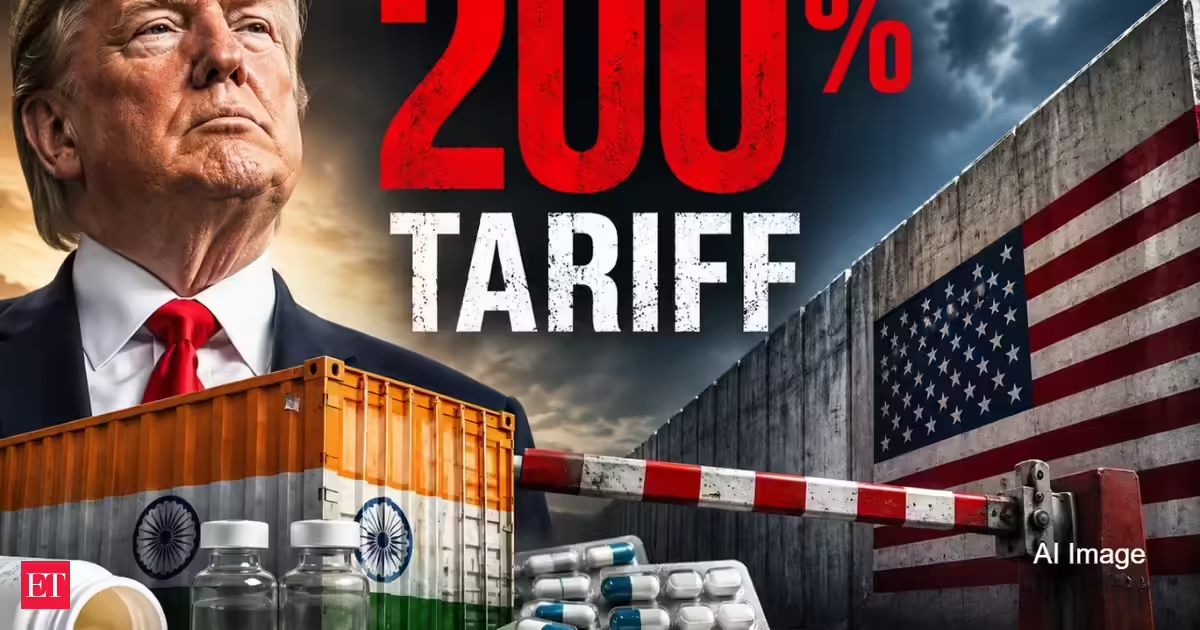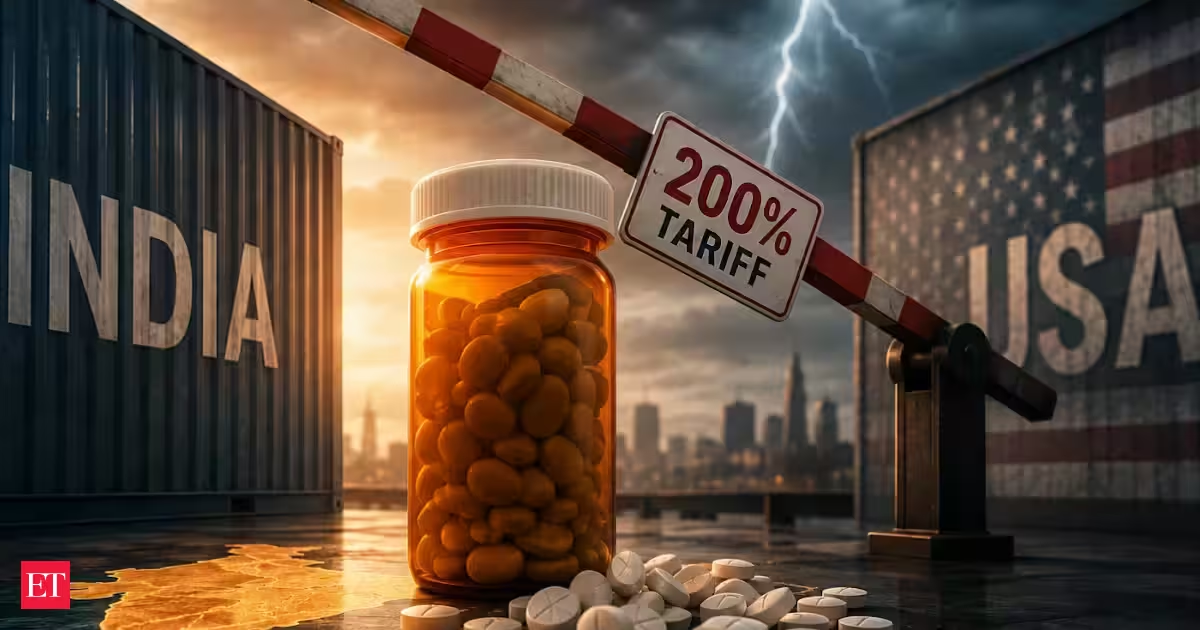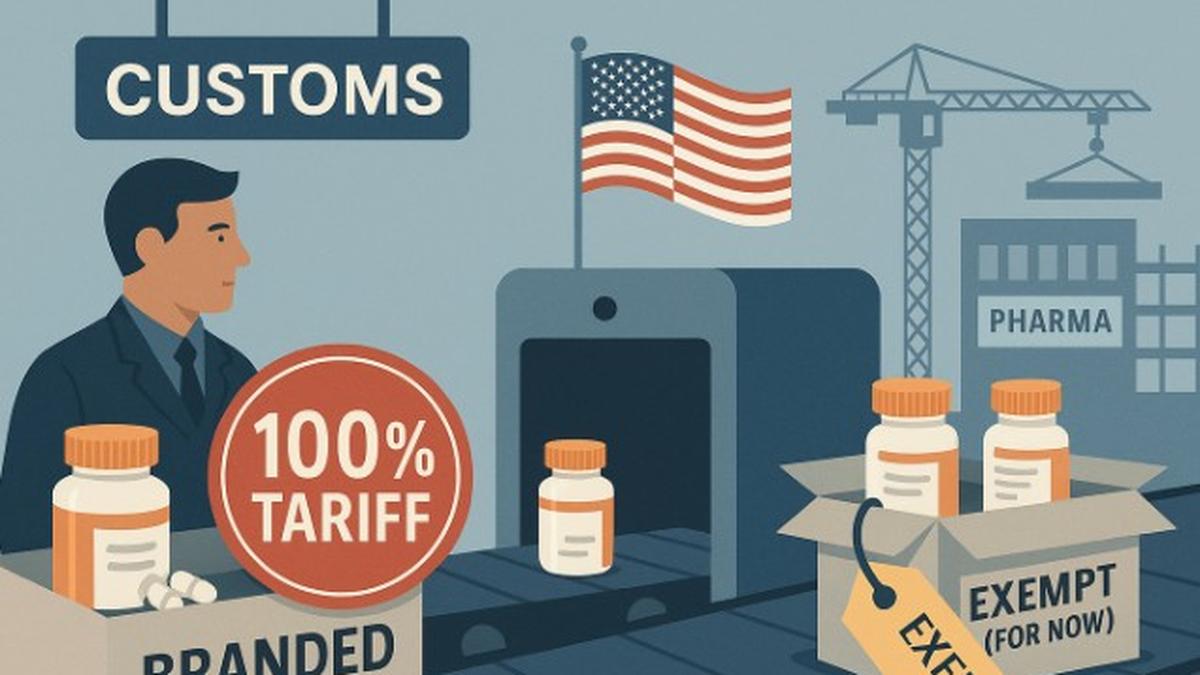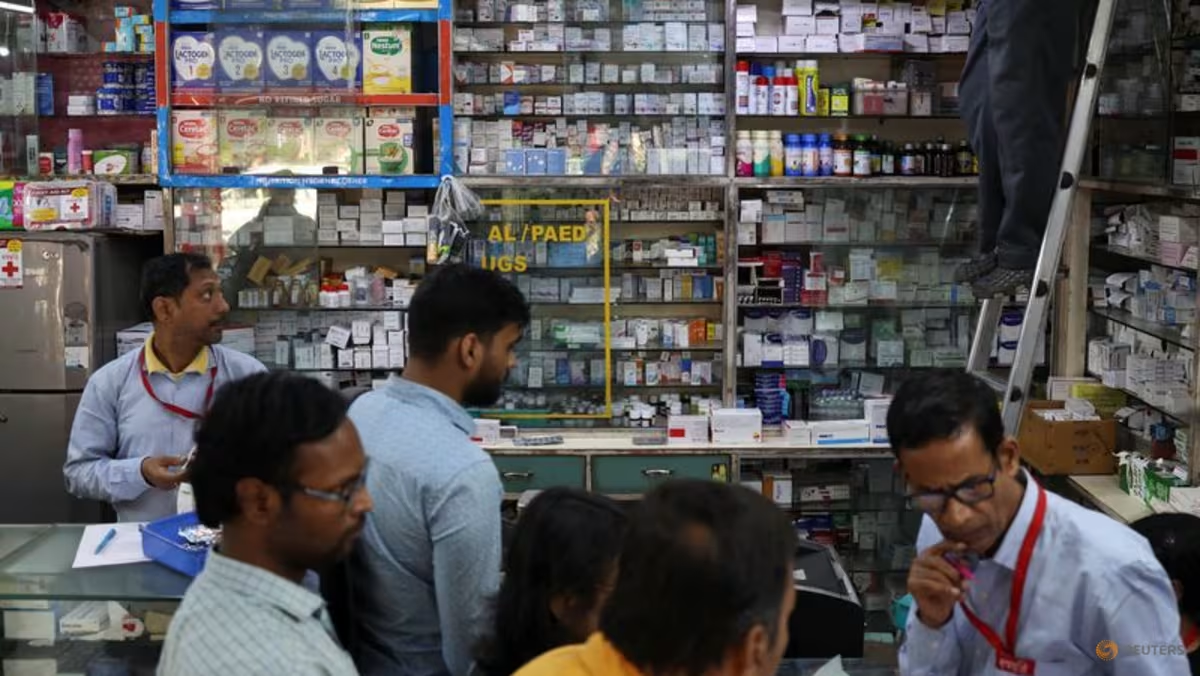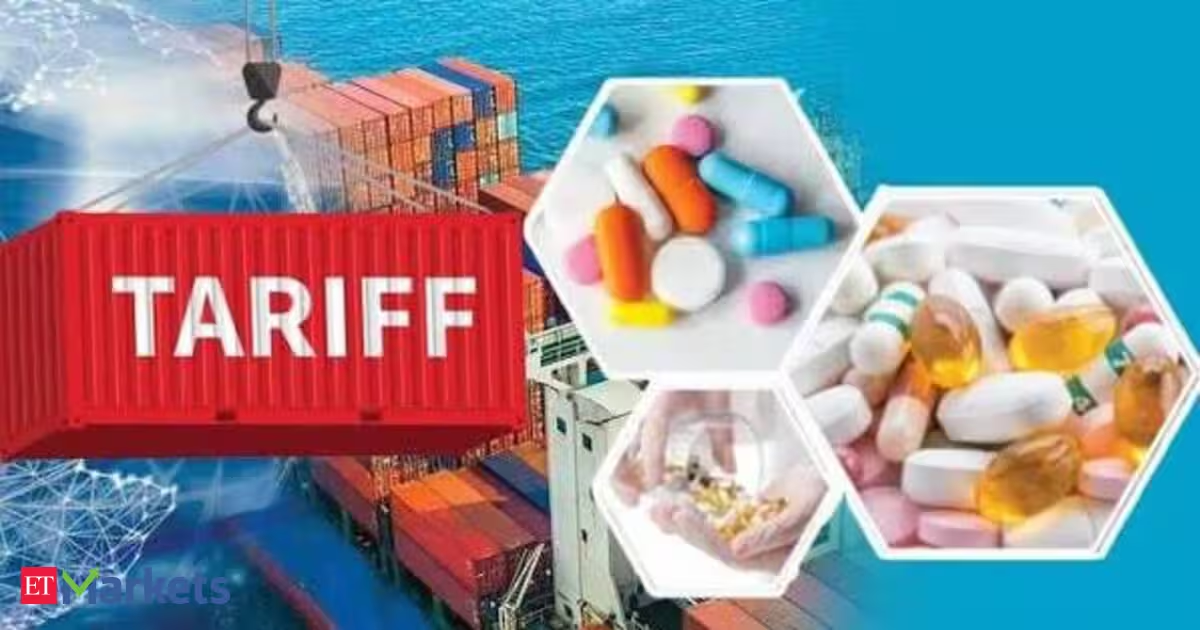
Sujit, leisurely scrolling through his phone, gets an alert that launches him into an animated rant. Shreyas, caught in the splash zone, finds out about the issue and tries to calm him down.Sujit: He is at it again. A million things to solve, but the US President’s obsession with drug prices, right after you know what, is truly astounding.Shreyas: Let me guess. A 1000 per cent tariff on drugs from tomorrow.Sujit: Close enough. Trump has finally (yet again) announced a 100 per cent tariff on generic drugs from August 2028. This will increase to 200 per cent a year later. That is unless you have a plant producing generic drugs in US, i.e, reshoring.Shreyas: That hits close to home. Aren’t Indian companies highly exposed to the US generics market?Sujit: Yes, if the tariffs take hold, Indian pharmaceutical companies, which derive between 30-70 per cent of their revenues from the US generics, will be impacted. Some have higher exposure (Aurobindo, Dr. Reddy and Biocon) while some have normal 30-35 per cent exposure (Sun Pharma, Lupin, Cipla). India-facing companies are better placed in the whole fiasco (Mankind, Ajanta, Alkem, IPCA).Shreyas: So what options do companies have here, again assuming the tariffs take hold?Sujit: Firstly, most Indian companies have a manufacturing presence in the US, that can at best shoulder a part of the shift even if not entirely. To retain the business, companies must consider investing in the US. But the constant policy flip-flops will likely push companies to be watchful, even at the cost of business loss. Even assuming a firm policy stance over the next three years (Trump’s term ends in about 900 days) the economics of production is a whole new ball game.Shreyas: Please elaborate.Sujit: The other day, I found that Indian statutory monthly minimum wage of $55 in 2024 in rural areas is less than even Bangladesh, Vietnam, or Malaysia – forget US or Europe. Land, power, water, regulatory costs (including incidentals) are a fraction of costs compared to the US. At such high production costs in the US, Indian companies would still face generic price erosion of 6–8 per cent even in a good year. The Indian companies have barely managed to fix a portfolio comprising new launches, high-margin products and a base portfolio of generics to cope with steep price erosion. To reimagine the same in a high cost environment is a tough ask. The likely question would be how much of the portfolio are companies willing to let go.Shreyas: How will this impact the US? I am guessing it will be in a fix too.Sujit: US pharmaceutical consumption is 80- 90 per cent generic and close to half of that is imported from India. Expect high prices and drug shortages on tariff implementation. Depending on domestic shortfalls, drug manufacturers will be able to pass on 50 per cent of the tariff (good domestic availability) to 90 per cent (low or nil domestic availability) to US customers. Even now, with a fair amount of competition, the drug shortage list has expanded. With the introduction of tariffs and landed price, which is twice-thrice that of domestic production cost, the shortage list is likely to widen, despite price transfer.Shreyas: Got it. A peculiar proposal, one which is likely to hurt both buyers and sellers and leave everyone else confused.. But with earnings discussions underway, we might get a glimpse of how companies are reacting to it.Sujit: Yes, will be interesting to hear their views on this latest episode of Trump tariffs.Published on July 25, 2026
Simply Put: Tariffs on generics
Friends discuss the impact of proposed tariffs on generic drugs, highlighting potential consequences for Indian companies and US consumers.
587 words~3 min read