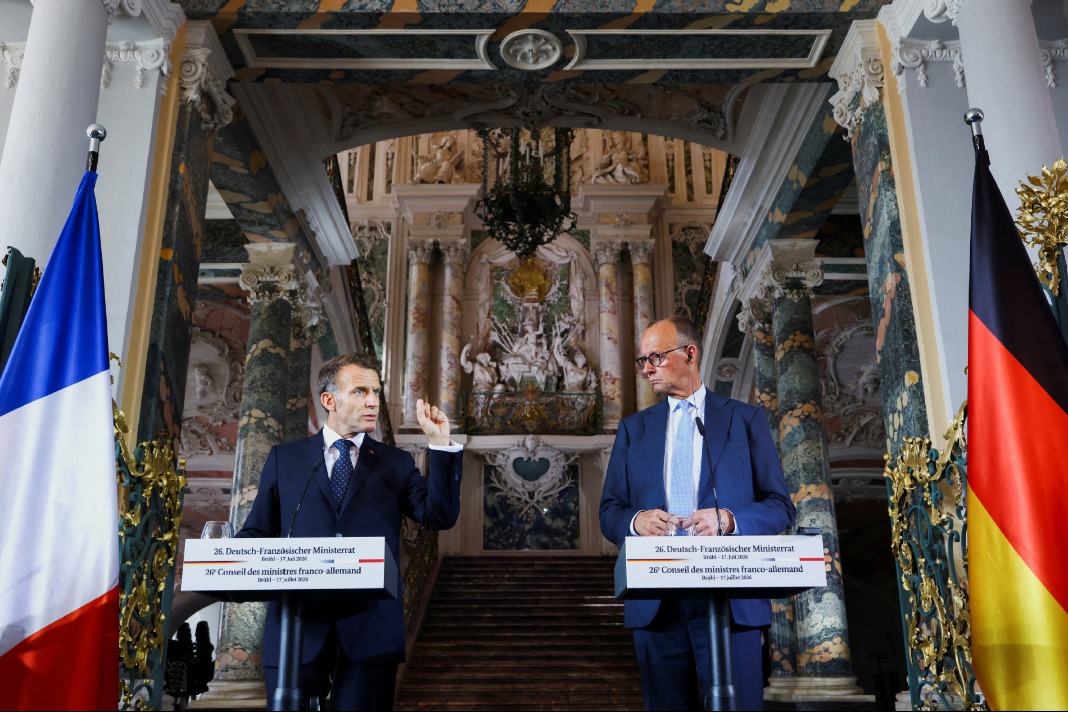
German Chancellor Friedrich Merz and French President Emmanuel Macron hold a news conference at Schloss Augustusburg in Bruehl, Germany, July 17, 2026. [Photo/Agencies]
Europe is accelerating its drive for greater self-reliance on defense, a move that experts say faces a host of challenges stemming from both internal divisions and external pressures. They also caution that shifts in Europe's defense posture could result in heightened regional military tensions.
Last week offered a vivid illustration of this ambition when Germany and France announced a historic first: German troops would participate in a French nuclear exercise. This builds on earlier initiatives, including the announcement of the Anti-Ballistic Missile Coalition.
A joint declaration released by the French presidency on July 13, signed by leaders from Denmark, France, Germany, Italy, the Netherlands, Norway, Spain, Sweden, the UK, and Ukraine, described the coalition as "purely defensive", citing the growing threat of ballistic missiles and the increasing importance of European defense capabilities.
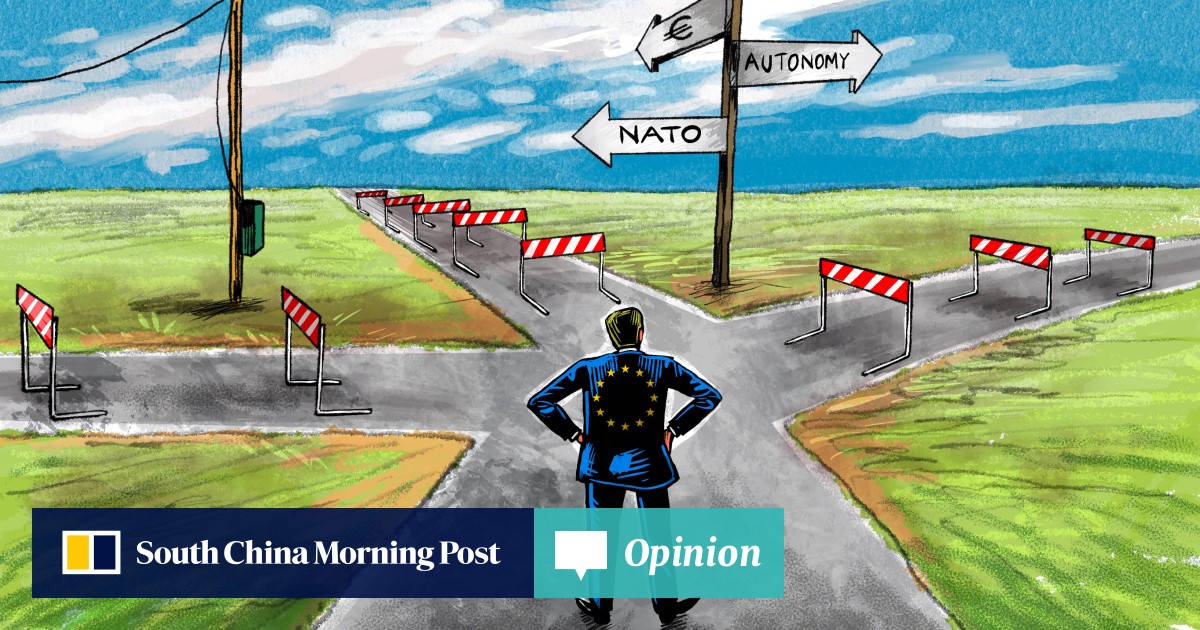
Experts say these initiatives underscore a broader European push for strategic autonomy, driven by the prolonged war in Ukraine and increasingly shaky trans-Atlantic ties.