C
onfronted with war on its eastern borders, the weakening of the transatlantic bond and the rise of authoritarian regimes, the European Union is experiencing a moment of strategic urgency. If it wants to preserve its autonomy, it must strengthen its defense capabilities – particularly in next-generation military technologies. If it fails to act, Europe will remain vulnerable to external pressures – both economic and geopolitical – and dependent on the United States and China. Ultimately, the very survival of the European project and its core values would be at risk.
At the same time, the overwhelming dominance of US capital markets reveals another European vulnerability: its incomplete financial architecture. A Europe that is strategically weak and financially fragmented cannot carry weight in a world where power is measured by technological and military capabilities and by capital flows.
We propose the creation of a new European architecture for the defense of the future – a framework that is at once technological, industrial, and financial – designed to achieve strategic autonomy and to promote the integration of European financial markets.
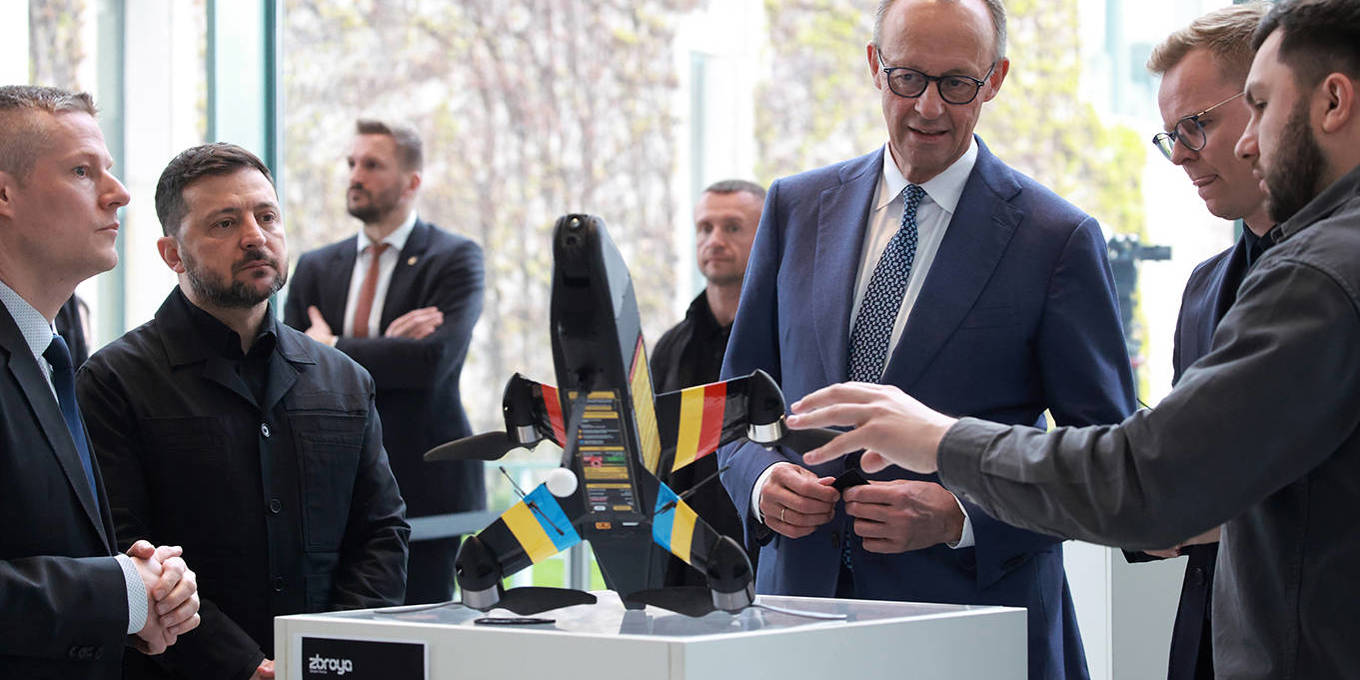
This initiative, distinct from military efforts related to Ukraine, could be launched by a coalition of willing countries acting swiftly. It would complement the European Commission's initiatives, without replacing traditional defense spending (personnel, ammunition, tanks, etc.). Its goal is clear: to develop European sovereignty in next-generation defense technologies – military cloud, satellite constellations, drones, air-defense shields, robotics, artificial intelligence, advanced softwares, quantum computing, cyber-defense and the processing of critical minerals.