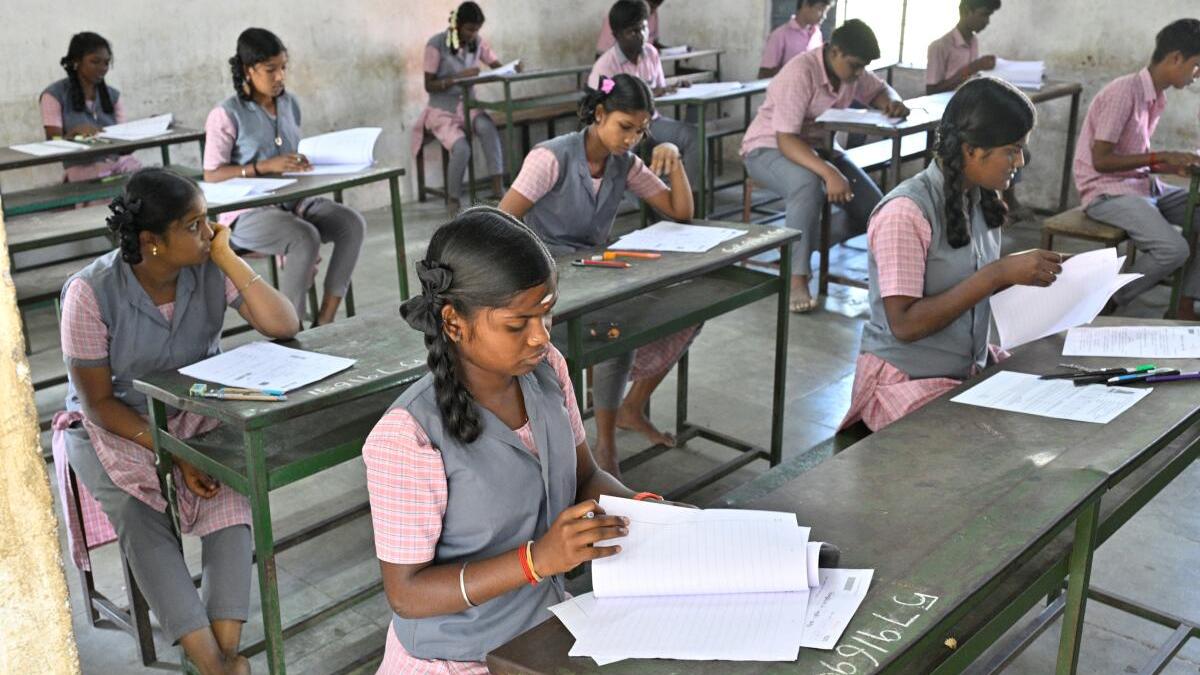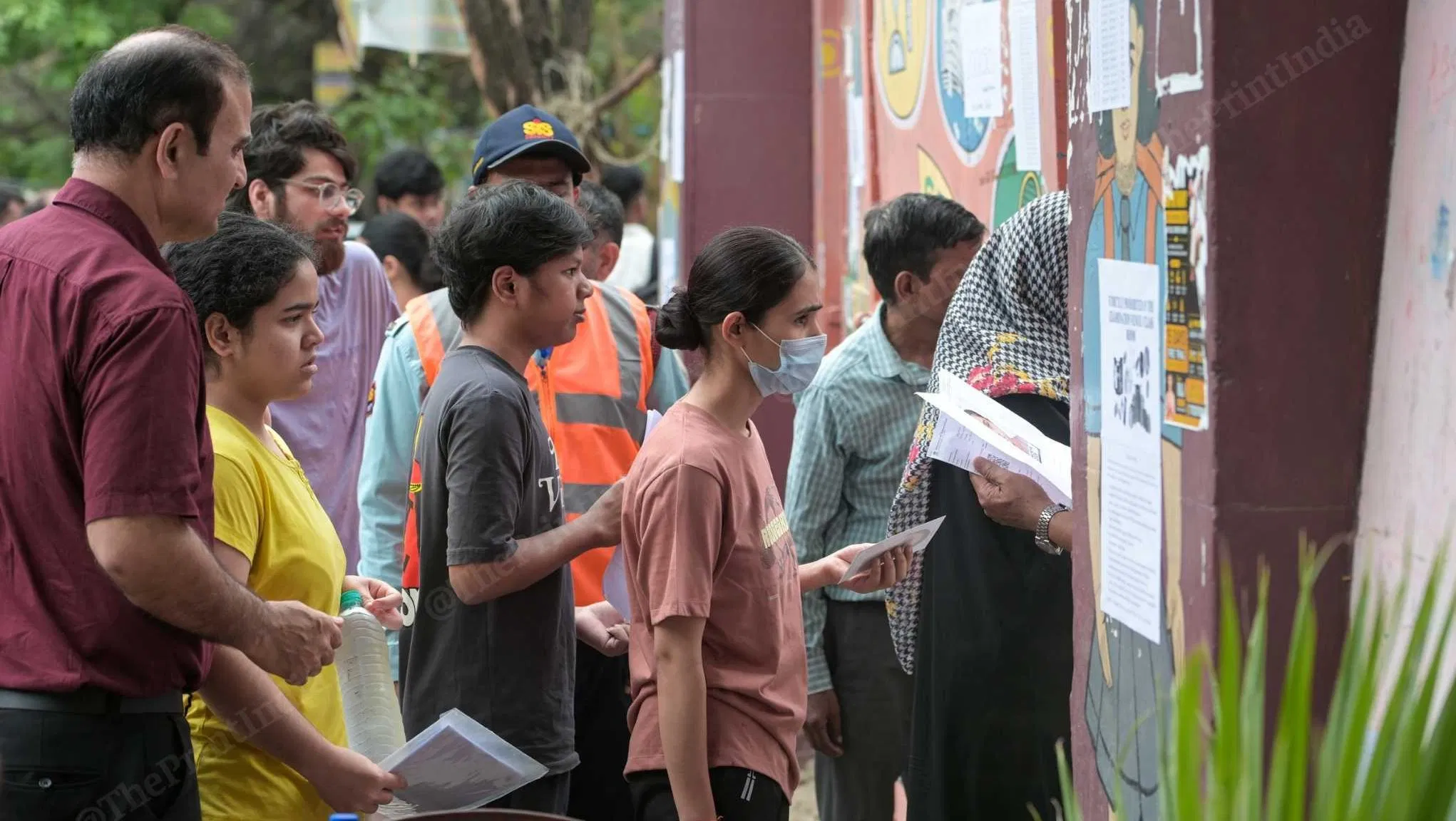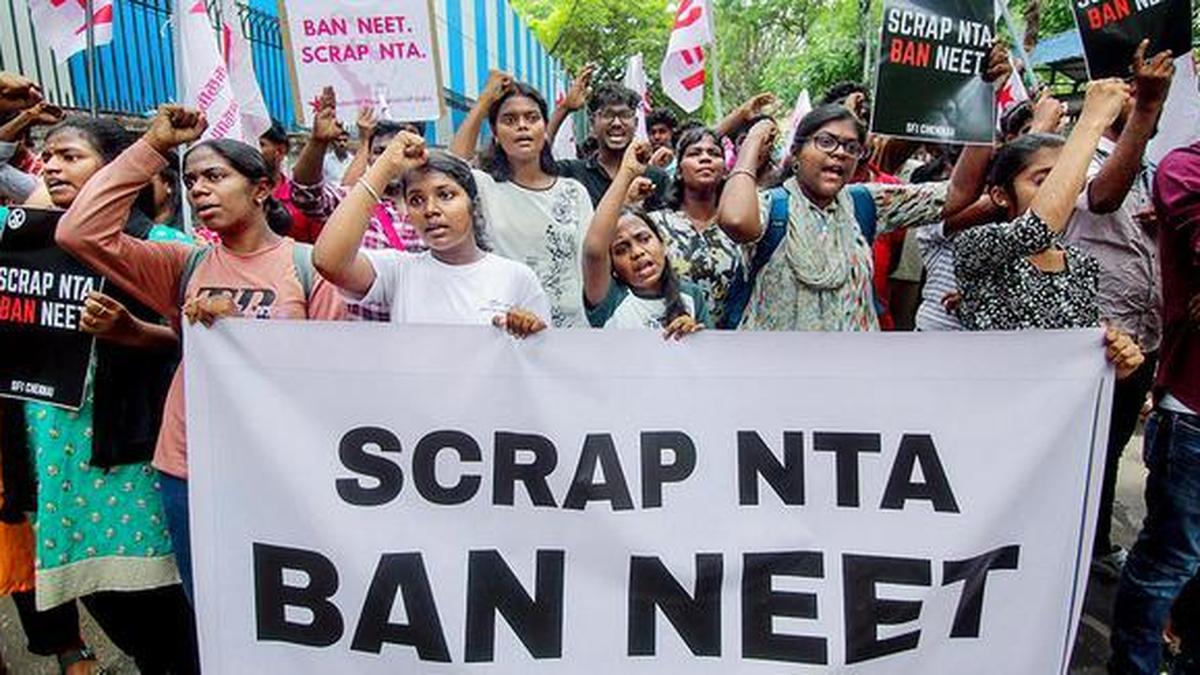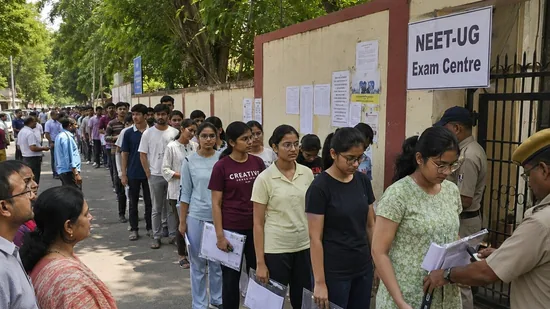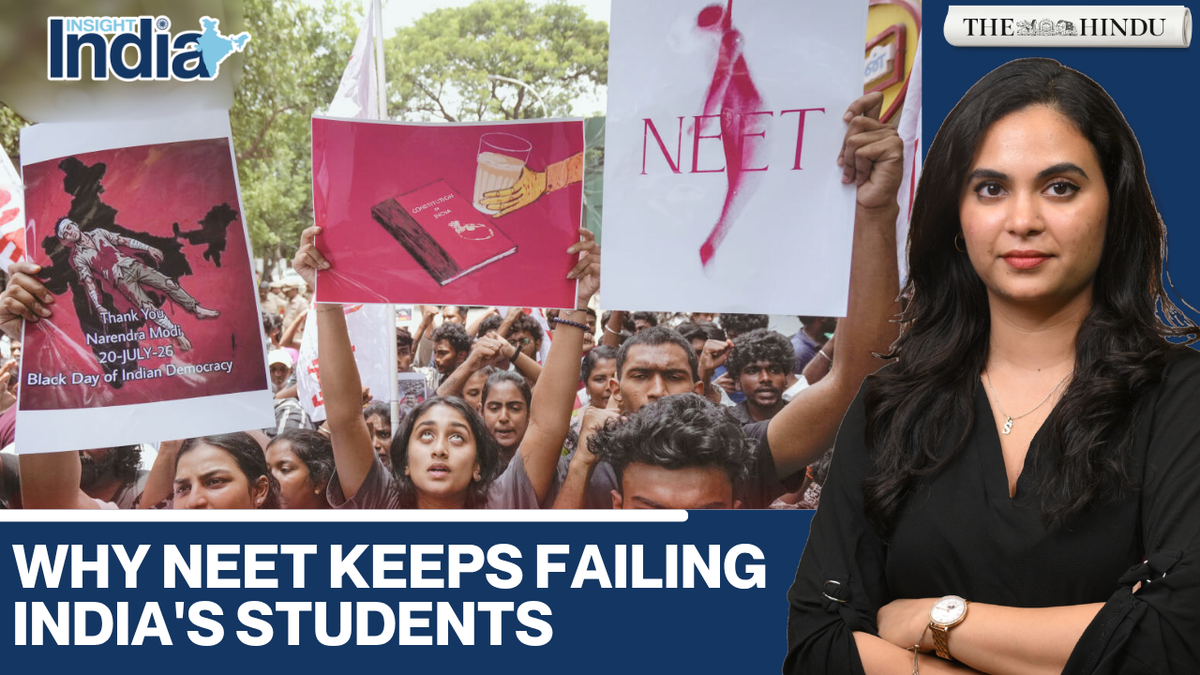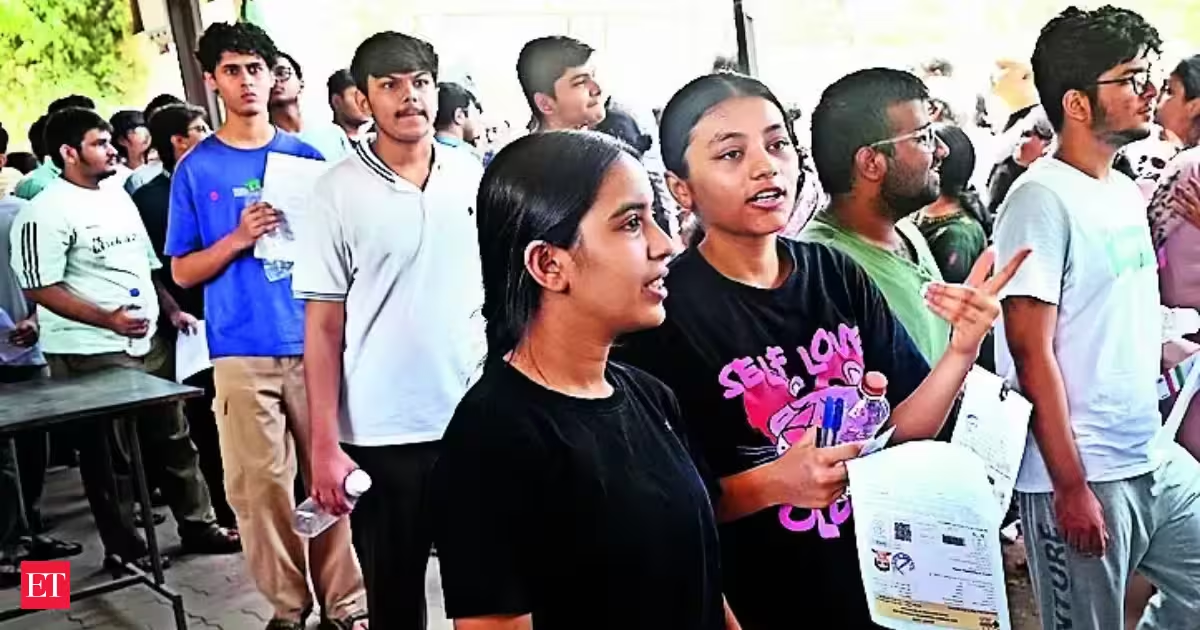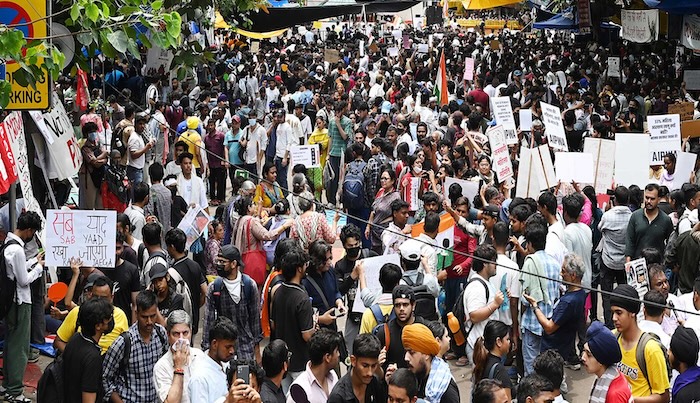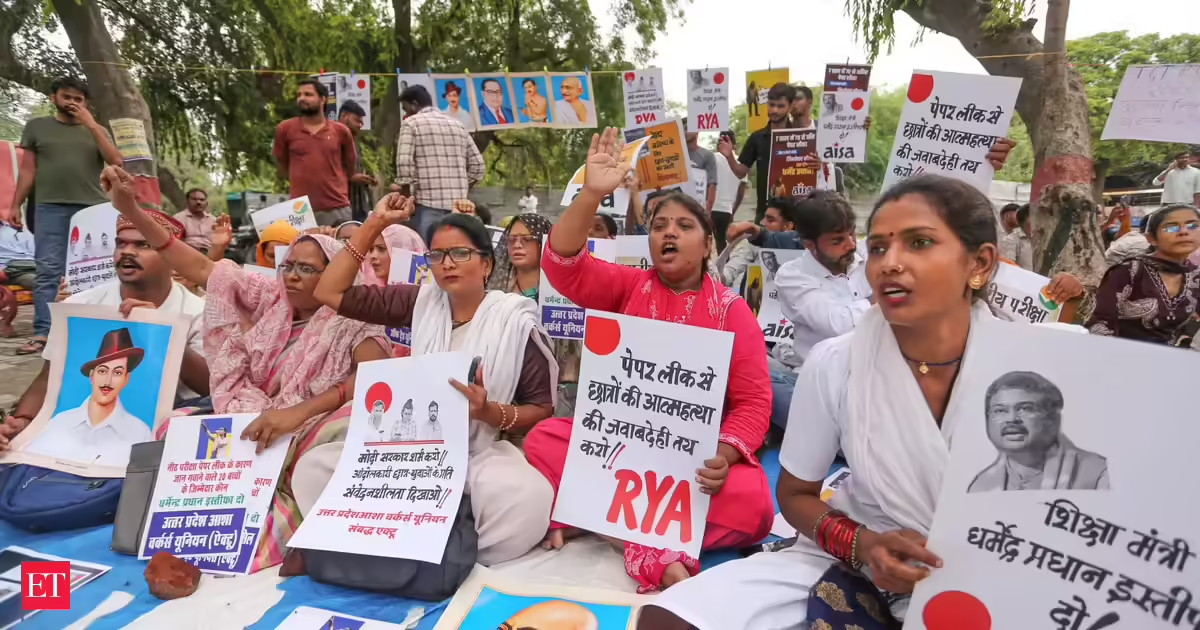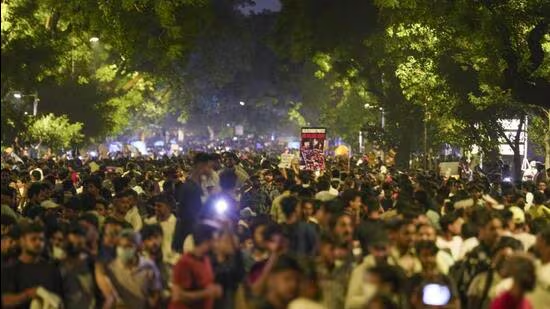
The controversy surrounding the National Eligibility cum Entrance Test (NEET) is no longer about a leaked question paper or an examination conducted badly. It has become a test of the Indian state itself: Whether it can protect merit, respect federalism, admit institutional failure and respond to the anger of young citizens without treating them as a law-and-order problem.Demonstrators at the site during the protest by the Cockroach Janta Party (CJP) demanding the resignation of Union education minister Dharmendra Pradhan over the NEET paper leak issue, at Jantar Mantar in New Delhi on Friday. (PTI Photo)A common medical entrance examination has an undeniable logic. It offers a national benchmark, reduces multiple tests and can curb arbitrary selection and capitation practices. But uniformity has value only when the process is unquestionably fair. Centralisation also creates a single point of failure. When one chain is compromised, the future of millions is placed in doubt.That danger is no abstraction. The 2024 NEET examination was clouded by a paper leak; the Supreme Court found breaches at Hazaribagh and Patna, though not enough evidence of a system-wide failure to cancel the entire test. UGC-NET was also cancelled in 2024 after official inputs indicated that its integrity might have been compromised. NEET-UG 2026 then had to be conducted again. Different cases; together they reveal a system pushed to the edge of public disbelief.For a student, this is not an administrative lapse. It can mean years of preparation, family sacrifice, coaching costs and endurance rendered meaningless. A leak does not merely disturb a timetable; it transfers opportunity from the diligent to the dishonest. It tells the young that merit is celebrated in speeches but can be defeated by money, access or manipulation.I am reminded of my days at Delhi University. Atal Bihari Vajpayee would come to the campus to mobilise students against the government of the day. Arun Jaitley and Vijay Goel, then faces of the ABVP and later Union ministers, were often seen on the stage with him. Vajpayee spoke forcefully, but never contemptuously, about students. He emphasised their positive role in democracy and disapproved of coercion against the young. His instinct was to engage, persuade and listen.Dialogue over distrustHe would have been deeply uneasy with what Delhi has recently witnessed. The state has a duty to maintain order, and protesters must remain peaceful. But tear gas, baton charges, detentions, metro closures and restrictions on movement cannot answer the question at the heart of the agitation: Can the examination system be trusted? Force may disperse a crowd; it cannot restore credibility.Why did structured dialogue with student representatives not begin before the monsoon session of Parliament? Why did the government wait until anger hardened, streets filled and the opposition found an obvious opening? Political parties inevitably enter a vacuum created by official silence. The answer is not to dismiss students as partisan instruments, but to deny politics that vacuum through early engagement, transparent disclosure and time-bound action. Dialogue after confrontation cannot erase the cost of dialogue delayed.A more troubling allegation has surfaced: That leaks in entrance and recruitment examinations may be used to accommodate ideologically committed but otherwise undeserving candidates. Similar suspicions have been voiced earlier against some regional parties. There is no substantive evidence to treat this as fact, and it would be irresponsible to do so. Yet opaque investigations and the absence of visible accountability allow suspicion to acquire the appearance of truth. The strongest answer is not indignation, but verifiable transparency.Federal concernThe federal concern is equally real. Tamil Nadu has consistently opposed NEET and its assembly has formally sought exemption. Critics have questioned whether one centrally controlled examination can fairly reflect differences in school boards, languages, rural access and social conditions. Education is in the Concurrent List. States run medical colleges and school systems and provide much of the machinery through which NEET is conducted.Cooperative federalism cannot mean that states supply buildings, police, magistrates and invigilators while remaining peripheral to design and oversight. The Union cannot distrust state capacity while relying upon it for execution. India may need national standards; it does not necessarily need a national operational monopoly.A better model would be a federated national assessment system. A national authority could prescribe the syllabus, psychometric standards, scoring rules, security protocols and audit requirements. Accredited state boards, universities and regional consortia could conduct the examination through certified centres. Multiple equivalent question sets, encrypted transmission close to examination time, random allocation, tamper-proof digital trails and independent audits would distribute risk without lowering standards.International examinations show that common standards can be delivered through accredited networks across countries. Their credibility rests on professional management, secure procedures, audits and enforceable consequences, not on one agency physically controlling every examination room. India should be able to trust, certify and supervise its own institutions with the same confidence.Reform and rebuildReform should also reduce the tyranny of a single day. Candidates should have two opportunities each year, with the better score retained and made portable across participating institutions. This would reduce panic, moderate the coaching-driven obsession with one attempt and protect candidates against illness, disruption or official failure.The public examinations law provides stronger punishment for organised malpractice, but criminal law largely operates after the breach. Prevention requires professional staffing, less opaque outsourcing, cybersecurity and process audits, protected whistle-blowing channels, detection of unusual result patterns and personal accountability. When official failure forces a re-examination, candidates deserve compensation. Every major breach should produce a public report explaining what failed, who was responsible and what has changed.The students on the streets are not asking to escape competition. They are asking for a competition they can trust. This is an aspirational generation, less willing to accept authority without accountability and deeply invested in merit, quality and ethics. It expects the state to practise the values it prescribes.NEET need not be abandoned because its administration has failed. But it must be rebuilt around fairness, federal partnership, professional competence and democratic restraint. Vajpayee understood that listening to students did not weaken the state; it enlarged democracy. The real examination is now for the government: Can it protect merit without centralising fragility, maintain order without suppressing dissent and recover trust before another generation concludes that the system is neither fair nor capable? sureshkumarnangia@gmail.comThe writer is a retired Punjab-cadre IAS officer. Views expressed are personal.
Guest Column| NEET was never neat: Test of merit, federalism, restraint
From compromised exams to police crackdowns, the centralisation of medical admissions has become a test of the Indian state’s democratic restraint and federal ethos.
1,045 words~5 min read