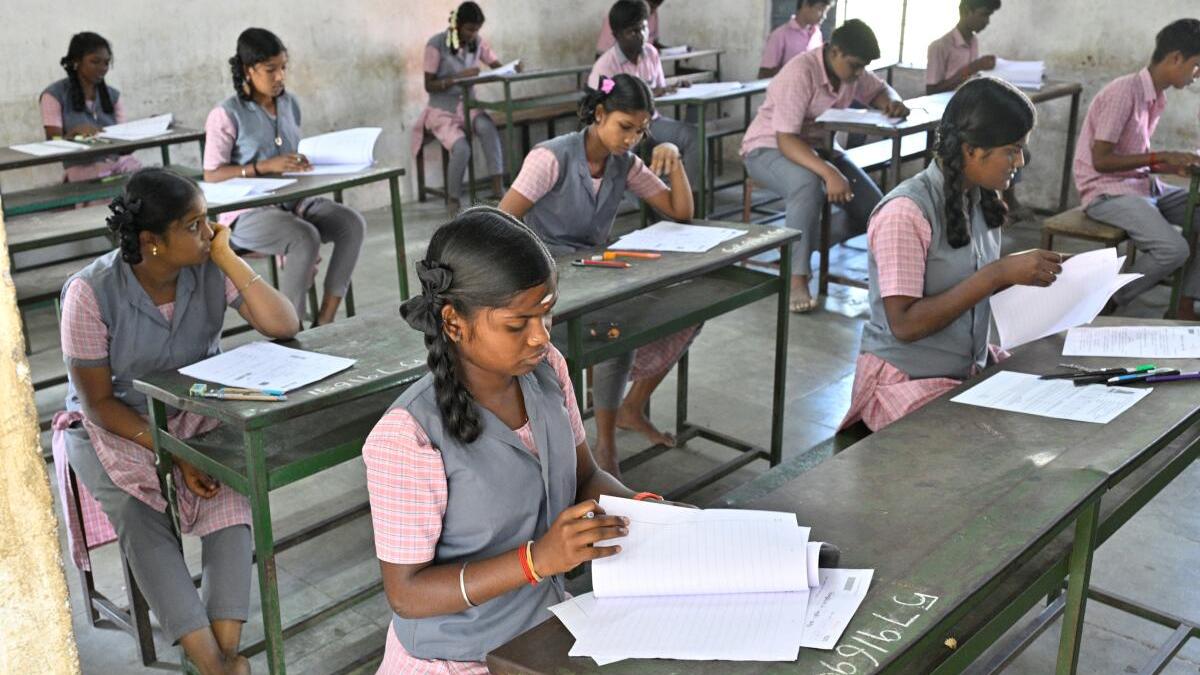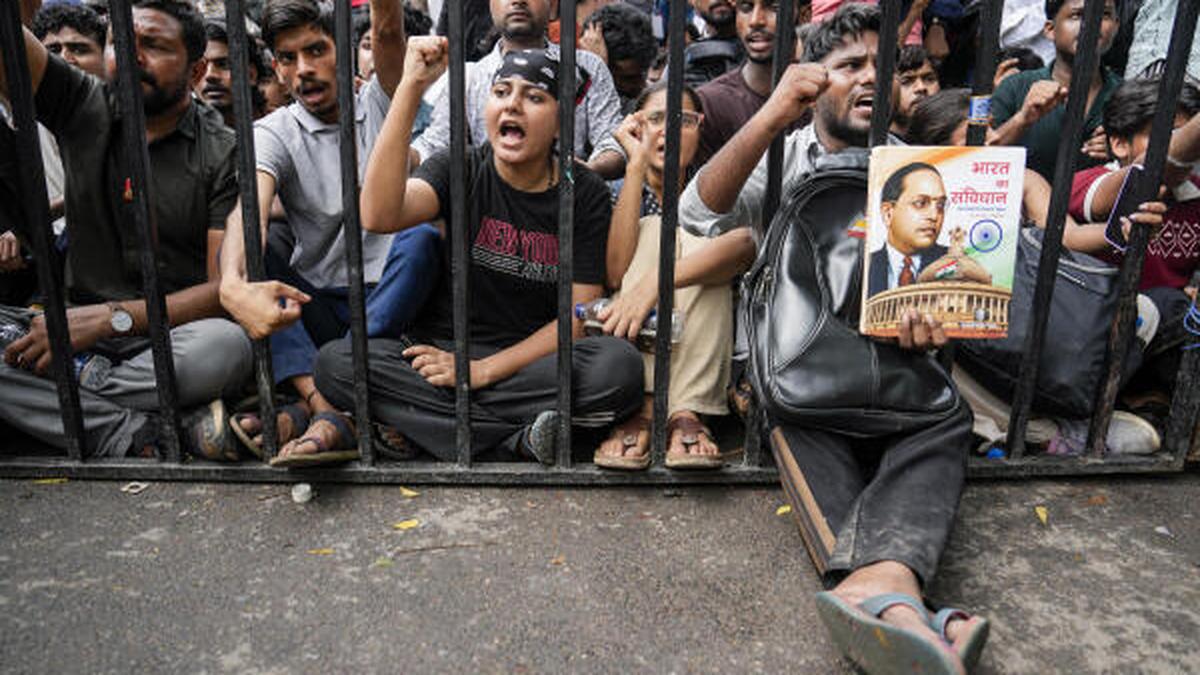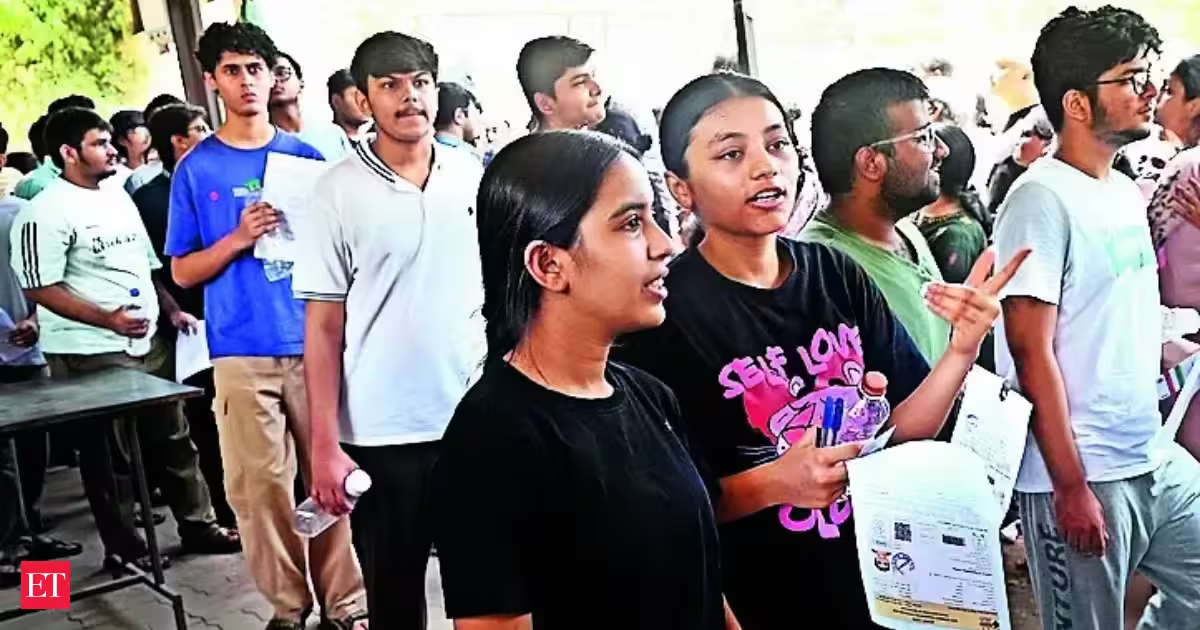
The crisis of NEET examinations, and other controversies related to Entrance tests like JEE, are not just administrative inefficiency and security failure, rather a failure of our education system that reduced the knowledge to a finite commodity. The assessment and evaluation of students are just an algorithmic activity, not an organic way of understanding them. Officials verify documents of aspirants before they appear for the NEET-UG 2026 exam on May 3. (PTI/File)The question is precisely this: How many unique questions can be generated from a finite syllabus? When the possible number of unique questions runs out, deep learning ceases and gives way to peripheral learning. Students now do not toil for conceptual understanding; they adopt strategic shortcuts by cramming answers for an already available pool of questions. The cognitive load theory points out that when students are given with a finite set of questions that reduce/ stop their cognitive efforts on such stuffs. In such cases, our students preparing for the high stakes’ tests, like NEET, JEE, are not passionately learning science, rather deciphering the grammar of the test that they wanted to attend. The output is ‘question banks ‘or ‘guess question’ booklets and their answers prepared by coaching industry. The idea of question banks stem from finite syllabus and the exhausted unique questions from the syllabus. Originally question banks must contain questions that evaluate these various cognitive abilities, lower to higher. Unfortunately, the idea was distorted by the high-stake testing culture. The coaching industry used question banks not to test the varied level of abilities, rather reduced the knowledge into discrete measurable units. This reduction, of the knowledge in a syllabus, into objective type questions corrupted ‘intellectual science’. The question bank compiler visits every nook and corner of the syllabus and generates a whole universe of questions and their answers. It created an impression among students that science is nothing but a set of questions waiting for the right answer to be matched with. Does it mean that the syllabus is redundant? Absence of syllabus will result in a pedagogical entropy, without a level playing field for students from various social and cultural backgrounds. The idea of syllabus must sustain with a structural change in its nature. The transition of strict boundaries of facts and contents to a conceptual framework promoting varied interpretations is what time demands. Tamil Nadu’s prolonged demand, including the new chief minister Thalapathi Vijay's, also needs a critical analysis. What is wrong with admitting students on the basis of their +2 examination results? Considering the marks of +2 examination is a good suggestion, but when it becomes the sole criteria, it brings in another layer of complexity and injustice. The pedagogy, quality of text books and study materials, quality and quantity of teachers, educational outcomes, rigour of evaluation varies across states. A raw comparison of percentages among students from structurally different educational settings, including varied socio, economic, geographic contexts is the breach of a level playing field. Students from states where liberal evaluation scheme will benefit from a criterion in which board examination is the sole criteria for admission.It is the nature of questions, MCQs and their definite answers, that promoted the leakage of NEET question papers. The coaching industry has identified the economic value of MCQs long ago. After all coaching industry is not for promoting passion for science. They survive through mapping such questions over decades, drilling and testing. The key pedagogical strategy they use is testing. A series of testing in regular intervals muzzles students' critical and creative thinking and converts them into meek respondents to these tests. Students with good social and economic capital benefit out of a testing regime based on MCQs. The drilling and testing factories effectively bypass the school practices, where MCQ-centred exam is not unduly promoted. Coaching centres train for test hacking, where schools teach science and fail in the race with coaching centres. The inequality becomes more problematic and deeper when we consider the intersections of identity among students in India. A financially backward female Dalit student hailing from a remote background studying in the government school in local language faces the compounding intersectional disadvantage. She has to compete with the urban grown English-speaking students who can purchase the drilling and testing of coaching centres. Entrance tests are not the index of academic achievement, instead, it ranks socio economic status to a great extent.The leaks in the NEET question paper are the symptoms of an intellectual drought in our education system. We nurture students as MCQ resolvers and are upset when the set of MCQs are leaked. A structural change in the way entrance tests are conducted is needed. A single day MCQ based tests needs to be structurally changed to a composite admission score out of a set of tests of different nature. School level exam results, alongside a couple of aptitude tests that evaluate higher order cognitive abilities need to be introduced. Abilities like critical thinking, interpretation, evaluation, synthesis, computational thinking and creativity need to be tested in such tests using the prescribed conceptual framework given in the syllabus. The questions must promote students to articulate arguments, find unique ways of solving problems, use their skill of observation and many such process skills using the conceptual framework in the syllabus. Intelligent question paper setters can set brilliant questions that such question bank preparing industries cannot assume. For this we need teachers who can make test items in a creative manner. We actually have plenty of them. Identifying them and systematic training could yield better results. (The views expressed are personal)This article is authored by Amruth G Kumar, professor, School of Education, Central University of Kerala, Kasargode.
NEET exams: Trust deficit and beyond
This article is authored by Amruth G Kumar, professor, School of Education, Central University of Kerala, Kasargode.
942 words~4 min read