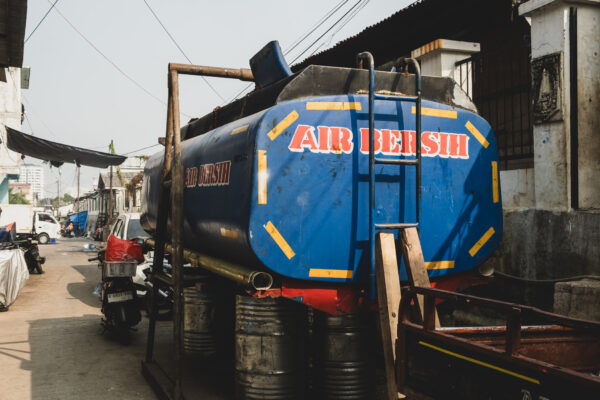
The blue water tanker rumbles into the narrow lanes of Muara Angke, a fishing community on Jakarta’s northern coast, every few days.
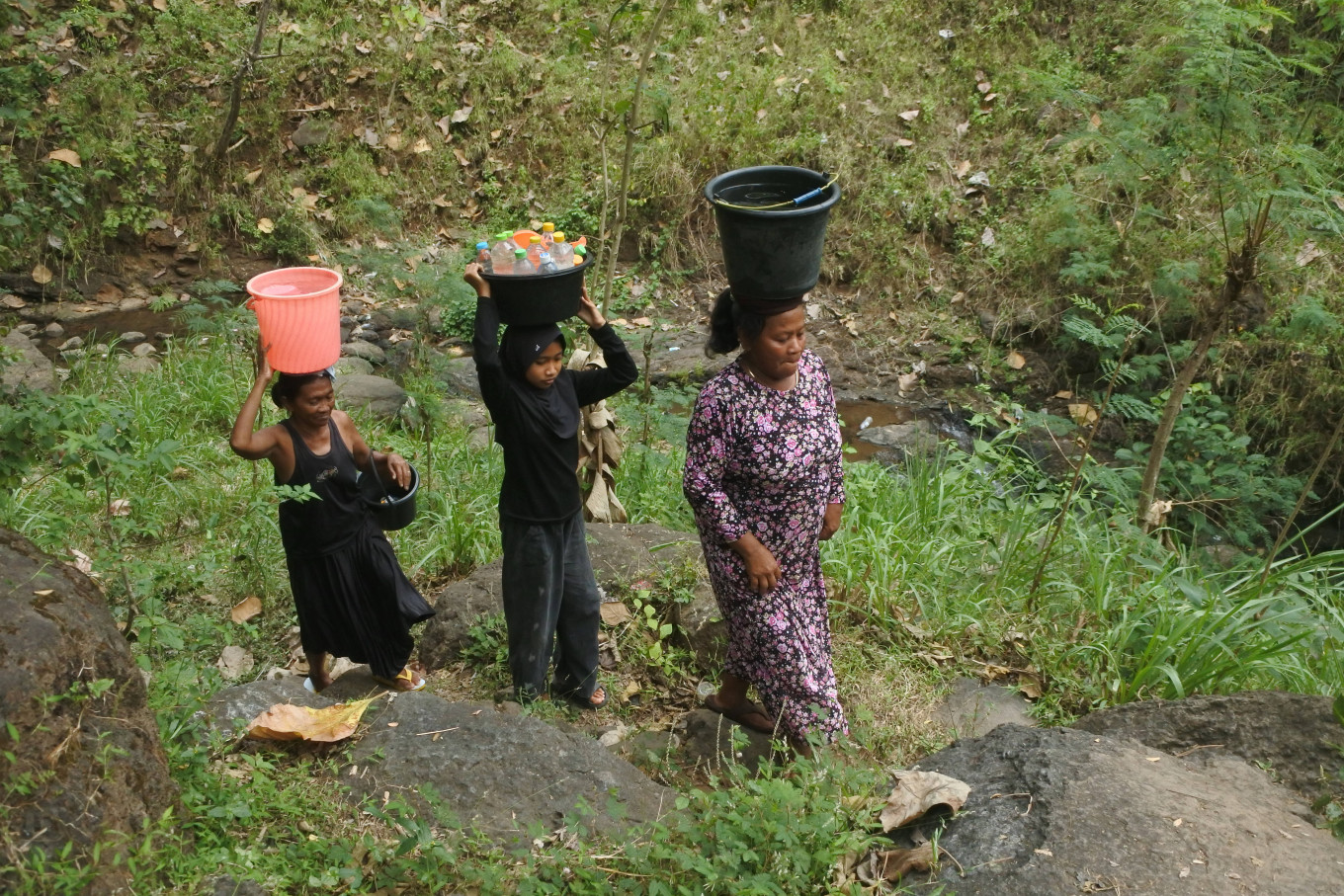
Within minutes, residents emerge carrying hoses and plastic containers. Some connect pipes snaking through the densely packed community. Others wait with buckets.
For families here, in one of the poorest neighborhoods in the world’s most populous metropolis, the truck delivers something millions of people in Indonesia’s capital still cannot rely on: clean water.
“When the deliveries stop, life quickly becomes impossible,” said Ellah, who runs a small neighborhood water kiosk.
“For seven days,” she recalled of one such instance, “people couldn’t wash. They couldn’t cook.”