Story audio is generated using AI
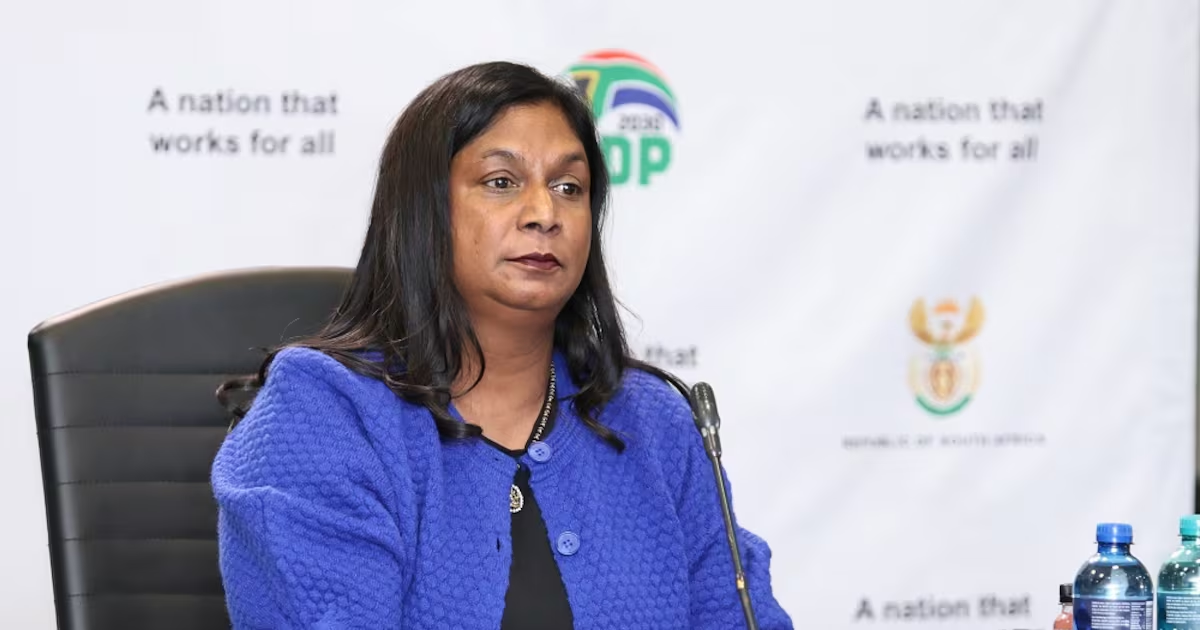
After two days of gruelling cross-examination, Investigating Directorate Against Corruption (Idac) head Andrea Johnson has publicly apologised for describing crime intelligence official Brig Dineo Mokwele as an “unqualified civilian” before the Madlanga commission.On Thursday Johnson conceded that the anchoring accusation, in a corruption case against crime intelligence boss Lt-Gen Dumisani Khumalo, of Mokwele not being qualified for an engineering-related position, was incorrect. The concession could have far-reaching consequences for the credibility of the directorate’s corruption investigation against Khumalo, which is under review by the NPA. The directorate’s corruption charges against him relate to the SAPS crime intelligence unit’s employment of Mokwele, who it claimed lacked the required qualification.With the qualification accusation nullified, Johnson said the issue of whether Mokwele had the experience required for the position remains, as well as the “system capture” allegations.Johnson made the concession after commissioner Sandile Khumalo took her through Mokwele’s qualifications, which include a B-Tech in industrial engineering and a qualification in mechatronics (specified in the advert) and other certificates. “I must say to you before I saw these files, the picture painted in my head was that crime intelligence appointed a receptionist from BMW. Until I saw these files, it became clear to me that this person was not just qualified but her qualifications exceeded the requirements,” Khumalo said. Johnson responded and said: “It is incorrect what I stated in the affidavit.” She said she made the statement that Mokwele was not qualified for an engineering-related post based on a brief from the directorate’s investigation team, adding that “I now see that the facts I received were incorrect.” Johnson publicly withdrew the statement.The country’s corruption investigating body, which has existed for only two years, has been in the limelight after KwaZulu-Natal police commissioner Lt-Gen Nhlanhla Mkhwanazi accused it of acting outside its mandate. Aside from the qualification concession, Johnson also admitted she had made an error in concluding that the corruption case against Khumalo fell within the directorate’s mandate. She was asked whether the complaint by National Coloured Congress MP Fadiel Adams, which started the investigation into Khumalo, complied with the National Prosecuting Authority Act’s requirements for cases falling in the directorate’s mandate. Johnson admitted the initial complaint by Adams lacked substance to back up suspicions of corruption. The NPA Act requires that matters investigated by the directorate should stipulate the grounds on which the suspicion is based. The commission took the view that the directorate should not have investigated Adams’ allegations. “What you had is this wholly inadequate section 27 affidavit, which on its terms does not make a case that triggers your jurisdiction,” commissioner Sesi Baloyi said. “You then authorised a preliminary investigation and that is where you collect all of this evidence. You use that to show up a poor referral. That is not the purpose of your section 28 (13). It is not to assist what should have been kicked out or not accepted by you because it did not trigger your jurisdiction.” Section 28 (13) of the NPA Act gives the directorate power to conduct a preliminary investigation into a matter to determine whether there are reasonable grounds to investigate a reported matter.Johnson accepted that her office’s dealing in the Adams matter was procedurally flawed.The Adams cases have created a headache for Johnson, who now faces an investigation by the directorate’s oversight judge. There have been calls for President Cyril Ramaphosa to suspend her pending investigation of allegations of improper conduct against her. Johnson’s testimony on Thursday could also attract the ire of MPs after she admitted she incorrectly testified to parliament’s ad hoc committee that she was unaware of corruption allegations against Khumalo being referred to now suspended police minister Senzo Mchunu’s office. In November last year when she appeared before parliament’s ad hoc committee looking into criminal infiltration in the justice system, Johnson said she was unaware that Adams’ complaint alleging the interception of dockets had been referred to Mchunu’s office. However, Johnson testified before the Madlanga commission of inquiry this week that the investigation into Khumalo and other crime intelligence officials had been triggered by a letter from Mchunu’s office about the complaint made by Adams. The contradiction opens her to an accusation of perjury after testifying in both instances under oath. Perjury is an offence of “intentional false statement” under oath. When she testified before parliament’s ad hoc committee, Johnson said she did not “recall receiving the letter from the office of the minister”. MK party MP David Skosana on Thursday during an ad hoc committee indicated the party will open a perjury case against Johnson for “not submitting” documents she promised the committee while under oath. Update: July 23 2026This article has been updated with new information.