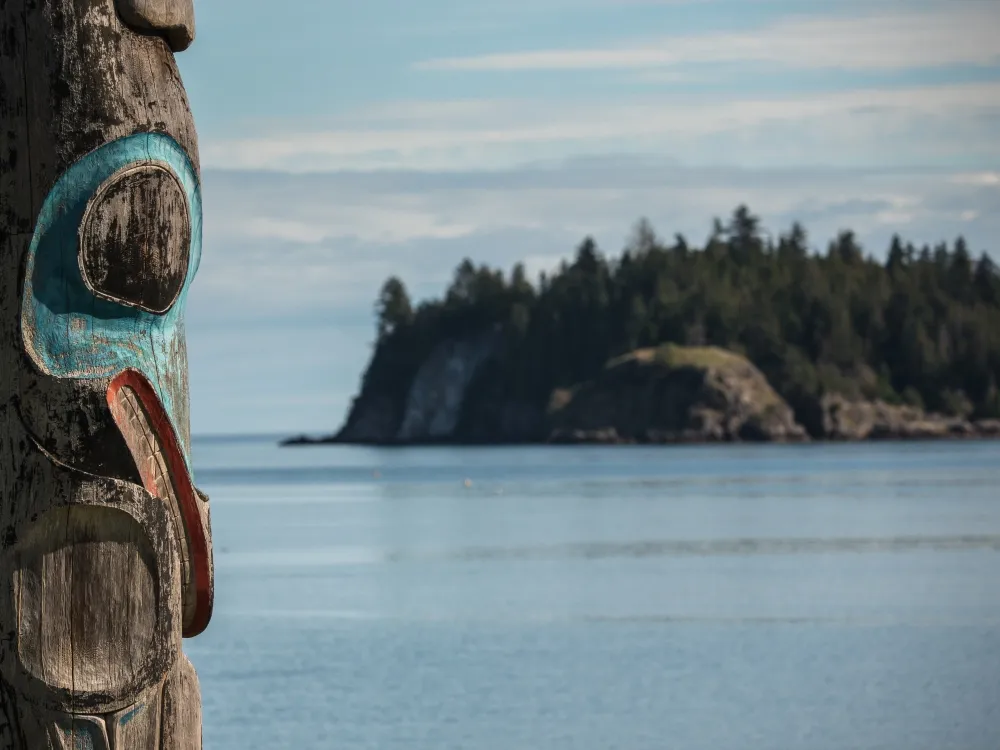
Skip to Content Subscribe Our Offers My Account Manage My Subscriptions FAQ Newsletters Canada Canadian True Crime Canadian Politics Health World Israel & Middle East Financial Post NP Comment Longreads Puzzmo Diversions Comics NP News Quiz New York Times Crossword Horoscopes Life Eating & Drinking Style Sponsored Play for Ontario Travel Travel Canada Travel USA Travel International Cruises Travel Essentials Culture Books Celebrity Movies Music Theatre Television Business Essentials Advice Lives Told Tails Told Shopping Buy Canadian Home Living Outdoor Living Kitchen & Dining Tech Style & Beauty Personal Care Entertainment & Hobbies Gift Guide Travel Guide Amazon Prime Day Deals Savings National Post Store More Sports Hockey Baseball Basketball Football Soccer Golf Tennis Driving Vehicle Research Reviews News Gear Guide Obituaries Place an Obituary Place an In Memoriam Classifieds Place an Ad Celebrations Working Business Ads Archives Healthing Epaper Manage Print Subscription Profile Settings My Subscriptions Saved Articles My Offers Newsletters Customer Service FAQ Newsletters Canada World Financial Post NP Comment Longreads Puzzmo Diversions Life Shopping Epaper Manage Print Subscription HomeNP CommentJosh Dehaas: Aboriginal title claims should be proven in courts, not signed away by governmentsIf governments believe the claims are strong, then why not let the courts test them?Last updated 7 hours ago You can save this article by registering for free here. Or sign-in if you have an account.Totem poles in the British Columbia island of Haida Gwaii. Photo by Getty Images/iStockphotoLast September, many Canadians were shocked to learn through a Haida Nation news release that British Columbia and Canada had gone behind closed doors in judges’ chambers and signed an agreement that recognized Aboriginal title over all of Haida Gwaii. Without having to prove their title in court, the Haida gained constitutionally protected rights over the entire archipelago.Enjoy the latest local, national and international news.Exclusive articles by Conrad Black, Barbara Kay and others. Plus, special edition NP Platformed and First Reading newsletters and virtual events.Unlimited online access to National Post.National Post ePaper, an electronic replica of the print edition to view on any device, share and comment on.Daily puzzles including the New York Times Crossword.Support local journalism.Enjoy the latest local, national and international news.Exclusive articles by Conrad Black, Barbara Kay and others. Plus, special edition NP Platformed and First Reading newsletters and virtual events.Unlimited online access to National Post.National Post ePaper, an electronic replica of the print edition to view on any device, share and comment on.Daily puzzles including the New York Times Crossword.Support local journalism.Create an account or sign in to continue with your reading experience.Access articles from across Canada with one account.Share your thoughts and join the conversation in the comments.Enjoy additional articles per month.Get email updates from your favourite authors.Create an account or sign in to continue with your reading experience.Access articles from across Canada with one accountShare your thoughts and join the conversation in the commentsEnjoy additional articles per monthGet email updates from your favourite authorsSign In or Create an AccountorNow, due to access to information requests from the Public Land Use Society (PLUS), a non-profit organization dedicated to protecting public access to Crown land in B.C., we’re feeling the same sense of disbelief to learn that B.C. and the Carney government are poised to give up title to as much as 11 per cent of northwestern B.C. to the tiny Tahltan Nation, population 4,000.The National Post newsletter that doesn’t hold back, giving readers the unvarnished truth on media, politics and culture.By signing up, you consent to receive the above newsletter from Postmedia Network Inc.A welcome email is on its way. If you don't see it, please check your junk folder.The next issue of Right? will soon be in your inbox.We encountered an issue signing you up. Please try againWhile we all want reconciliation and progress, British Columbia and Ottawa need to stop this risky practice of recognizing Aboriginal title claims that have not been proven in court. If these governments believe that an Aboriginal title claim is strong, they should go before the courts to prove it, rather than simply signing away land that may belong to all of us.The details of the final agreement with the Tahltan, if there is one, are not public. What is known thanks to PLUS is that, back when the world was distracted by COVID-19 on March 30, 2020, the B.C. NDP signed a Shared Prosperity Agreement that says, “the Province recognizes that Tahltan’s Title and Rights exist in Tahltan Territory.” The agreement defines the Tahltan Territory with a map that includes the entire South-Korea-sized chunk of the province’s northwest. At a news conference last month, B.C. Premier David Eby refused to say whether the province recognized title over the entire territory, but he did say that he had asked Prime Minister Carney for financial support, “because of the very strong title claim that the Tahltan has….”The reality is that we don’t know the strength of the Tahltan’s claim to Aboriginal title or the extent of that title until it has been tested in court. This is especially concerning considering there are upwards of $1.2 trillion dollars of minerals in B.C.’s “golden triangle,” which is roughly coterminous with the Tahltan’s claimed territory. If they truly possess title, then they, arguably, possess a veto over developments and the right to keep the minerals. Perhaps the Tahltan do have Aboriginal title to all or some of that territory, but is it too much to ask for them to prove it?It is unclear what would happen if the claim went to court. Aboriginal title is a new and slippery concept defined almost entirely by several rather thick paragraphs in a handful of Supreme Court of Canada decisions. The basic idea is sound: Aboriginal people possessed title to at least some lands, and they continue to possess that unless and until it was ceded and/or legally extinguished.But we still don’t know exactly what it means. It wasn’t until 1997 that the Supreme Court recognized that Aboriginal title is protected by section 35 of the Constitution Act, 1982, and not until the 2014 decision in Tsilhqot’in that Aboriginal title was actually proved in a specific place. To prove title, the Tsilhqot’in decision says a First Nation would likely need to show that, pre-sovereignty, it sufficiently used the area in a way that evinced an intention to hold the land; that there was continuity between present and pre-sovereignty occupation; and the occupation was exclusive, in the sense of intention and capacity to control the land by keeping others out. Based on this, one might have thought title could not be proved outside of small, remote areasThen came Cowichan Tribes. Without any notice, homeowners and commercial property owners in Richmond, B.C., woke up last summer to the news that the B.C. Supreme Court had declared that the Cowichan have Aboriginal title over land where they also hold fee simple. There’s little doubt that the Cowichan were wronged by colonial figures, but the ruling has unsettled private property in an unprecedented way. Most notably, Justice Young ruled that, where fee simple and Aboriginal title clash, Aboriginal title is the senior interest (see paras 2189 and 3588). In other words, even if the Cowichan are not looking to take anyone’s house or farm (and they have repeatedly said so), it’s far from clear they can’t change their minds. The decision is being appealed.The same concern exists on Haida Gwaii. The “Big Tide (Low Water)” agreement between B.C., Canada and the Haida says the Haida “will honour” fee simple title. But what if the Haida opt to end that agreement? They would be left with a senior, constitutionally protected right vis-a-vis the homeowners and business owners. That is, it’s far from clear that the Haida can’t boot them.As Indigenous affairs expert and Macdonald-Laurier Institute fellow Karen Restoule recently explained, B.C.’s land governance problems are of its own making, since the province refused to sign treaties when they were available, and then let the land claims fester unresolved for more than a century. Yet making Aboriginal title declarations that cannot be reversed without first having those claims tested in court is not the solution. We simply don’t know where this leads.National PostJosh Dehaas is Interim Litigation Director with the Canadian Constitution Foundation. Join the Conversation This website uses cookies to personalize your content (including ads), and allows us to analyze our traffic. Read more about cookies here. By continuing to use our site, you agree to our Terms of Use and Privacy Policy.
Josh Dehaas: Aboriginal title claims should be proven in courts, not signed away by governments
If governments believe the claims are strong, then why not let the courts test them?
1,407 words~6 min read