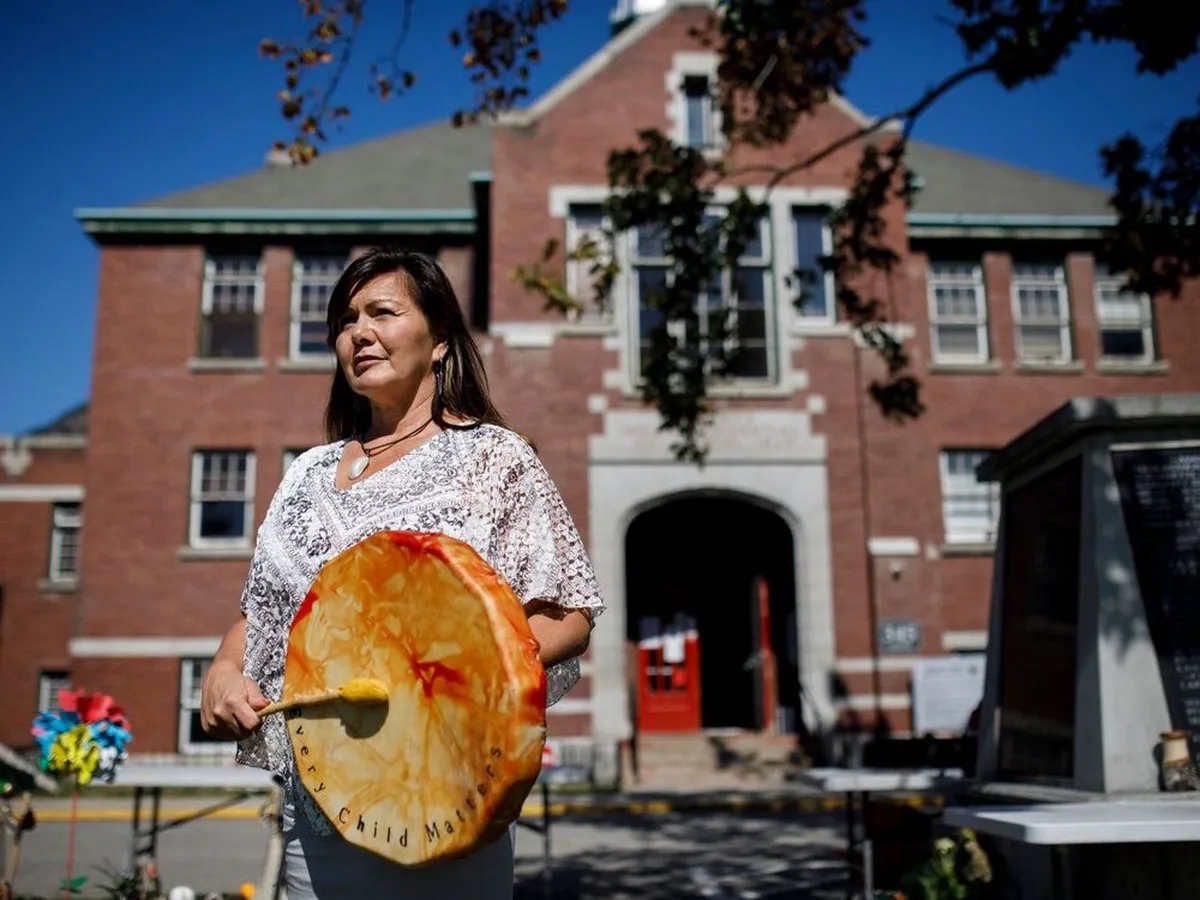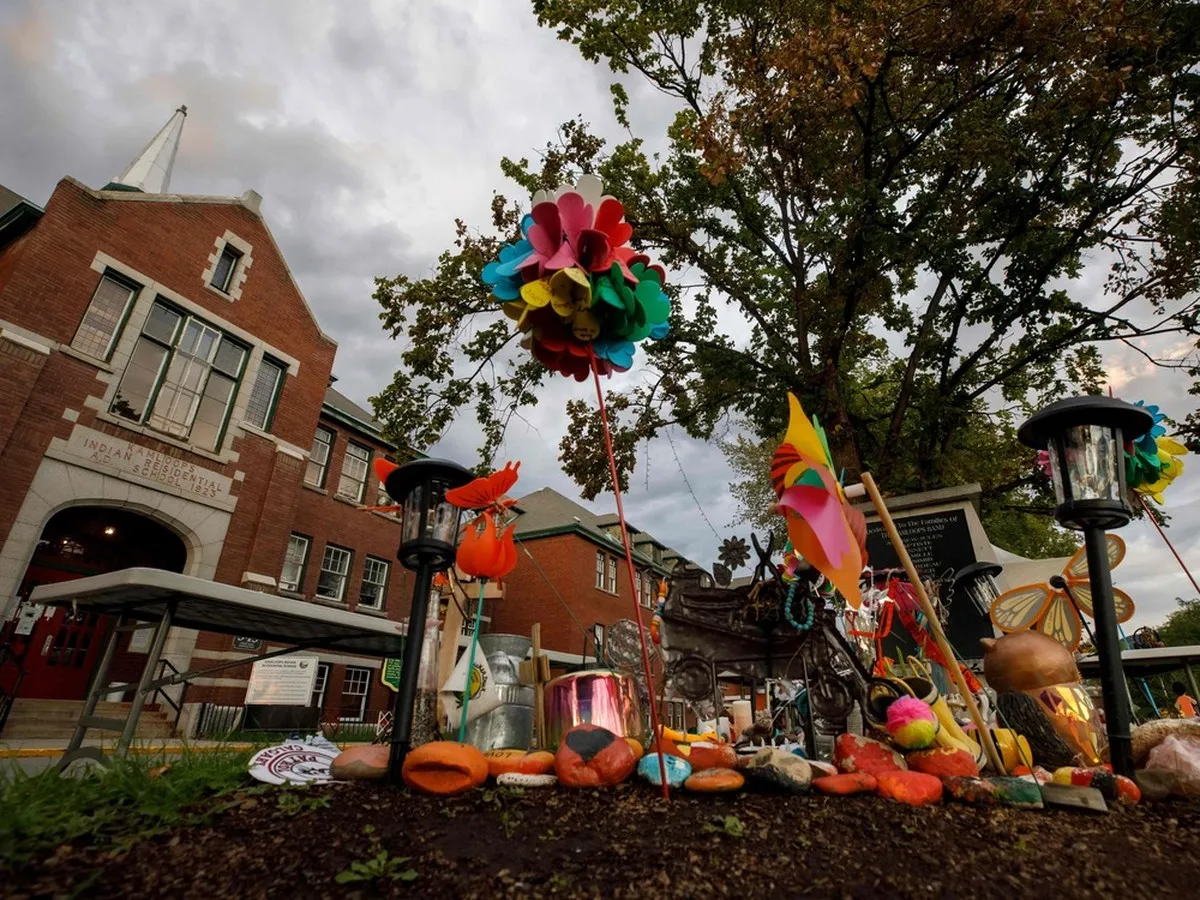
Skip to Content Subscribe Our Offers My Account Manage My Subscriptions FAQ Newsletters Canada Canadian True Crime Canadian Politics Health World Israel & Middle East Financial Post NP Comment Longreads Puzzmo Diversions Comics NP News Quiz New York Times Crossword Horoscopes Life Eating & Drinking Style Sponsored Play for Ontario Travel Travel Canada Travel USA Travel International Cruises Travel Essentials Culture Books Celebrity Movies Music Theatre Television Business Essentials Advice Lives Told Tails Told Shopping Buy Canadian Home Living Outdoor Living Tech Style & Beauty Kitchen & Dining Personal Care Entertainment & Hobbies Gift Guide Travel Guide Deals Savings National Post Store More Sports Hockey Baseball Basketball Football Soccer Golf Tennis Driving Vehicle Research Reviews News Gear Guide Obituaries Place an Obituary Place an In Memoriam Classifieds Place an Ad Celebrations Working Business Ads Archives Healthing Epaper Manage Print Subscription Profile Settings My Subscriptions Saved Articles My Offers Newsletters Customer Service FAQ Newsletters Canada World Financial Post NP Comment Longreads Puzzmo Diversions Life Shopping Epaper Manage Print Subscription HomeNP CommentAaron Pete: Criminalizing residential school 'denialism' won't help reconciliationThis risks turning contested public issues into legal hazardsLast updated 11 hours ago You can save this article by registering for free here. Or sign-in if you have an account.A makeshift memorial outside the former Kamloops Indian Residential School in Kamloops, British Columbia, Canada, on Sept. 1, 2021. Photo by COLE BURSTON /AFP via Getty ImagesCanada should take residential schools seriously. That means taking both truth and reconciliation seriously. But the Senate’s work on criminalizing “residential school denialism” raises a difficult question: when a country faces a painful historical issue, should the criminal law become the instrument used to manage public discussion?Enjoy the latest local, national and international news.Exclusive articles by Conrad Black, Barbara Kay and others. Plus, special edition NP Platformed and First Reading newsletters and virtual events.Unlimited online access to National Post.National Post ePaper, an electronic replica of the print edition to view on any device, share and comment on.Daily puzzles including the New York Times Crossword.Support local journalism.Enjoy the latest local, national and international news.Exclusive articles by Conrad Black, Barbara Kay and others. Plus, special edition NP Platformed and First Reading newsletters and virtual events.Unlimited online access to National Post.National Post ePaper, an electronic replica of the print edition to view on any device, share and comment on.Daily puzzles including the New York Times Crossword.Support local journalism.Create an account or sign in to continue with your reading experience.Access articles from across Canada with one account.Share your thoughts and join the conversation in the comments.Enjoy additional articles per month.Get email updates from your favourite authors.Create an account or sign in to continue with your reading experience.Access articles from across Canada with one accountShare your thoughts and join the conversation in the commentsEnjoy additional articles per monthGet email updates from your favourite authorsSign In or Create an AccountorThis is not an abstract issue for me. My grandmother attended St. Mary’s Indian Residential School. Many Indigenous people have horrible stories to tell about their experiences at that school and ones across Canada. I know some of them personally. I have heard their experiences. No amount of civil discourse will erase their lived experience or convince me that their pain is not real.That is precisely why this debate matters. If we are serious about truth, we must be serious about the tools we use to defend it.This newsletter from NP Comment tackles the topics you care about. (Subscriber-exclusive edition on Fridays)By signing up you consent to receive the above newsletter from Postmedia Network Inc.We encountered an issue signing you up. Please try againIn recent years, phrases such as “healthy democracy” and “freedom of speech” have often been invoked across the political spectrum, sometimes sincerely and sometimes selectively. At the same time, many public policies have been advanced in the name of respect, kindness, empathy and protection for vulnerable communities. These are worthy instincts. No decent society should be indifferent to hatred, cruelty or the denial of real suffering.But government, for better or worse, is a blunt tool. So is the law. As a law graduate, I understand why people reach for legislation when faced with conduct they find harmful. The law carries authority. It sends a message. It appears decisive. Yet the law is rarely capable of detecting all the nuance of a complicated social issue, particularly one involving history, trauma, contested facts, political rhetoric and public trust.That is why Canadians need to ask a more careful question before expanding the Criminal Code: what is the right tool for the problem we are trying to solve? Sometimes the answer is law. Sometimes it is education. Sometimes it is cultural change, public debate, better journalism, archival research or institutional accountability. A mature society must be able to distinguish between conduct that should be criminalized and speech that should be challenged, debated, corrected or rejected.Before reaching for the criminal law, we should ask a more basic question: is this a problem at all? Is it a problem that Canadians are asking questions, debating rigorously and trying to understand one of the most painful chapters in this country’s history? Is it a problem that people are discussing difficult issues such as the lived experiences of former Indian residential school students, the role of churches and governments, the meaning of reconciliation and the evidence behind major public claims?Surely that is not something a democracy should fear. In fact, it may be exactly what reconciliation requires. A public that asks hard questions is not necessarily a hostile public. A citizen who wants clarity is not necessarily a denialist. A Canadian who struggles with complexity is not necessarily acting in bad faith. If the goal is to bring people along, then discussion, even uncomfortable discussion, should be welcomed rather than criminalized.The concern with criminalizing residential school denialism is not that residential schools were harmless. They were not. Nor is it that anti-Indigenous hatred is imaginary. It is not. The concern is that when governments are repeatedly asked to ban, restrict or control language and discussion in the name of compassion, the state’s power expands while the space for nuance shrinks.That should worry all Canadians, including Indigenous Canadians.Indigenous issues have become flashpoints in recent years. The political temperature has risen dramatically. But something else has happened too: Canadians have started to learn. They have researched treaties, Aboriginal rights, government spending, land claims, child welfare, residential schools and reconciliation. Many are forming views that go beyond generic acknowledgments or slogans. Some of those views will be thoughtful. Some will be incomplete. Some will be wrong. But public curiosity should not be treated as a threat.If reconciliation is to mean anything, Canadians must be brought along, not warned away from asking questions.The “unmarked graves” story illustrates the danger. The initial national coverage was emotionally powerful, but parts of the public narrative later required clarification. Canadians have since learned about ground-penetrating radar, anomalies, excavation, archival records and the difference between suspected graves and confirmed remains. These questions are not inherently hateful. In many cases, they reflect citizens trying to understand what is true.That should not be feared. Indigenous people asked for truth and reconciliation. I believe that request was genuine. But truth is not partisan. It does not belong to activists, governments, journalists, political parties or critics. Truth requires humility from everyone. It requires us to follow evidence even when it complicates our preferred story.There is a real difference between someone promoting hatred against Indigenous people and someone questioning a media report, a government statement or a public claim. The former may properly attract legal scrutiny in narrow circumstances. The latter is part of democratic life.Canada should resist the temptation to criminalize questions, especially when the subject is politically charged. Once the state begins policing the boundaries of acceptable historical interpretation, it risks turning contested public issues into legal hazards. That does not build trust. It hardens suspicion. It encourages people to believe that difficult topics are being protected from scrutiny rather than strengthened by evidence.A healthier path would be more demanding, but also more democratic: better education, better records, more transparency, more excavation where appropriate, more serious journalism and more honest public dialogue, all carried out in a spirit of kindness, which is the Canadian way. We should confront hatred firmly without turning every difficult or uncomfortable question into a potential criminal matter.Reconciliation will not be advanced by fear. It will be advanced by truth, humility and mutual responsibility. Canadians should not prejudge one another or assume the worst of intent. This is our shared country, and we all have a duty to seek truth, guard against government overreach and debate complex issues civilly.The history of residential schools deserves seriousness. So does freedom of expression. A confident democracy should be able to protect both.Aaron Pete is Chief of Chawathil First Nation Join the Conversation This website uses cookies to personalize your content (including ads), and allows us to analyze our traffic. Read more about cookies here. By continuing to use our site, you agree to our Terms of Use and Privacy Policy.
Aaron Pete: Criminalizing residential school 'denialism' won't help reconciliation
This risks turning contested public issues into legal hazards
1,509 words~7 min read