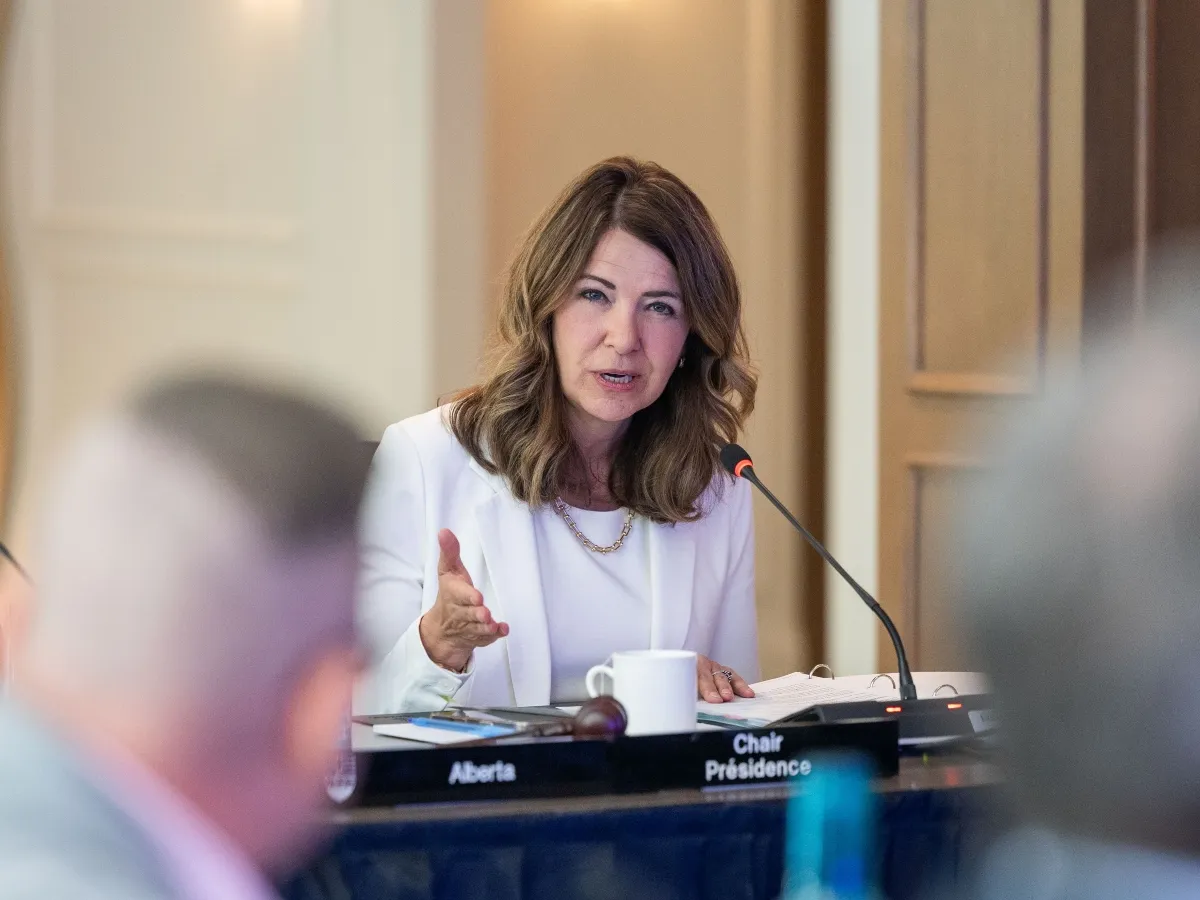
Skip to Content Subscribe Our Offers My Account Manage My Subscriptions FAQ Newsletters Canada Canadian True Crime Canadian Politics Health World Israel & Middle East Financial Post NP Comment Longreads Puzzmo Diversions Comics NP News Quiz New York Times Crossword Horoscopes Life Eating & Drinking Style Sponsored Play for Ontario Travel Travel Canada Travel USA Travel International Cruises Travel Essentials Culture Books Celebrity Movies Music Theatre Television Business Essentials Advice Lives Told Tails Told Shopping Buy Canadian Home Living Outdoor Living Tech Style & Beauty Kitchen & Dining Personal Care Entertainment & Hobbies Gift Guide Travel Guide Deals Savings National Post Store More Sports Hockey Baseball Basketball Football Soccer Golf Tennis Driving Vehicle Research Reviews News Gear Guide Obituaries Place an Obituary Place an In Memoriam Classifieds Place an Ad Celebrations Working Business Ads Archives Healthing Epaper Manage Print Subscription Profile Settings My Subscriptions Saved Articles My Offers Newsletters Customer Service FAQ Newsletters Canada World Financial Post NP Comment Longreads Puzzmo Diversions Life Shopping Epaper Manage Print Subscription HomeNP CommentJamie Sarkonak: Danielle Smith gets it. Aboriginal rights have gone too farAll premiers should be talking about amending Section 35 of the ConstitutionLast updated 0 minutes ago You can save this article by registering for free here. Or sign-in if you have an account.Alberta Premier Danielle Smith joins provincial and territorial leaders at the Western Premiers' Conference 2026 to discuss shared priorities, regional collaboration, and economic opportunities across Western Canada. Photo by Government of British ColumbiaWithin the tangle of Indigenous rights holding down the Canadian economy is Section 35 of the 1982 Constitution — the Indigenous rights guarantee. It’s the country’s very own Gordian Knot, and that’s why it was such a good sign that Premier Danielle Smith is willing to split it.Enjoy the latest local, national and international news.Exclusive articles by Conrad Black, Barbara Kay and others. Plus, special edition NP Platformed and First Reading newsletters and virtual events.Unlimited online access to National Post.National Post ePaper, an electronic replica of the print edition to view on any device, share and comment on.Daily puzzles including the New York Times Crossword.Support local journalism.Enjoy the latest local, national and international news.Exclusive articles by Conrad Black, Barbara Kay and others. Plus, special edition NP Platformed and First Reading newsletters and virtual events.Unlimited online access to National Post.National Post ePaper, an electronic replica of the print edition to view on any device, share and comment on.Daily puzzles including the New York Times Crossword.Support local journalism.Create an account or sign in to continue with your reading experience.Access articles from across Canada with one account.Share your thoughts and join the conversation in the comments.Enjoy additional articles per month.Get email updates from your favourite authors.Create an account or sign in to continue with your reading experience.Access articles from across Canada with one accountShare your thoughts and join the conversation in the commentsEnjoy additional articles per monthGet email updates from your favourite authorsSign In or Create an Accountor“If there’s an appetite among the other premiers to talk about defining that ever further through some kind of constitutional amendment, I’m open to having that conversation,” Smith told reporters at a Friday news conference. She added that the conversation could start as early as this week.Section 35 is the reason why private property rights have been in flux in B.C. since last summer; it’s the cause of death for pipeline projects that couldn’t survive past the drawing board. It’s a convenient excuse for weak governments to justify their inaction when Indigenous fishers on the East Coast harvest illegally. And earlier this month, when an Alberta judge invalidated a citizens’ petition on secession for the preposterous reason that Indigenous people weren’t consulted first, it became a barrier to democracy.This newsletter from NP Comment tackles the topics you care about. (Subscriber-exclusive edition on Fridays)By signing up you consent to receive the above newsletter from Postmedia Network Inc.We encountered an issue signing you up. Please try againSince it was added in 1982, this part of the Constitution has grown far beyond treaty acknowledgements and assurances that traditions will be considered when state decisions are made. This is because the courts have interpreted it more broadly and given it more power over time. In 2004, for example, the Supreme Court decided that Section 35 imposes upon the Crown a duty to consult with potentially affected Indigenous people whenever an upcoming government decision could affect their interests.This has given the anti-development wings of the Indigenous community incredible leverage in their efforts to roadblock the Canadian economy. They’re much more likely to win in court if they decide that consultations aren’t to their standard. Even the most unserious arguments that fail in the end — like the claim that a grizzly bear spirit would be disturbed by a new ski resort and thus it should not be built, which lost at the Supreme Court in 2017 — can pause projects for years and cause such a political headache that projects die on the page anyway.Last year, a judge in B.C. applied that duty retroactively to Vancouver-area colonial officials a century ago in a case called Cowichan Tribes. To the shock of no one, these long-dead men did not meet her high standards. The effect? Some early land transactions that took place long ago in an area of Richmond were tainted. The people who own those lands today were told in August that the local Cowichan Tribes also have exclusive property interests over the area. It doesn’t make a lot of sense, and, by the account of Aboriginal law lawyer Thomas Isaac, it appears to be causing landowners grief.“I know of two examples, firsthand knowledge, of two commercial purchases in the eight-digit range — the tens of millions — of two commercial parcels, two separate deals, not on the 800 or the 1,800 acres (in the area affected by the court decision) … within the city of Richmond,” Isaac told the Kelowna Real Estate Podcast in December.“Both of those deals fell apart because the purchasers walked away, and in both of those instances, the only reason that was given was a lack of certainty in British Columbia’s land title system and the Cowichan decision.”The worst of this problem manifests in B.C., but it’s always possible that a judge could find that historic Crown agents also had a duty to consult with the Indigenous in the course of arranging land secession treaties elsewhere in the country. That would pull the rug out from under the property system in places considered stable now, such as the Prairies and Ontario.Few dare to talk about paring it all back. It’s a bold idea, one met with visceral displeasure from progressives who thirst for decolonization, and amplified by the media sympathetic to them. Anyone who talks about removing or declawing Section 35 risks severe political blowback. But between the erosion of property rights in B.C. and now, democratic rights in Alberta, the moment calls for bravery. Smith gets the honour.The trouble with Section 35 is that it’s ironclad, lodged within a Constitution that is nearly impossible to amend. It takes the House of Commons and the Senate to both agree, along with two-thirds of the provinces (with the additional requirement that these provinces comprise more than half of the country’s population).Some say it’s impossible and a waste of time to think about it, but that’s a pessimistic view. Things can always change. While the House of Commons and the Senate aren’t likely to agree for now, an election can change the former and the latter can be cowed into following the wishes of the provinces — if they can agree. The work of building a provincial consensus to get an amendment over the line is the hard part, and that can start now.“I think it’s worth it to go back and look at what the founders had to say when they were putting (Section 35) in the Constitution,” Smith said Friday.“My reading of it is that it was never intended to continue being open-ended and redefined by the court to create new and increasing rights over and over again with each new decision. And it was never intended to undermine private property rights. Never intended to undermine the ability of provinces to have control over their resources.”Canada’s Indigenous rights scheme is bigger than just Section 35 (some of it is also rooted in the Royal Proclamation of 1763, for example), but you can think of this provision as the main ballast holding it all up. Even if the intention wasn’t for it to crowd out democratic and property rights back when it was written, that’s the practical reality now. Smith is right: something has to change.National Post Get the latest from Jamie Sarkonak straight to your inbox Join the Conversation This website uses cookies to personalize your content (including ads), and allows us to analyze our traffic. Read more about cookies here. By continuing to use our site, you agree to our Terms of Use and Privacy Policy.
Jamie Sarkonak: Danielle Smith gets it. Aboriginal rights have gone too far
All premiers should be talking about amending Section 35 of the Constitution
1,495 words~7 min read