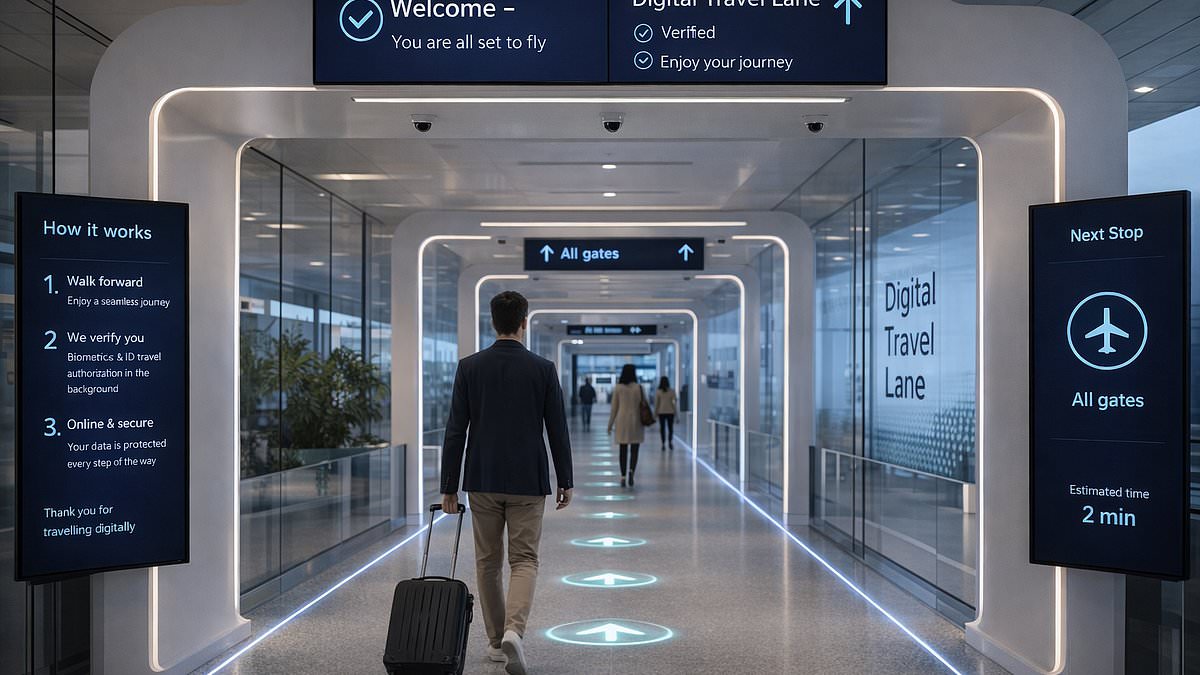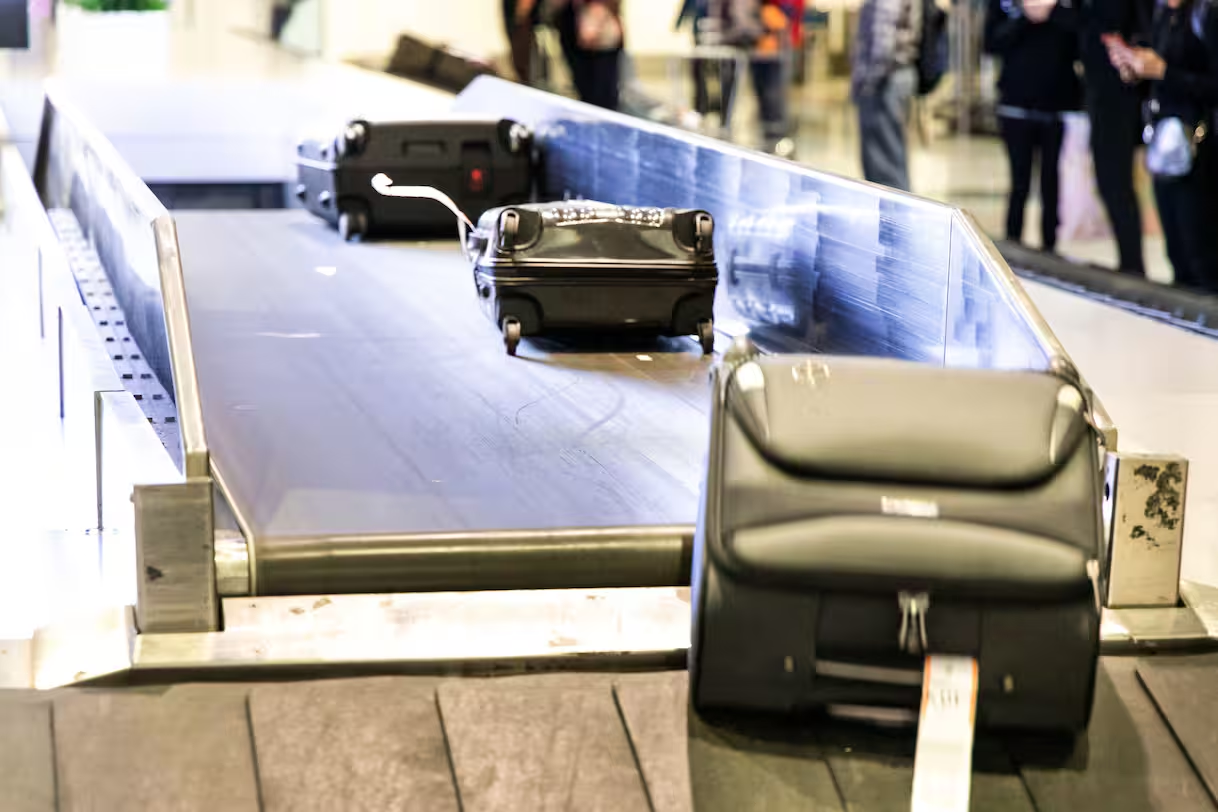
The aviation industry is preparing to carry 10-billion passengers a year by 2050, double the current figure, without doubling the number of airports, aircraft or border officials. Cue collective groans from half of those billions of passengers.Its solution is to make technology do much of the heavy lifting, according to the Société internationale de télécommunications aéronautiques (Sita), which provides communications and IT systems to airlines, airports and governments.According to Sita’s new impact report 2025, borders can already be cleared in eight seconds, and AI can cut weather-related delays by up to 65%. Anyone who has arrived at Frankfurt, Amsterdam or Sydney after a long-haul flight may find these claims difficult to believe. The evidence on the ground often suggests the opposite, as passport gates reject perfectly good passports and electronic systems direct passengers towards immigration officers who seem surprised by the arrival of an aircraft.Yet in Aruba, passengers whose travel details have been cleared before arrival can complete the border process in as little as eight seconds. Sita says that is 78% faster than before, using digital travel credentials linked to biometric identity checks.Privacy protests vanish at passport control, and the attraction for airports and governments is that most of the administrative work can be completed before a passenger reaches the immigration desk.Sita says more than 271-million travellers a year already receive a risk assessment supported by its systems before arrival. Most assessments take less than four seconds. Passengers regarded as low risk can move through quickly, leaving border officials to focus on cases that require closer attention.That eight-second Aruba crossing represents the airport experience most travellers were promised when electronic passports and biometric gates first appeared. It remains a distant aspiration at many major hubs, especially when several international flights arrive together.Tech also promises arrival and departure efficiency for the aircraft. Sita OptiFlight uses machine learning and a digital model of an aircraft’s performance to recommend more fuel-efficient climb and cruise profiles to pilots. During 2025 it processed 2.9-million flights for 59 airlines.Sita has calculated that the system saved 127,732 tonnes of fuel, avoiding the equivalent of 403,633 tonnes of carbon dioxide. Those savings come from small adjustments repeated across millions of flights, without waiting for a new generation of aircraft or fuel.At Toronto Pearson and Abu Dhabi airports AI-based management systems are helping recover valuable minutes during aircraft turnarounds. One minute saved while cleaning, one while refuelling, or one while loading baggage or boarding a passenger may appear trivial. Repeated across a full day, it can prevent delays spreading through an airline’s network.Weather forecasting offers perhaps the strongest example. During a 2025 trial at France’s Reims Control Centre, Sita gave air traffic controllers access to the same live weather picture used by pilots and airline dispatchers. Weather-related delays fell by 65%, saving up to 105,000 minutes during 21 days of weather-affected operations.While passengers would probably settle for being told about the delay before reaching the gate, the wider benefit comes with enabling controllers and airlines to reroute aircraft or adjust schedules ahead of bad weather.Ultimately, passenger confidence comes from one question: where is my suitcase?Thai Airways uses an AI function in Sita WorldTracer to route mishandled bags onto the next available flight. The process previously took about three minutes, or so it claims. It can now be completed in one second. Or so it claims.But there is one vast improvement that is likely to win far more trust. Users of Apple’s AirTag tracking device are now able to share a bag’s location with an airline through WorldTracer. Sita says the number of AirTag-equipped bags classified as truly lost fell by 90% when passengers used location sharing. Google has joined the programme, so it should become compatible with Android tracking devices.The tracker does not prevent a suitcase from being sent to Bloemfontein while its owner travels to Berlin, but it will no longer be classified as “location unknown”.• Goldstuck is CEO of World Wide Worx, editor-in-chief of Gadget.co.za, editor of GadgetWings, and author of “The Hitchhiker’s Guide to AI — The African Edge”.
ARTHUR GOLDSTUCK | Airports brace for the billions
New tech targets quicker journeys, smarter operations and fewer lost bags by 2050
674 words~3 min read