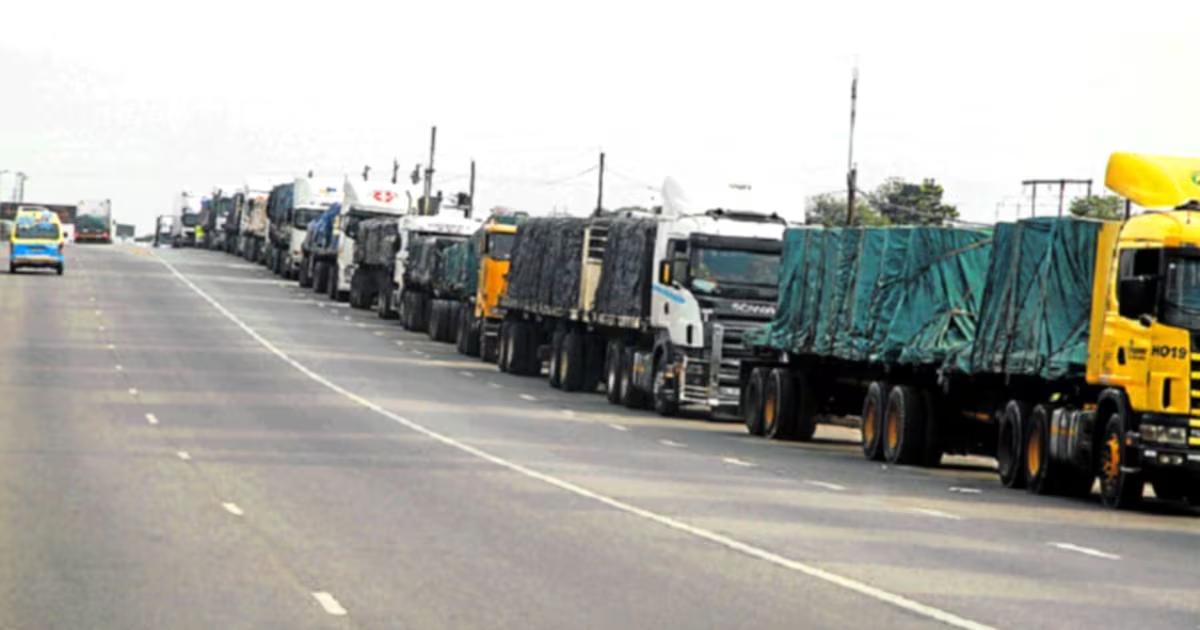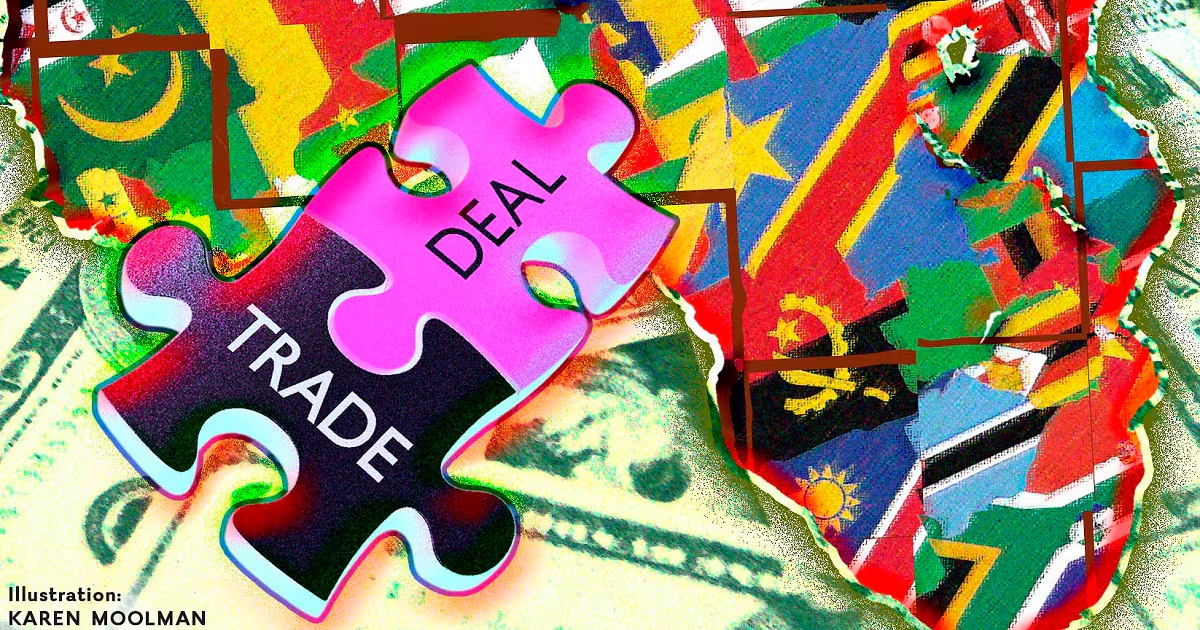
Four years after 54 African states signed the African Continental Free Trade Area (AfCFTA) agreement the headline numbers remain compelling: 1.3-billion people and a $3.4-trillion combined GDP, the largest free-trade area by membership. But the reality at Africa’s borders tells a different story. Trucks queue for days at Beitbridge. Exporters at Durban face duplicative paperwork. Clearing times and costs in Africa remain higher than on routes to Europe or Asia. According to the UN Economic Commission for Africa, intra-African trade comprised 14.9% of total continental trade in 2024, compared with 67% within the EU.The question is no longer whether the AfCFTA is a good idea. It is whether in its present form the agreement is anything more than well-branded window dressing. Progress on paper has not matched practice. Fewer than half of signatories have ratified. Rules of origin for vehicles, textiles and pharmaceuticals are still being negotiated. The guided trade initiative covers few products and countries.The binding constraint is weak implementation: inconsistent standards, poor logistics and limited trust in dispute mechanisms. Without fixing these a 0% tariff changes little. The AfCFTA risks becoming another strong communique with weak traction.Business follows the path of least resistance. That path is regional and bilateral, and the volumes prove it. The busiest corridors are not “AfCFTA corridors”. They are bilateral and regional economic community routes built on trust: South Africa to Botswana, Kenya to Uganda, Nigeria to Ghana. South African Revenue Service (Sars) data shows South Africa’s exports to Botswana alone exceeded total exports to Nigeria in 2023. These lanes move more goods in a month than many AfCFTA routes do in a year because the rules are known.The binding constraint is weak implementation: inconsistent standards, poor logistics and limited trust in dispute mechanisms. Without fixing these a 0% tariff changes little. The AfCFTA risks becoming another strong communique with weak traction.The department of trade, industry & competition continues to prioritise the EU deal, America’s African Growth & Opportunity Act (Agoa) and partners via the Southern African Development Community (Sadc), over new AfCFTA preferences. Those agreements are faster to negotiate and easier to monitor.The R2bn in early AfCFTA shipments to Ghana, Kenya and Egypt is welcome but remains a fraction of what moves monthly on Sadc roads.Global volatility is widening the gap. With supply chains and currencies unstable, firms retreat to routes they know. That makes businesses less willing to test new AfCFTA pathways, especially for manufactured goods needing reliable timelines.Trade agreements do not enforce themselves. For the AfCFTA to work an exporter must trust that contracts will be honoured. A logistics firm must trust corridors are secure. An investor must trust disputes will be resolved without interference.The work of commissions such as the Madlanga commission is central to trade policy. A captured police service, backlogged courts or rent-seeking customs will kill intra-African trade faster than any tariff.South Africa saw this with Agoa. The country had preferential US market access for 25 years yet did not industrialise at scale. Access without capable institutions produces limited results.The AfCFTA is not a failure. But calling it a success now is premature. Three shifts are needed:Resource and depoliticise border agencies and commercial courts. Prioritise depth over breadth. Make five regional economic communities work, then scale. For South Africa, start at the border. The department of trade, industry & competition and Sars should implement a single digital certificate of origin and resolve all nontariff barriers reported at Beitbridge and Durban in 30 days.The AfCFTA has the right ambition. Africa trading more with itself is a strategic imperative for jobs and industrialisation. But ambition without implementation and implementation without credible institutions will leave the continent trading more with Europe, Asia and America than with its neighbours.The agreement is the test. Four years in, that test is still being written in the corridor, not in the communique. For South Africa the department of trade, industry & competition’s industrial policy will succeed or fail at the border post, not in a treaty.• Maseko is an independent political economy analyst and researcher.
PHILIP MASEKO | AfCFTA at four ― the gap between the communique and the corridor
Implementation gaps and poor logistics stall the continent's free-trade ambitions
670 words~3 min read