Story audio is generated using AI
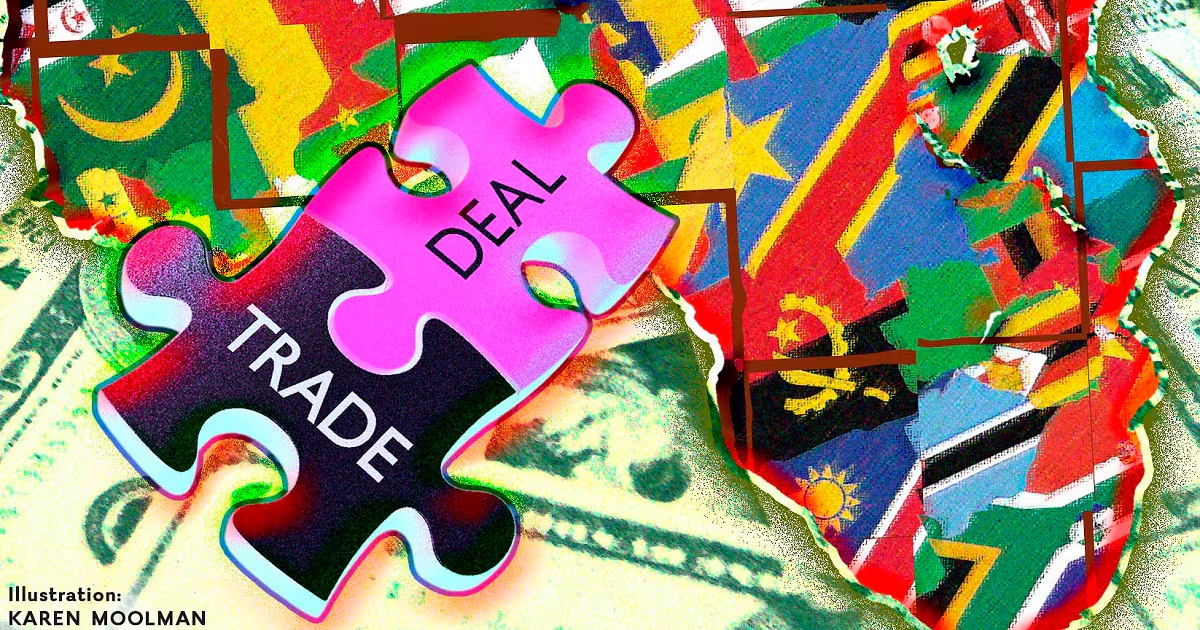
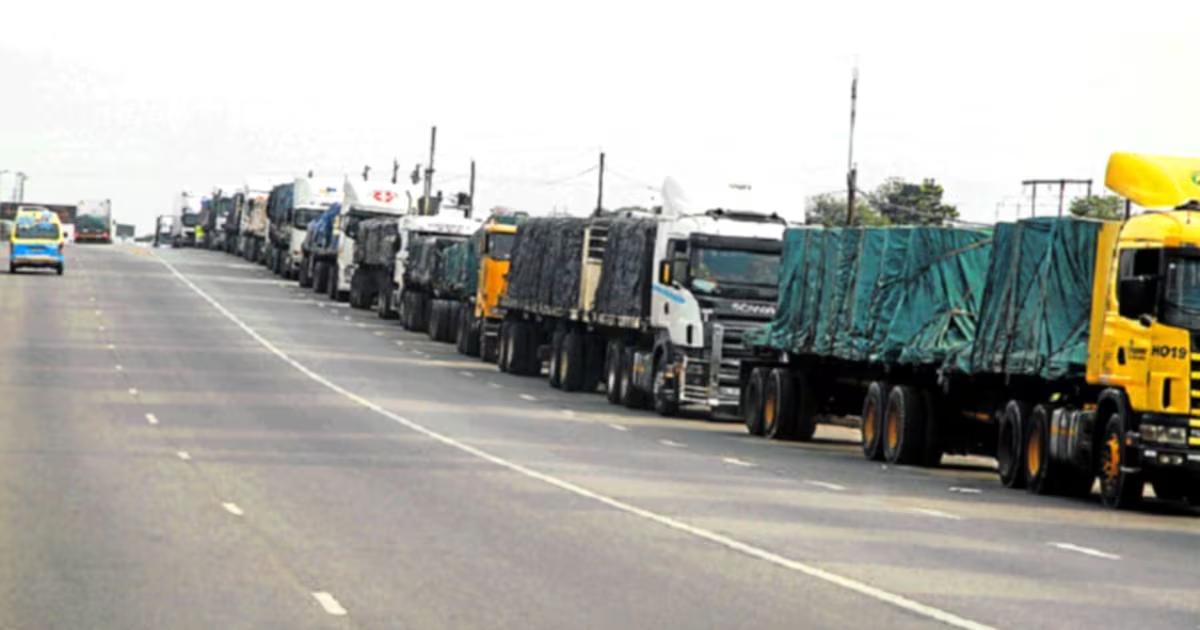
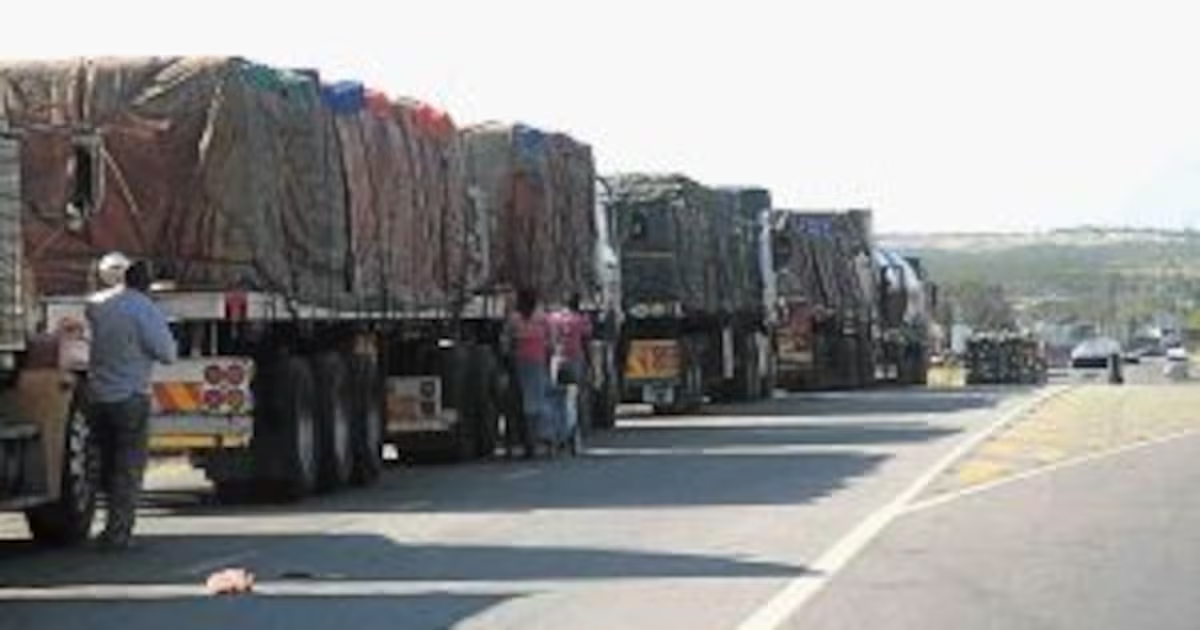
Nagging inefficiencies at borders and weak transport infrastructure stand in the way of the African Continental Free Trade Area (AfCFTA) significantly boosting business between member states, nearly five years after it came into effect.A manufacturing conference in Johannesburg this week heard that African intratrade is about 14%-16% of the continent’s total trade — compared with about 60% for regions such as Europe and Asia.The continent is far from fully tapping the potential market of more than 1.2-billion people in 55 countries with a combined GDP of $3.4-trillion under the pact, which was first signed in 2018 and came into effect at the start of 2021, Sharon Modiba, chief economist of the International Trade Administration Commission of South Africa, told the conference.While the trade pact looks good on paper, nontariff barriers experienced in different parts of Africa are the deterrent to real progress, Muntanga Lindunda, CEO of the Zambia Association of Manufacturers, said on the sidelines of the forum. She cited border delays and payment system constraints, among others.“If you compare with other free-trade areas like the EU … they have put measures in place that allow trucks to move from border to border within the free-trade area without having to stop so many times and for long times,” Lindunda told Business Day.“Under the AfCFTA … there are little to no tariffs and the traders are happy to pay whatever little [is required]. But the issue is the nontariff barriers. The AfCFTA secretariat is making some headway, but countries need to domesticate some of the protocols that have been provisioned under the agreement.”If you compare with other free-trade areas like the EU … they have put measures in place that allow trucks to move from border to border within the free-trade area without having to stop so many times and for long times.— Muntanga Lindunda, CEO of the Zambia Association of ManufacturersEach country’s domestic laws should provide for easier processing of goods, she said, citing how some member states have legislation aimed at protecting local industries, which hinders intraregional trade.Another problem arises from the fact that not all banks are on the Pan-African payment system, raising currency risks, Lindunda said.“Infrastructure is one of the elephants in the room, because even just moving around Africa is very expensive and if people can’t move easily, how do we expect goods to move easily?” she asked.“If Southern Africa has to trade with West Africa, maybe you can argue that they can use the Atlantic Ocean. But what about East Africa with West Africa? It takes such a long time. “Infrastructure within Africa is not well developed, and the possible solution to that, even if it’s long term, is: what if regional blocs like the EAC [East African Community], Sadc [Southern African Development Community], Comesa [Common Market for Eastern and Southern Africa] and Ecowas [Economic Community of West African States] negotiate for funding that could develop the internal infrastructure within Africa?” she added.While companies on the continent aim to expand beyond domestic markets, liquidity constraints, foreign exchange complexity, fragmented payment systems and regulatory hurdles continue to shape the day-to-day reality of doing business across borders, said Ola Oyetayo, CEO of financial technology firm Verto.In some instances, businesses report that making payments to major international financial centres can be simpler than settling transactions within Africa itself, Oyetayo said.“Liquidity remains the core issue. Businesses need deep emerging-market FX, multicurrency accounts and a direct route to foreign-currency rails. Without that, payments age and working capital get tied up.“For South African businesses specifically, there’s a two-corridor reality. They need reliable access into the rest of Africa and, separately, into global markets such as London and New York. Most infrastructure is still built for one or the other and that gap is where much of the friction businesses experience today originates,” he said.Business Day