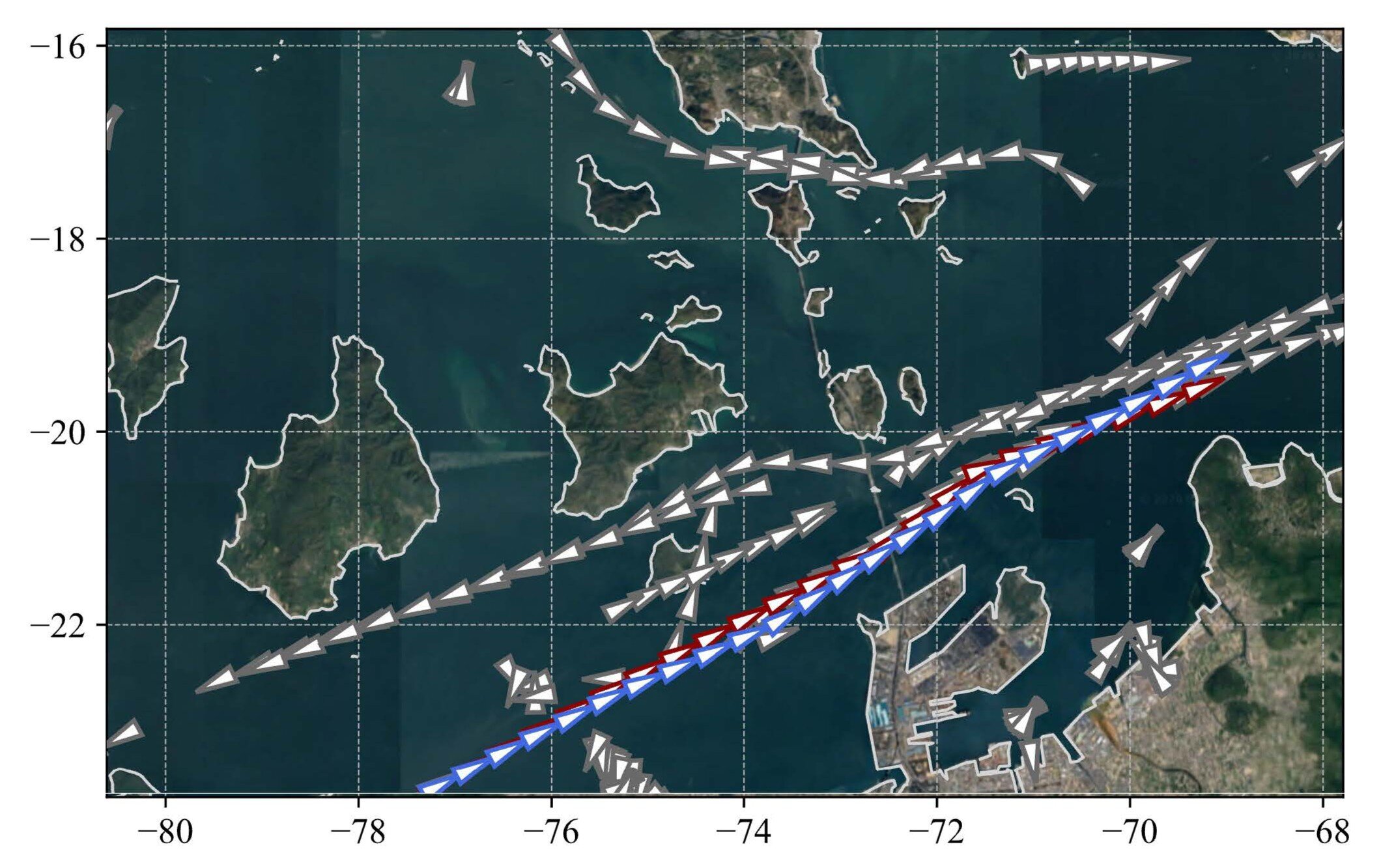
The AI-generated route (blue) closely follows the course taken by an experienced captain (red) while safely navigating through surrounding ship traffic (gray). Credit: Osaka Metropolitan University
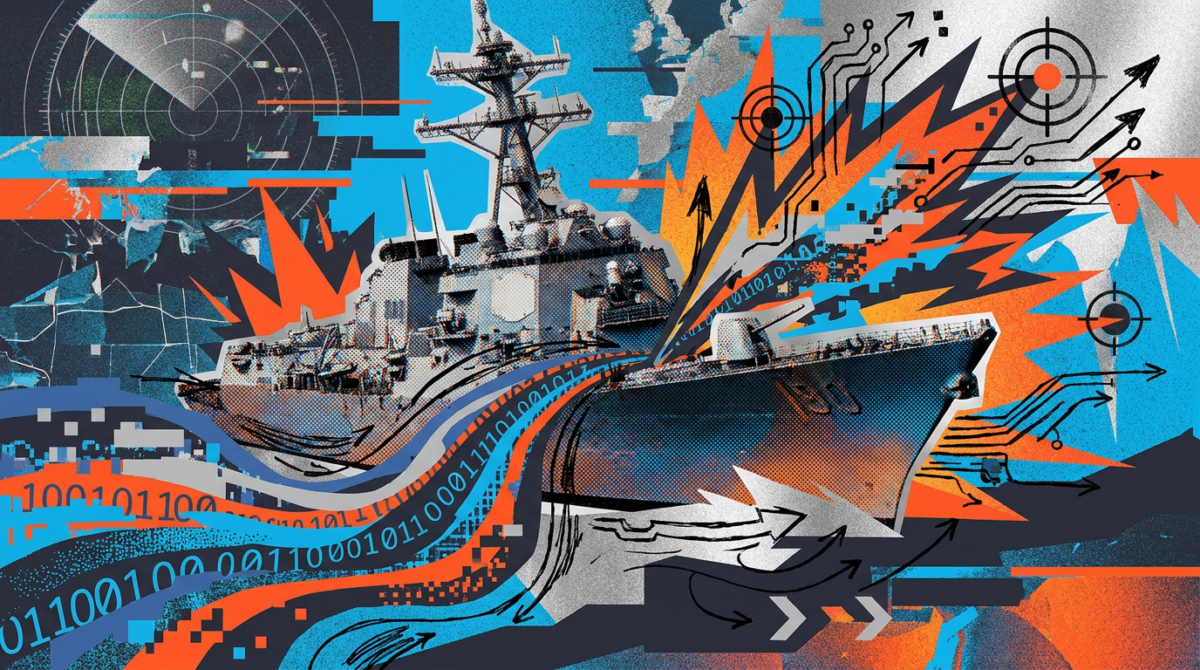
Teaching an AI to navigate a ship is far more challenging than teaching it to drive a car. In busy waterways such as Japan's Seto Inland Sea, vessels must safely negotiate dense traffic, narrow channels, hundreds of islands and ever-changing conditions while complying with navigation rules.
To develop an autonomous ship-navigation AI, a research group led by Assistant Professor Takefumi Higaki from the Graduate School of Engineering at Osaka Metropolitan University took a different approach.
The study was published in Ocean Engineering.
Instead of training their model with objectives and rules, the researchers used maneuvers performed by the vessel Fukae-Maru, a training vessel from Kobe University. Rather than trying to predict the best action like traditional AIs, the researchers turned to "diffusion AI," which makes decisions based on a range of actions that experienced humans might take and creates an entire trajectory.