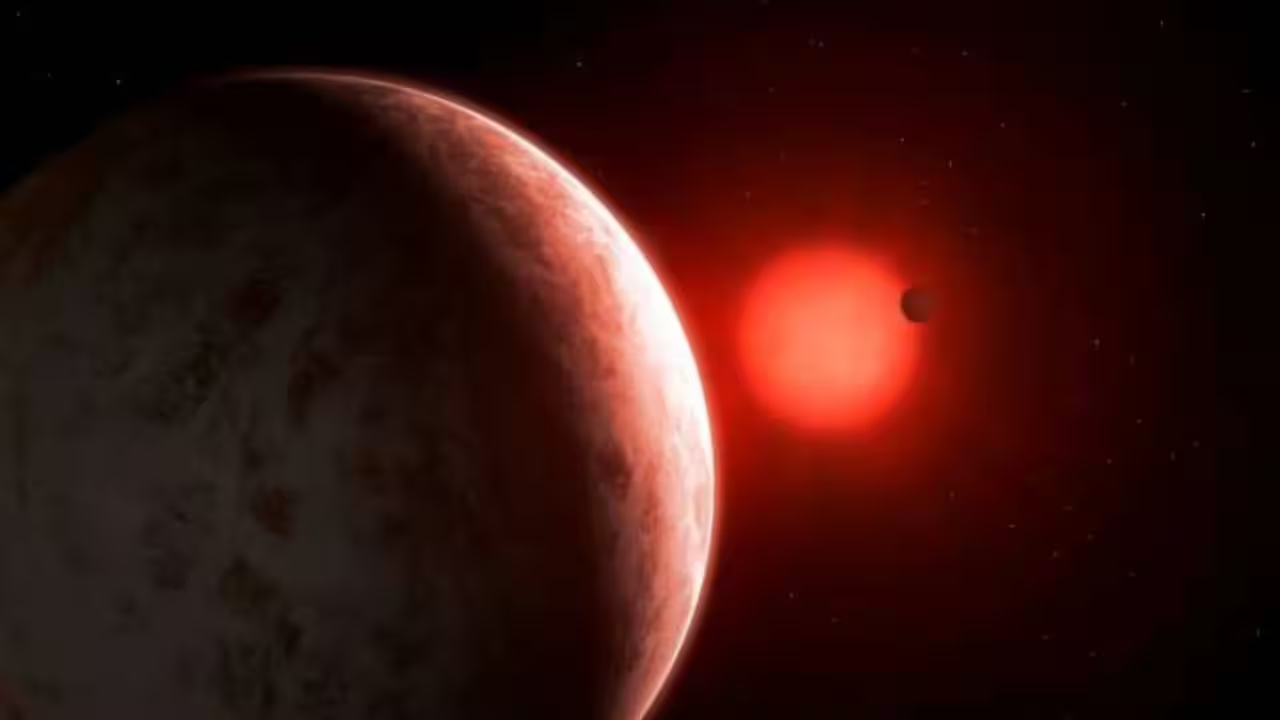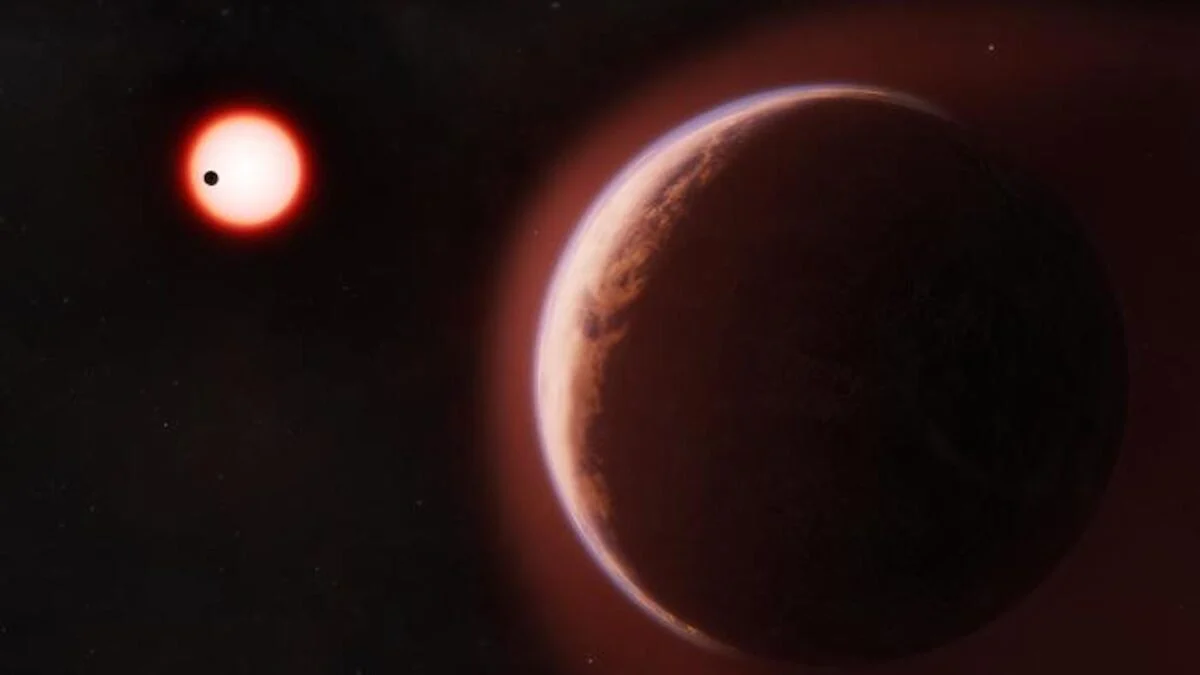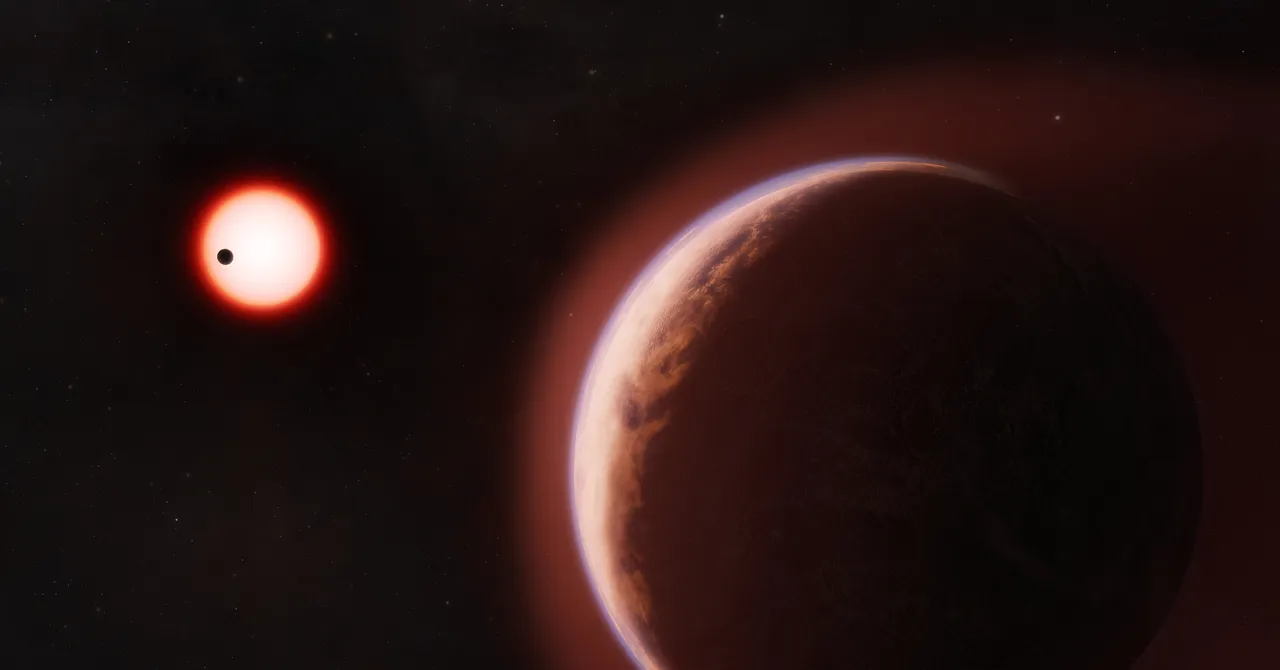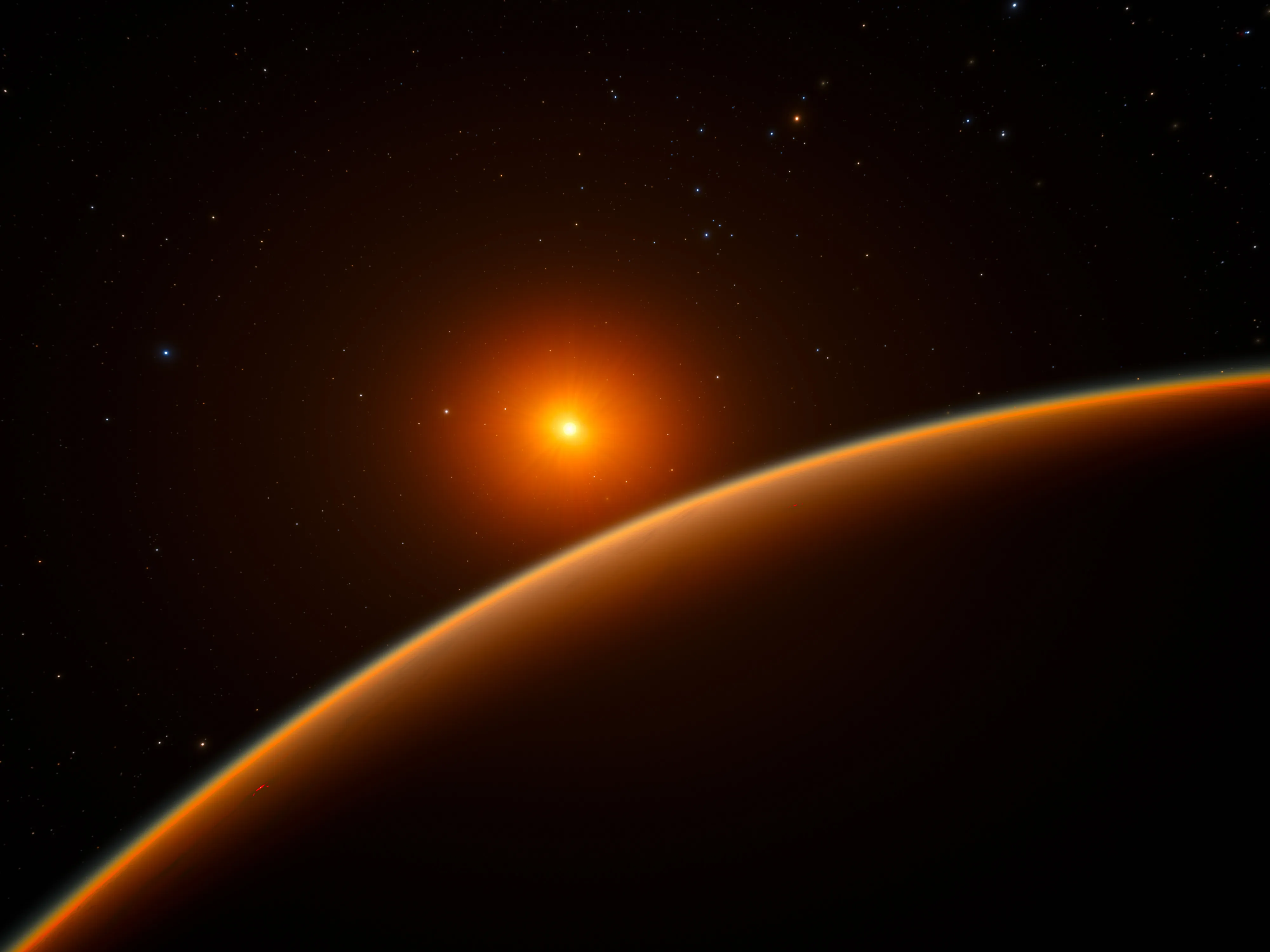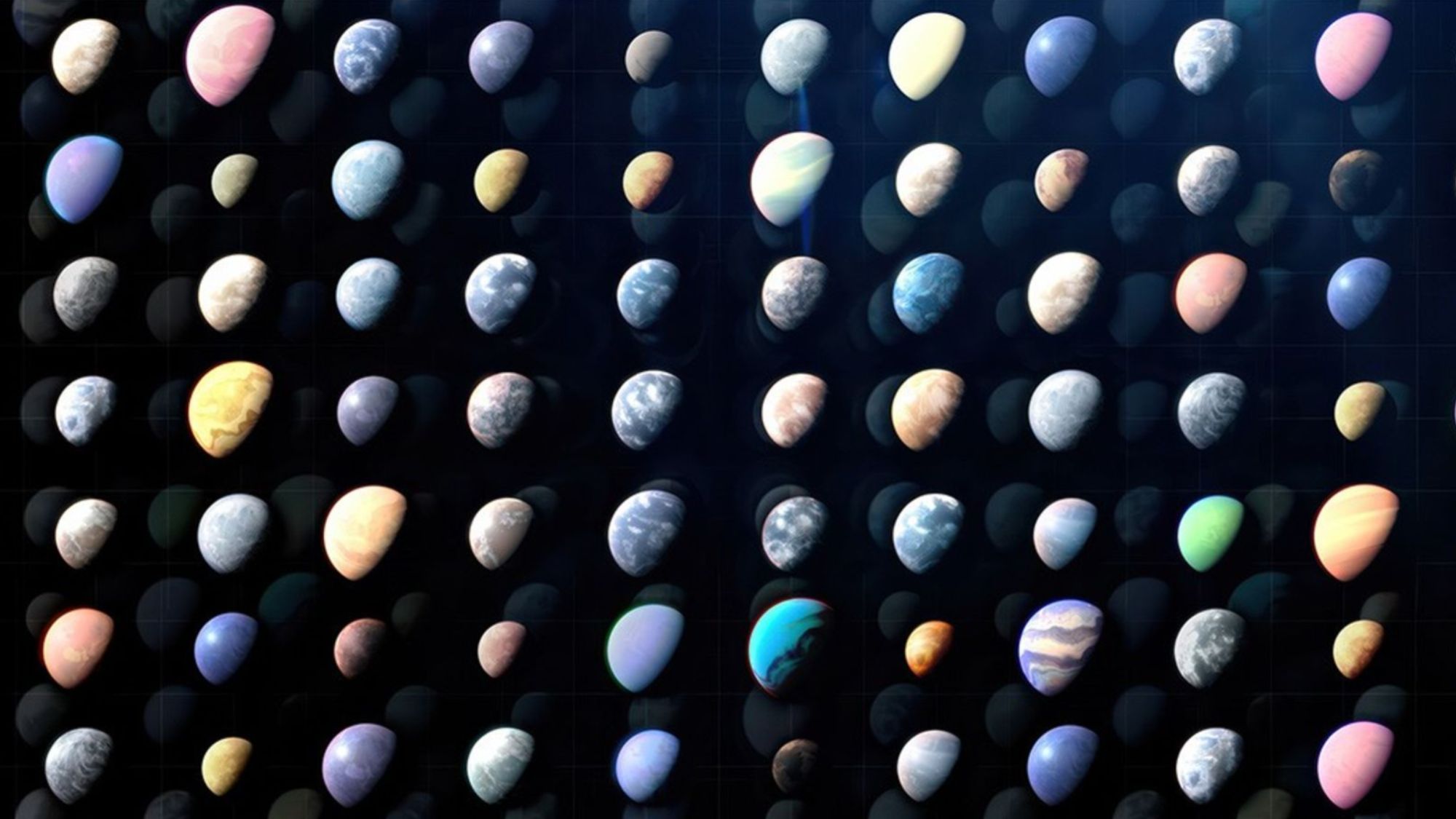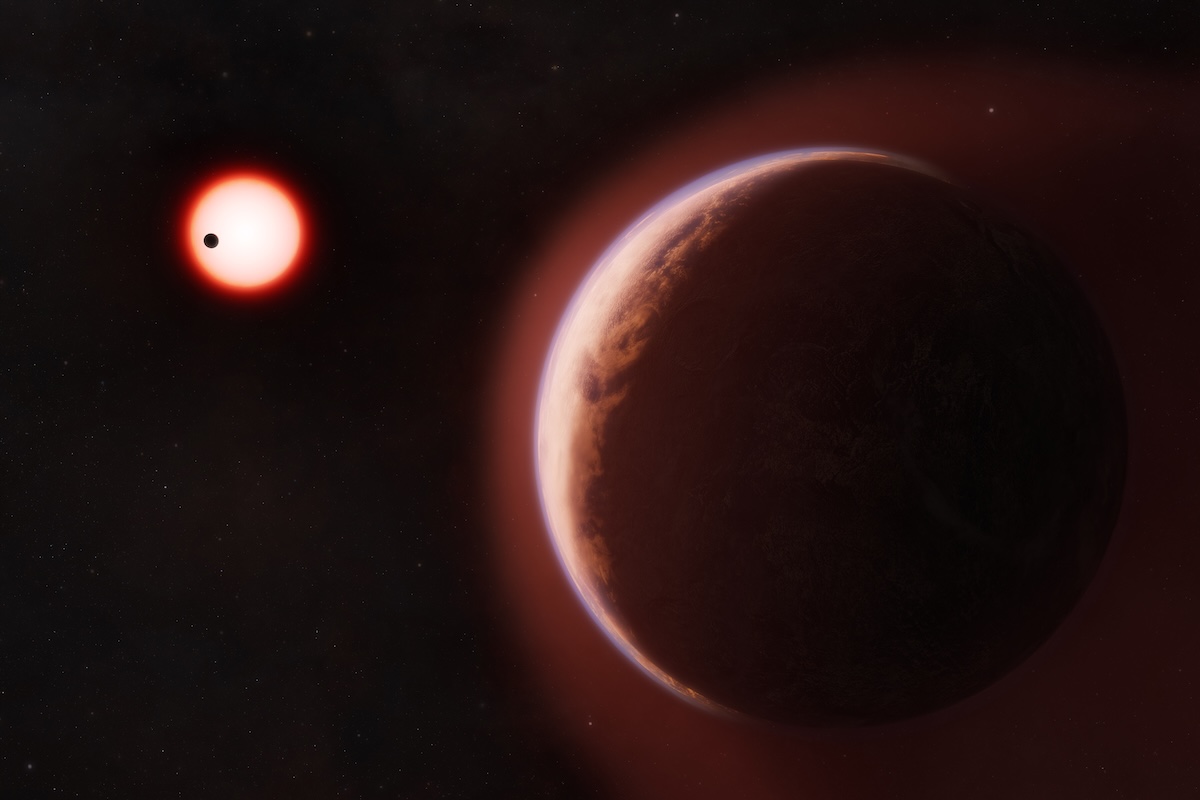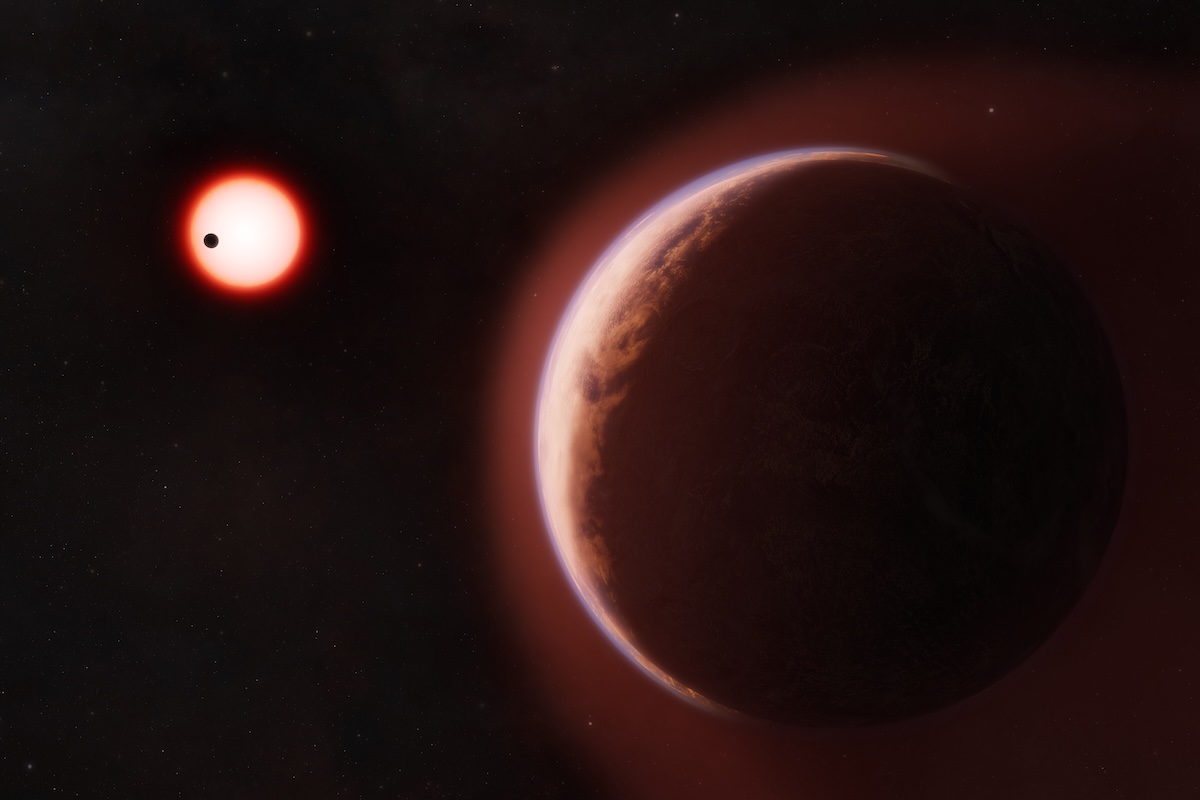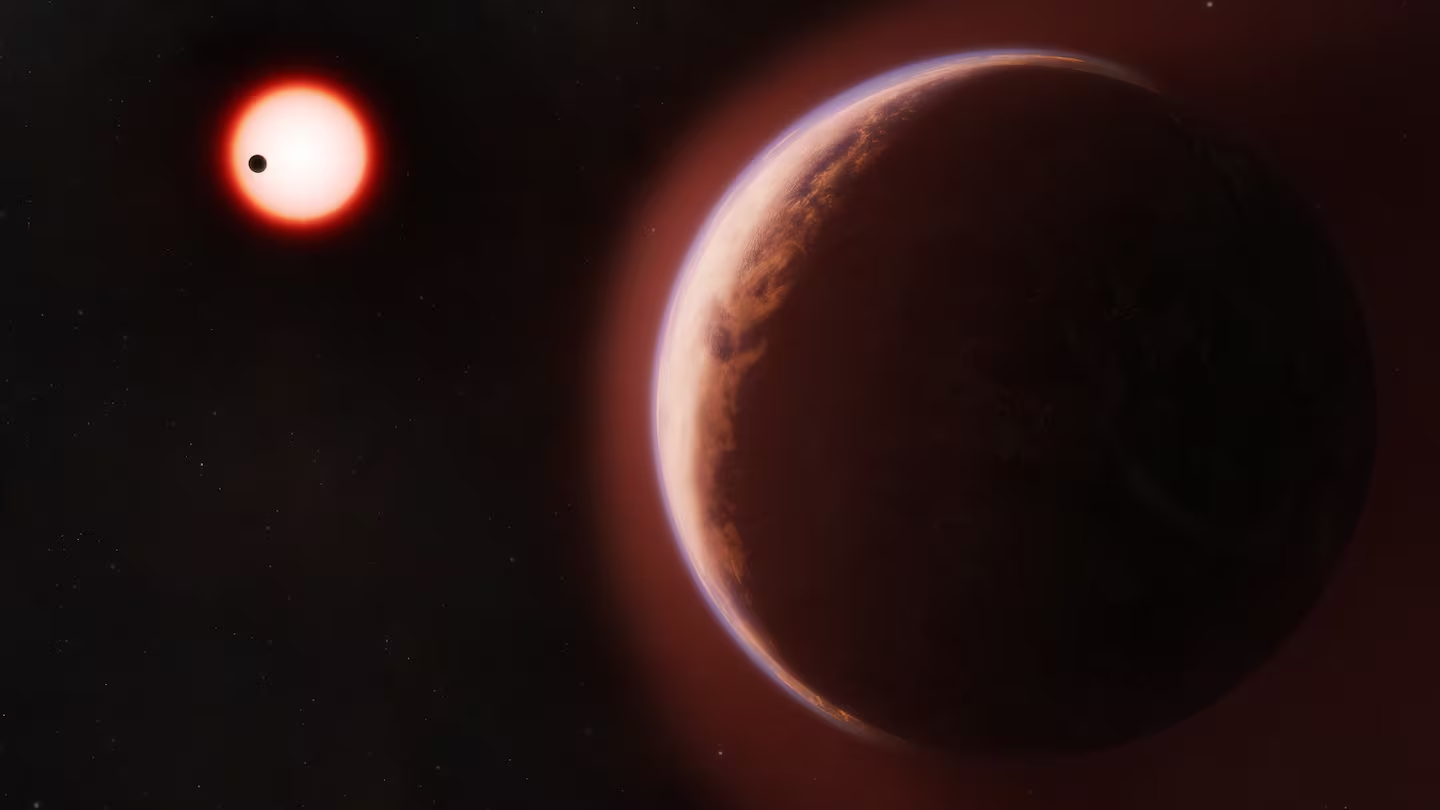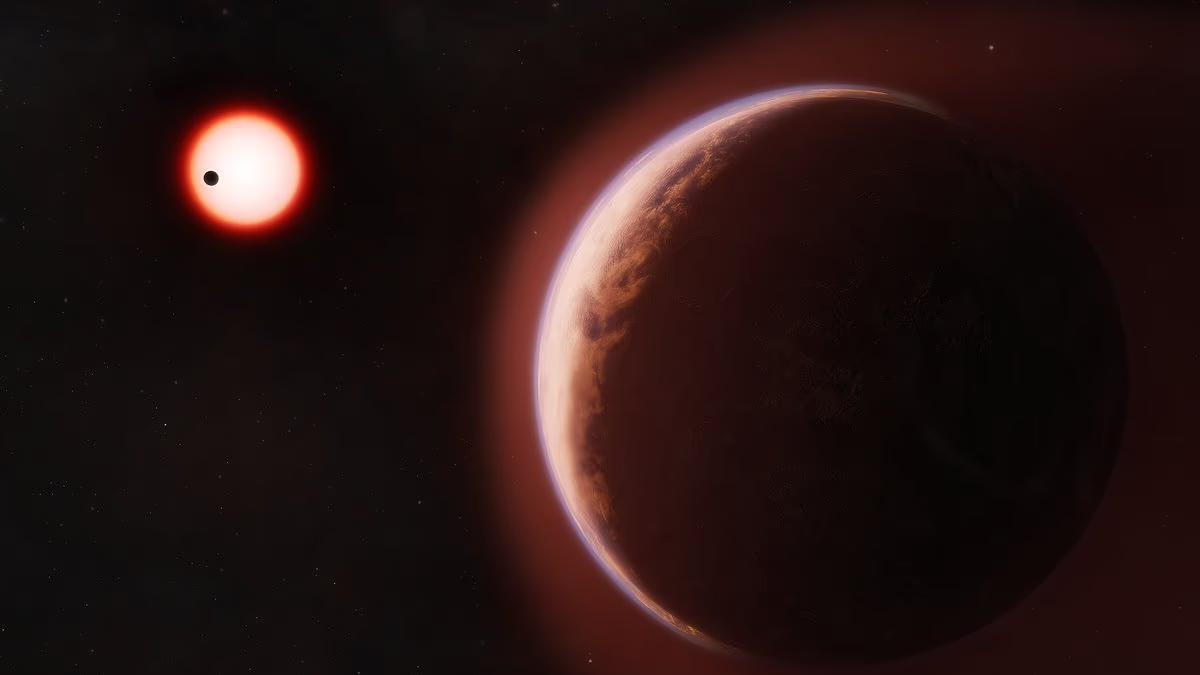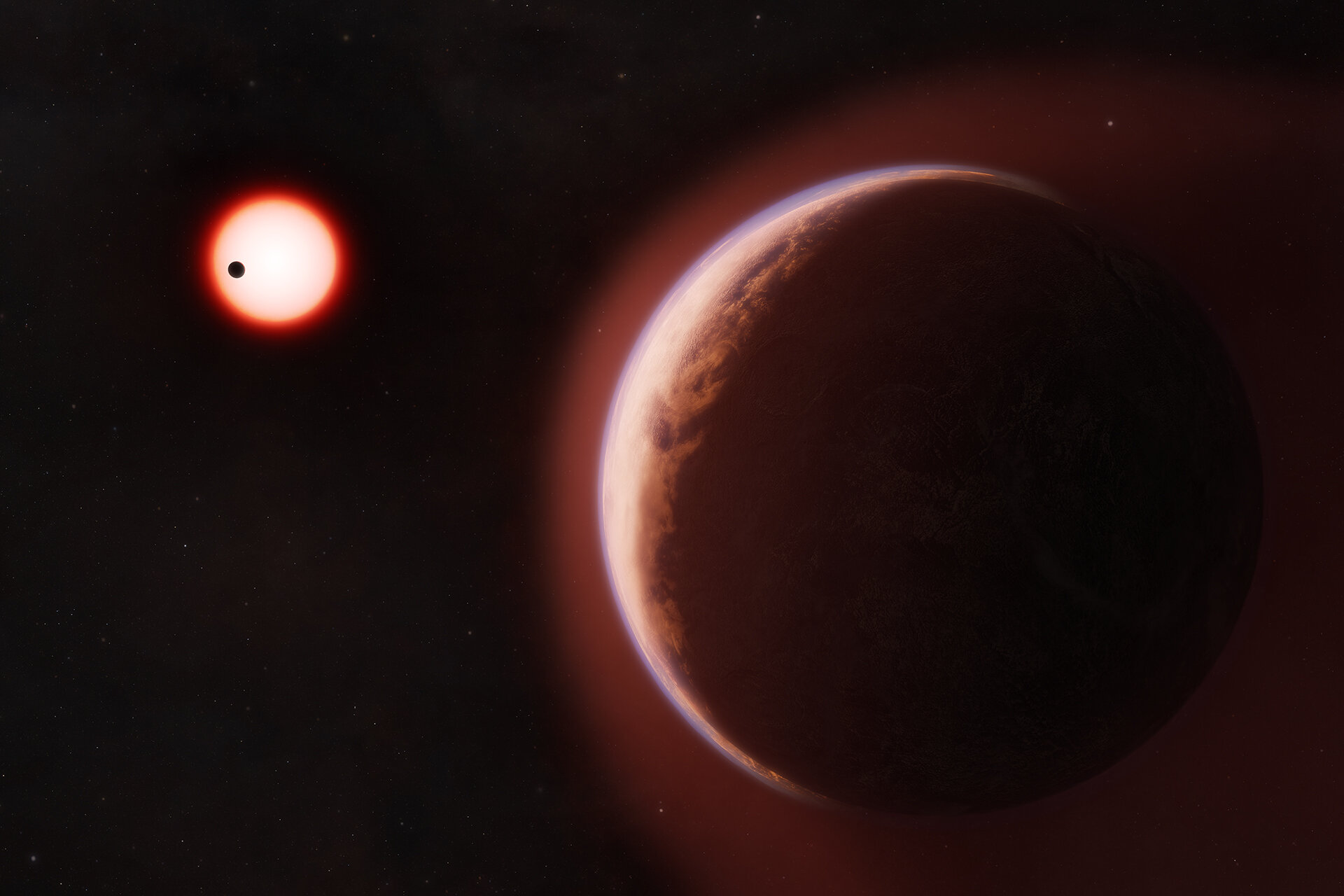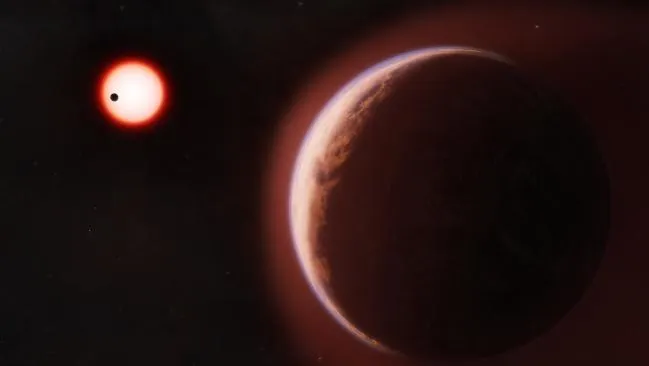
A rocky exoplanet 48 light-years from Earth not only is the right distance from its star to be habitable, but also has an atmosphere.A distant rocky planet was already known to orbit at just the right distance from its star to be hospitable for life.Now, researchers say the Earth-like world ticks another major box for being habitable: It has an atmosphere.While thousands of worlds known as exoplanets exist beyond the eight in Earth's solar system, evidence for life anywhere else has, so far, remained elusive.But the new discovery marks a major breakthrough in the search for life beyond Earth, as it's the first time that a planet in the so-called habitable zone of another star has been found to also have an atmosphere.In fact, the researchers tout their find in a press release as being the "strongest evidence yet" that worlds with life-supporting conditions similar to Earth could exist.After all, "an atmosphere is essential for a planet to support life as we know it," study lead author Collin Cherubim, an Earth and planetary scientist at Harvard University, said in a statement.Here's everything to know about exoplanets, as well as the latest cosmic discovery.What are exoplanets?Exoplanets are planets outside Earth's solar system. For that reason, these celestial bodies are sometimes also referred to as extrasolar planets.While most orbit another star – just like Earth orbits the sun – some, called rogue planets, are floating through the cosmos untethered.As of July 2026, a total of 6,324 exoplanets have been confirmed, according to NASA's Exoplanet Science Institute, which monitors and tracks exoplanets. What's more, not only are more than 8,000 additional exoplanet candidates awaiting official confirmation, but billions are thought to exist, astronomers say.Astronomers discover rocky exoplanet that may be habitableLocated a distant 48 light-years from Earth, a planet named LHS 1140b orbits its red dwarf star in what astronomers refer to as the "habitable zone" – where conditions could allow for water. In a nod to the classic fairytale, astronomers even refer to these regions as "Goldilocks" zones because conditions have to be just right – neither too hot nor too cold – for water to remain in liquid form and pool on planetary surfaces.That in and of itself is not unprecedented, as other rocky planets have previously been observed in habitable zones of their host stars.But in a major breakthrough, researchers say they recently discovered evidence of an atmosphere around the planet that has existed for billions of years. On planets like Earth, atmospheres composed of gases offer a surrounding layer of protection, helping control temperature and shielding inhabitants from things like radiation.This exoplanet 48 light-years from Earth may be able to support lifeA rocky exoplanet named LHS 1140b is the first in its stars' habitable zone to also be found with an atmosphere, astronomers say.Using a ground telescope in Chile to observe LHS 1140b and another planet in a rare alignment, the researchers detected helium escaping around it, confirming it retains an atmosphere. The team published their findings July 16 in the journal Science.Why is finding, exploring exoplanets important?The discovery marks a major milestone in the search for planets beyond Earth's solar system that could support life.Since the first exoplanet was discovered in 1995, researchers have spent years looking for and finding all sorts of strange and captivating worlds.But there's one they haven't found yet: a planet that closely resembles Earth. Such a landmark discovery would be a monumental leap forward to finding a world that could potentially harbor living organisms.Now, not only is it clear that LHS 1140b is similar in size to Earth and orbits in its star's habitable zone, but it likely has a dense atmosphere that is also a crucial condition to support life.As far as Cherubim is concerned, further study is warranted to determine the planet's atmosphere's complete composition and search for evidence of oceans and other features on the surface that could harbor life.“This has been a model validation," Cherubim said in his statement, "and hopefully it's just the first of many more observations to come."Eric Lagatta is the Space Connect reporter for the USA TODAY Network. Reach him at elagatta@usatodayco.com
Could this distant rocky exoplanet support life? Astronomers say yes
A rocky exoplanet 48 light-years from Earth has offered the 'strongest evidence yet' that other planets besides Earth could be hospitable to life.
690 words~3 min read