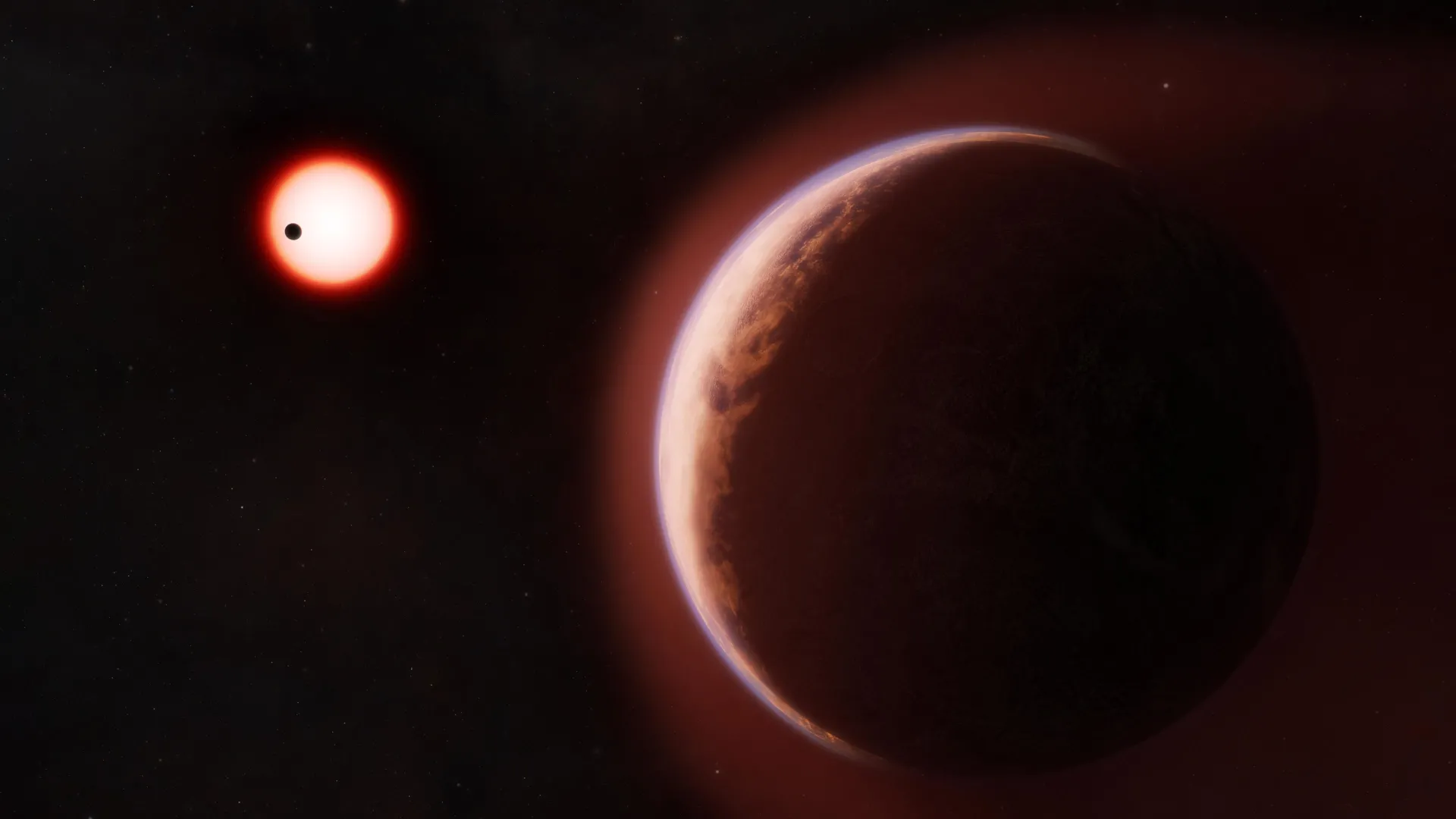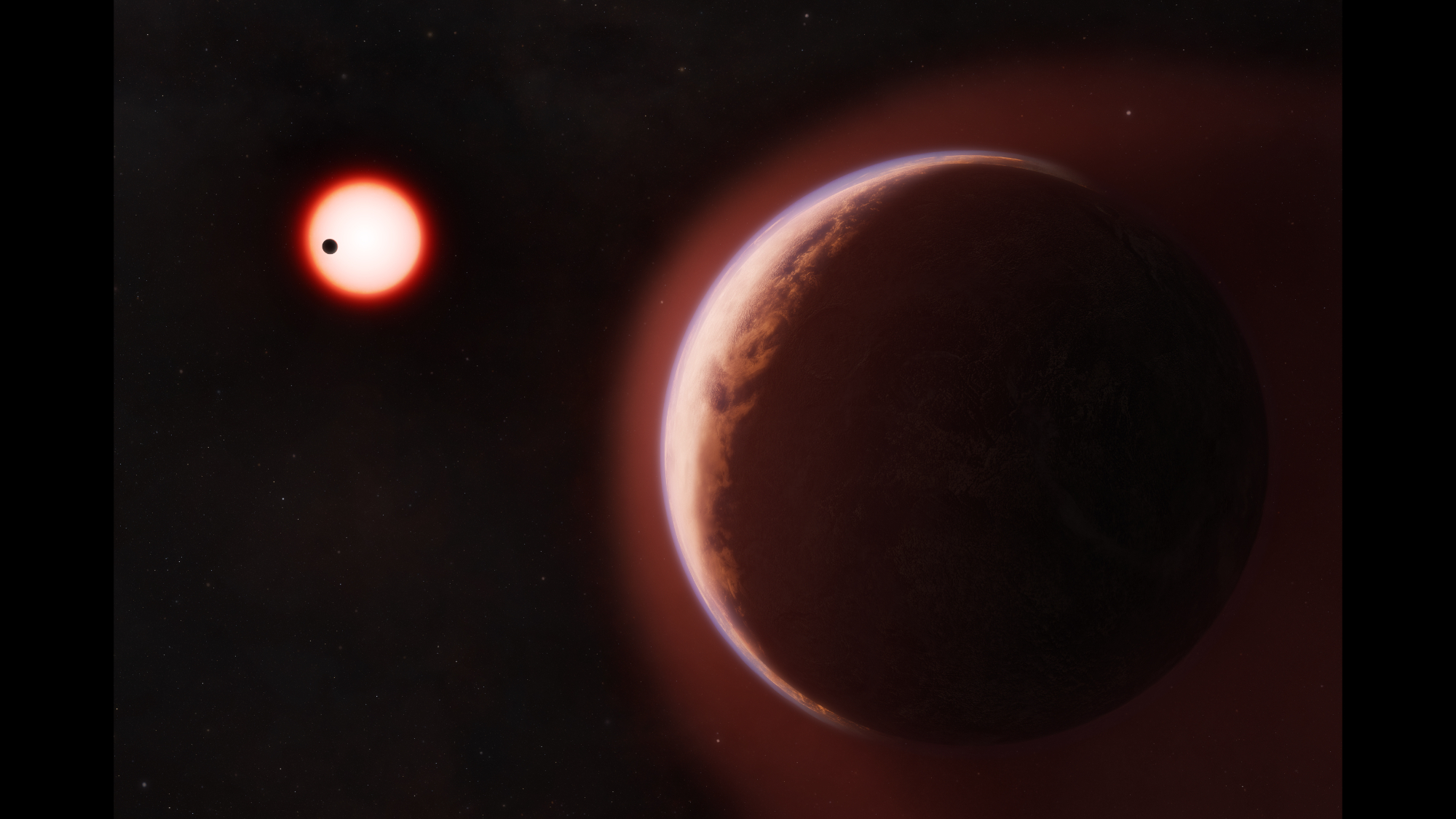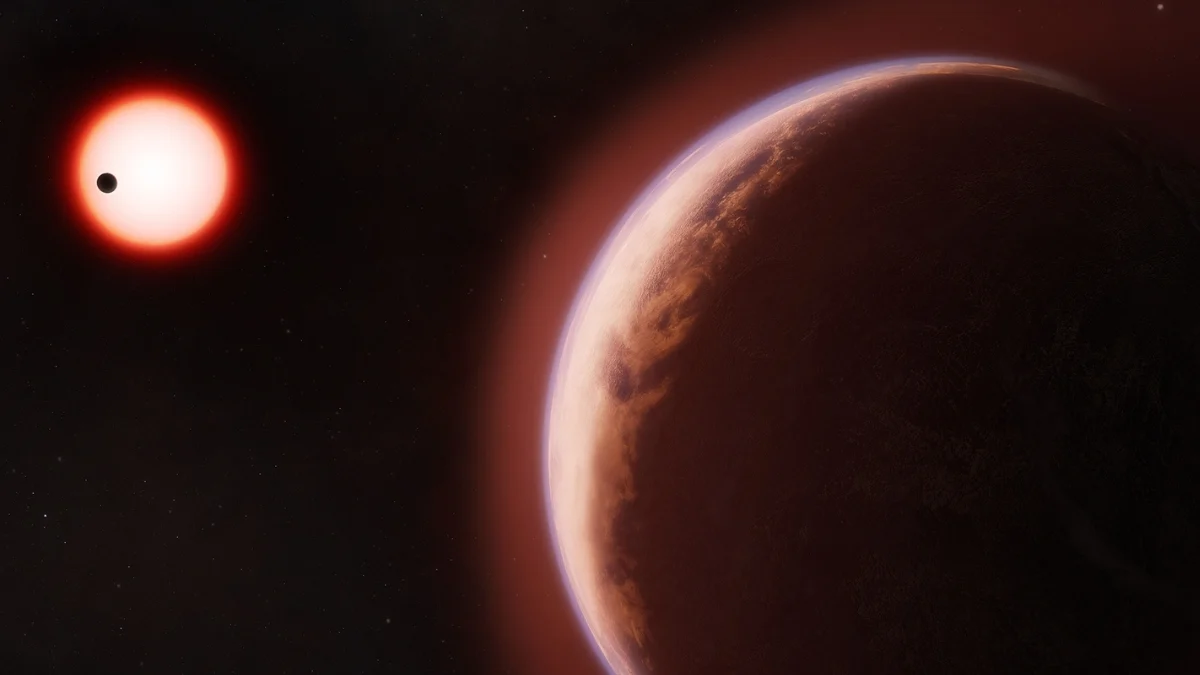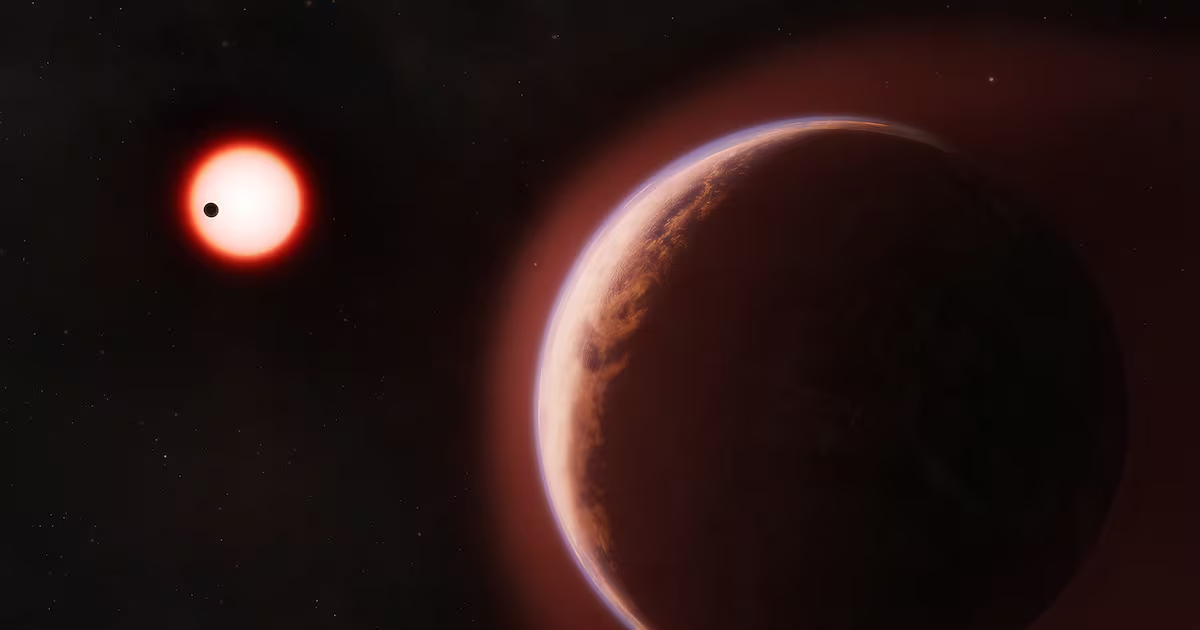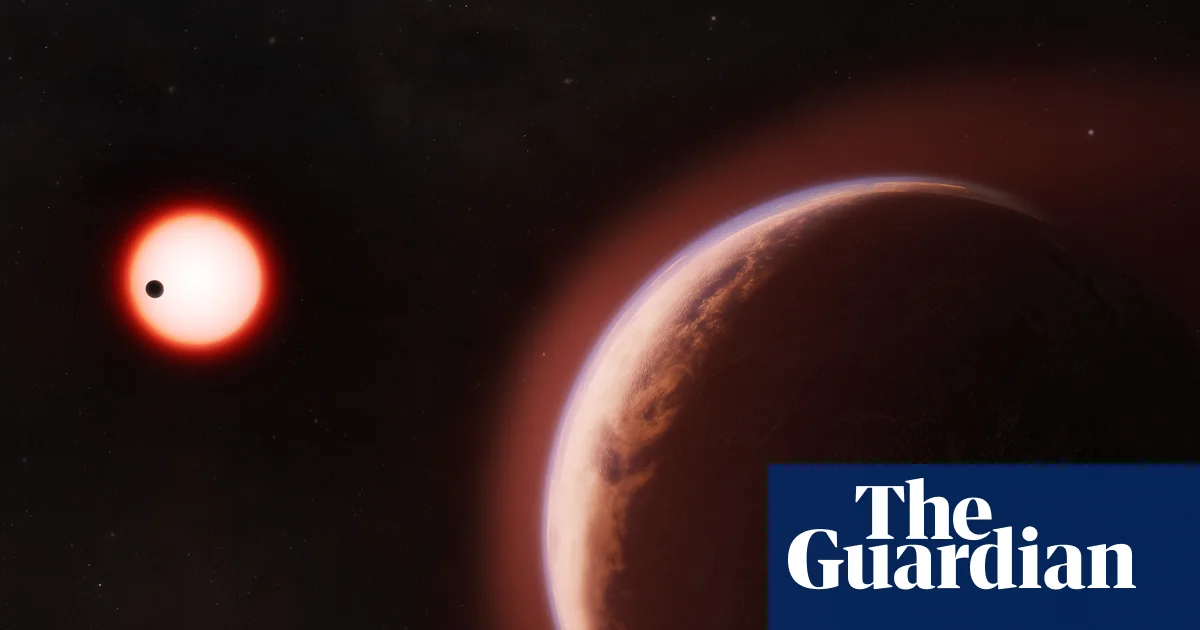
A rocky world orbiting within its star’s habitable zone may be surrounded by a helium-rich atmosphere, providing the strongest evidence yet that planets with Earth-like conditions could support life outside the solar system. In a new study published in Science, a team of astronomers reports the first detection of an atmosphere around an Earth-like rocky planet orbiting within the star system’s habitable zone. The findings represent a serious breakthrough in the search for life beyond Earth, providing the strongest evidence yet that a rocky planet in a habitable zone has retained an atmosphere. “An atmosphere is essential for a planet to support life as we know it,” Collin Cherubim, lead author of the study who recently earned his Ph.D. from Harvard University, said in a statement. “This is the first time anyone has found an atmosphere on a rocky planet in the habitable zone of another star.” The habitable zone The planet, called LHS 1140 b, is located approximately 48 light-years away from Earth. It orbits a red dwarf star, which is much smaller and cooler than our Sun.
The team of scientists behind the new study observed LHS1140b using the Magellan Clay telescope at Las Campanas Observatory in Chile. As it transited in front of its star, the scientists found traces of helium escaping from the planet into space. After ruling out other possible explanations, the team determined that the rocky planet is in possession of a helium-rich atmosphere.