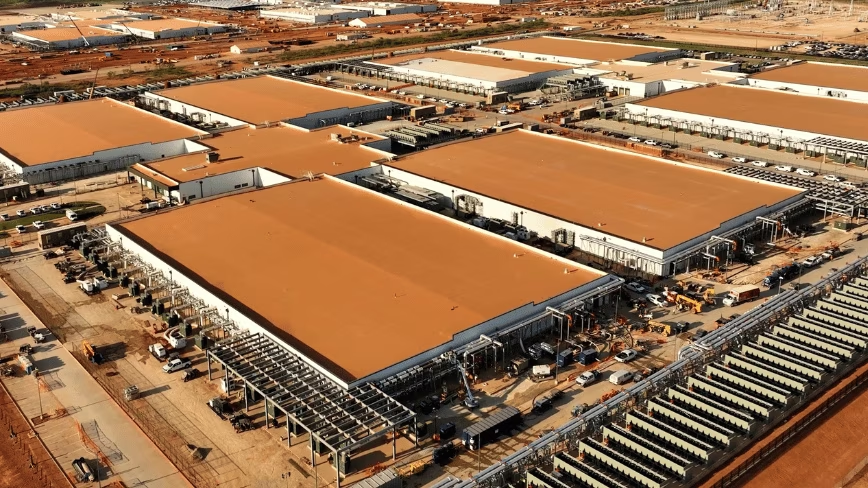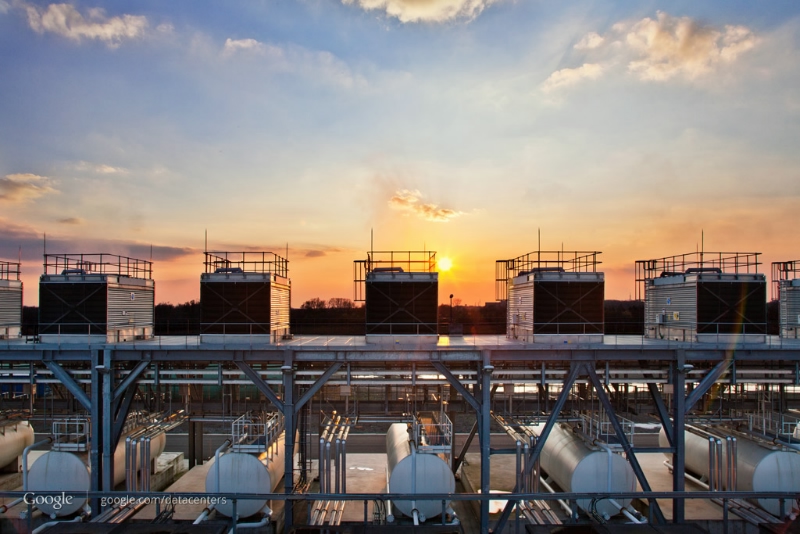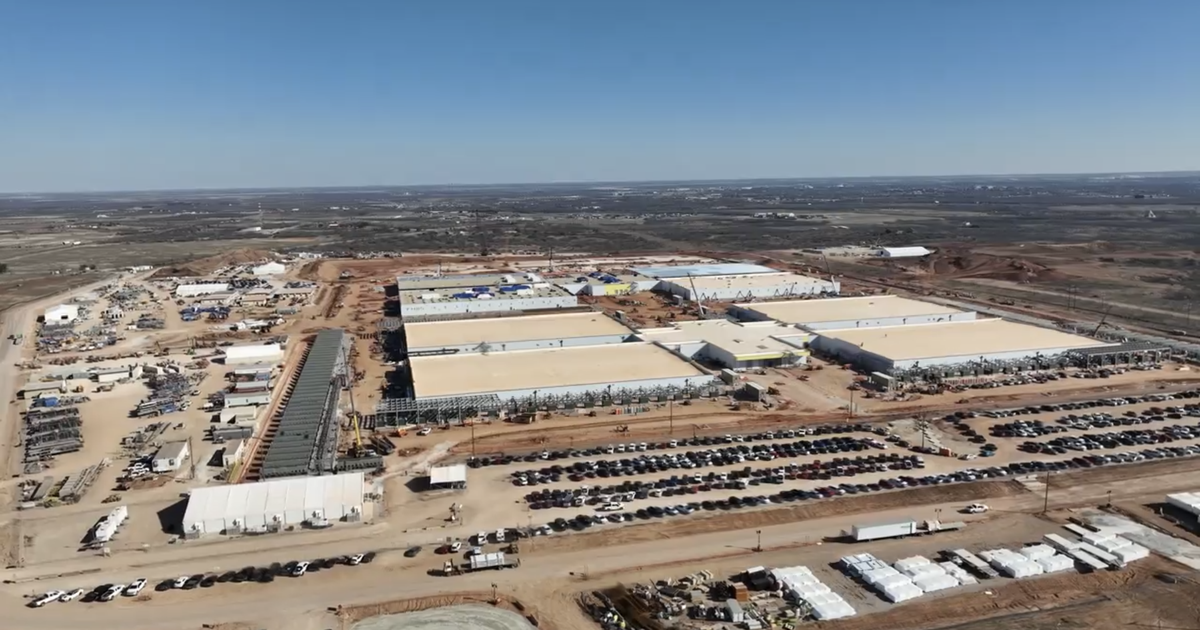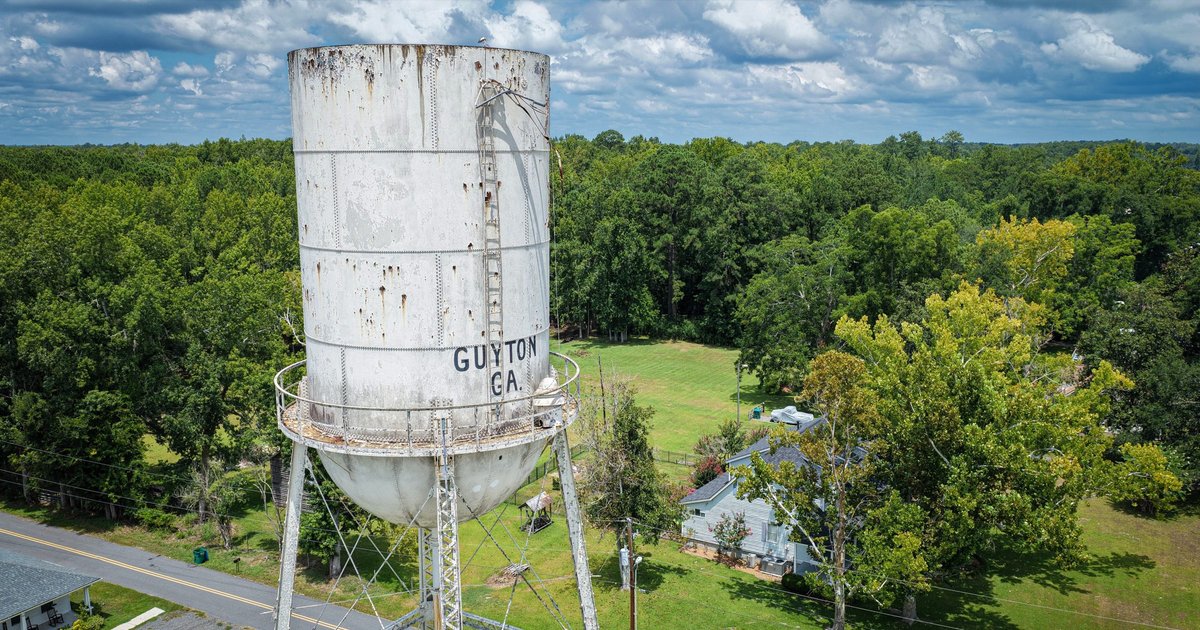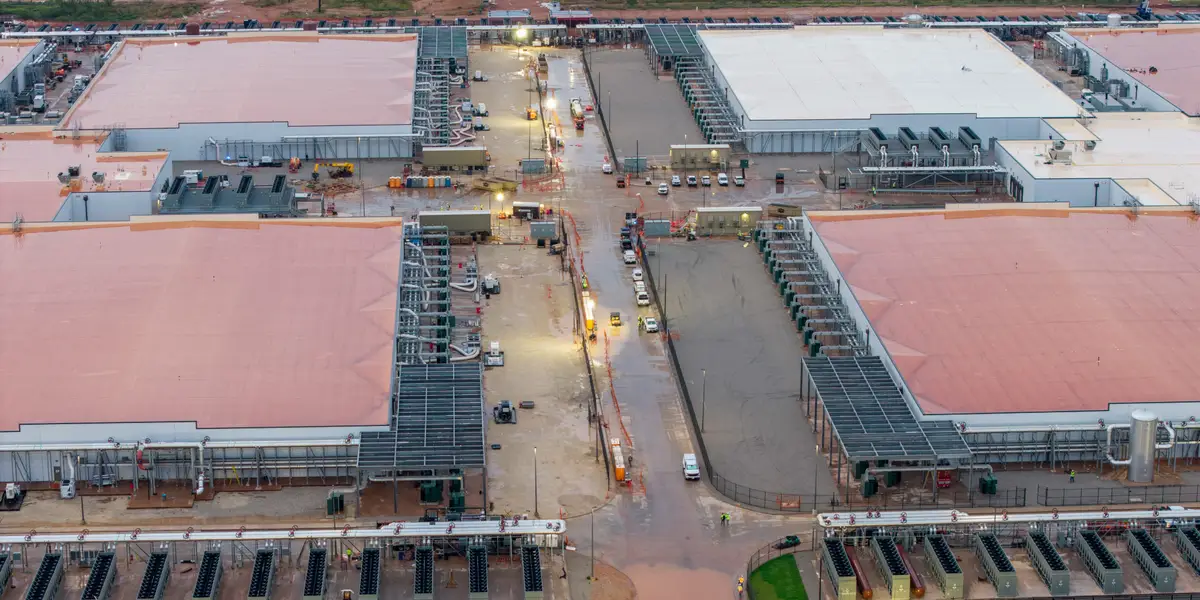
Ina FriedAdd Axios as your preferred source tosee more of our stories on Google.Illustration: Brendan Lynch/AxiosOpenAI on Wednesday announced plans to build a data center near Savannah, Georgia, with 3.2 gigawatts of power to be delivered in phases from 2028 to 2032.Why it matters: Computing infrastructure is a major constraint on how quickly AI improves and how broadly it can be deployed.Between the lines: OpenAI says guarantees are in place that residential electricity prices won't increase and also that OpenAI will reduce its power consumption during periods of high demand before others are impacted.The new data center will use closed-loop cooling with minimal water usage, the company says.OpenAI says it will provide $80 million in benefits toward supporting local priorities such as schools, public safety, health care, workforce training and housing. The company says it expects to also pay hundreds of millions of dollars in state and local taxes and become the county's largest taxpayer.It will also provide up to $71 million in Codex credits for use by every student at a college in Georgia and pay for an independent auditor to verify it is following through on all of its commitments.The big picture: OpenAI's new project comes amid growing public resistance to data center construction from across the political spectrum.New York Gov. Kathy Hochul signed an executive order last week aimed at imposing a one-year moratorium on the building of new data centers by large tech companies.What they're saying: OpenAI is presenting its Georgia project as a model for early community engagement and accountability as it seeks approval for new data centers."At the end of the day, you're only going to get approvals to be able to build these projects if you're actually doing right by these communities, and the communities themselves have become a lot more sophisticated," OpenAI policy chief Chris Lehane told Axios.Effingham County Commissioner Jamie DeLoach said in a statement that he and his colleagues posed tough questions around environmental impact and other issues."What we found is a project that uses minimal water, won't increase energy costs for county residents, will generate new tax revenue to support our schools, and create new opportunities for local businesses," DeLoach said.The county says it estimates the average homeowner will see a 40% reduction in property taxes due to proceeds generated by OpenAI's data center.
OpenAI announces $20 billion Georgia data center project
The campus near Savannah would receive 3.2 gigawatts of power and create hundreds of long-term jobs, according to local officials.
385 words~2 min read