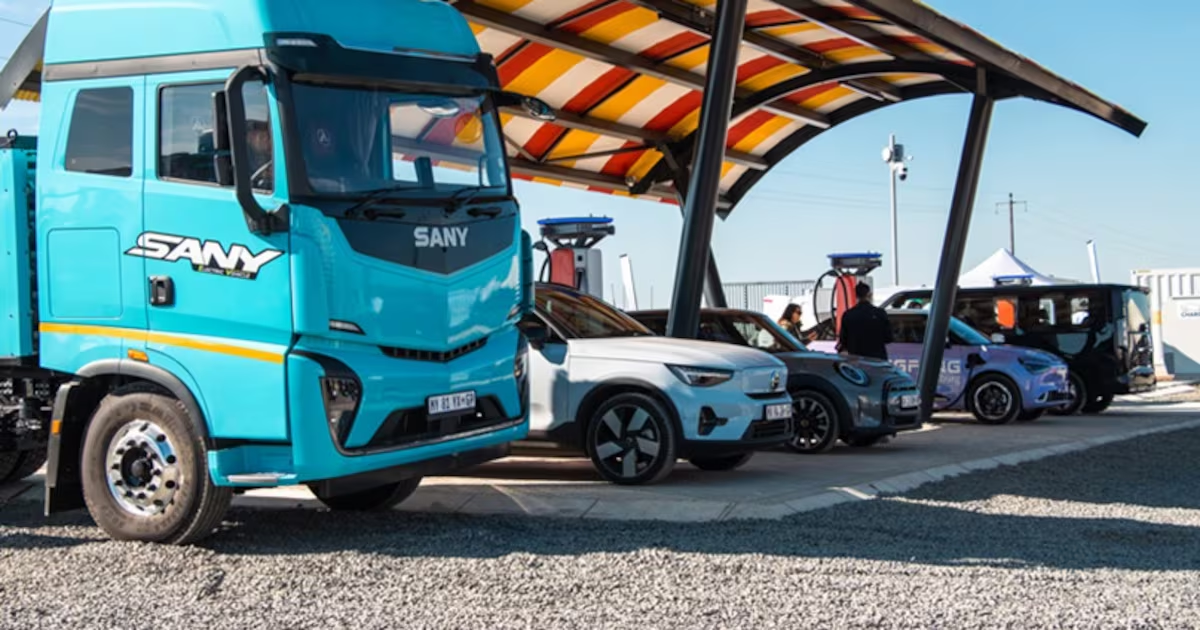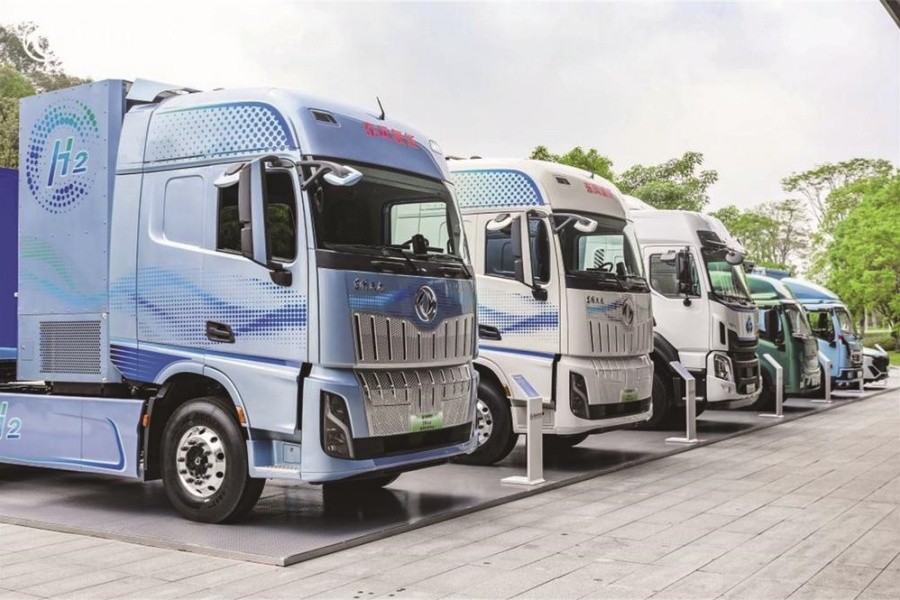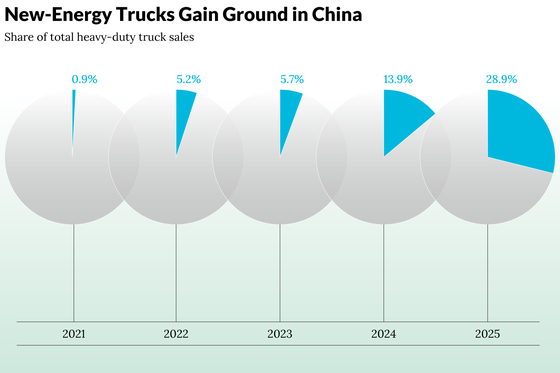
The new requirements will be introduced in three stages between 2027 and 2030. They will first apply to heavy trucks and tractor units above 15 tonnes, before expanding to medium and large buses and, finally, medium-duty trucks and dump trucks. By 2030, manufacturers must reduce average greenhouse gas emissions from these vehicle categories by 30 per cent compared with the 2021-2022 baseline. Companies failing to meet the targets may face financial penalties, although these will be introduced gradually before the regime becomes fully mandatory in 2031.
To encourage the transition to zero-emission commercial vehicles, South Korea will continue to award “super credits” for battery-electric and hydrogen fuel cell trucks and buses. The draft regulation also introduces compliance credits for hydrogen internal combustion engine vehicles.
Passenger cars and manufacturing also in focus
The government is also tightening emissions standards for passenger vehicles. By 2030, the fleet-average target for passenger cars and vans with up to ten seats would fall from the previously planned 70 g/km to 54 g/km. For light trucks and vehicles with 11 to 15 seats, the limit would decrease from 146 g/km to 98 g/km.