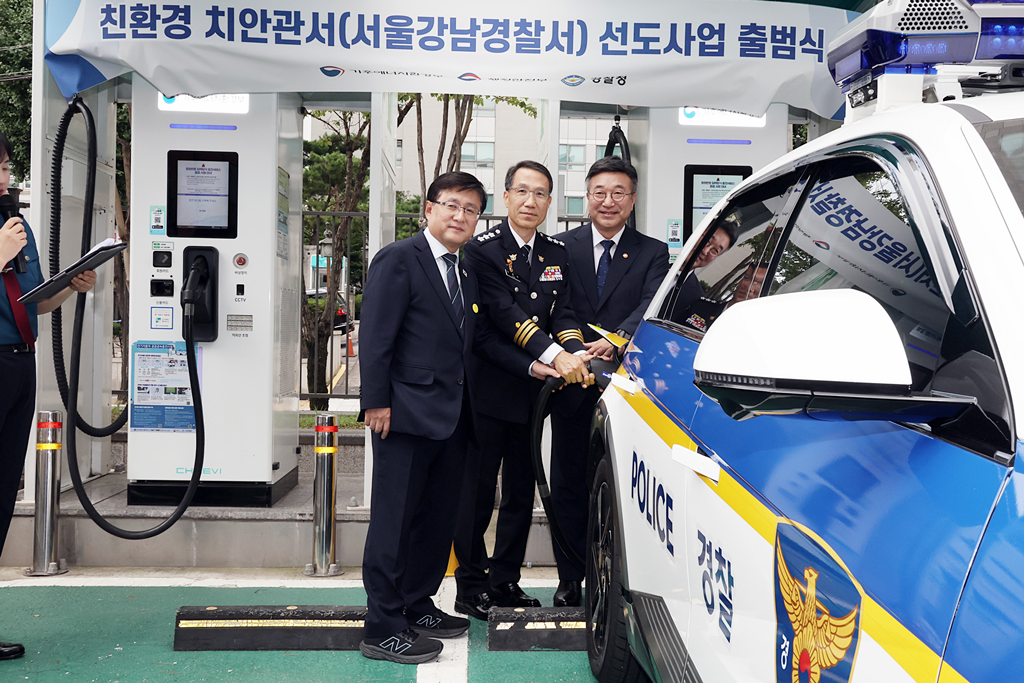
On 30 July, the Ministry of the Interior and Safety (MOIS), the Korean National Police Agency (KNPA), and the Ministry of Climate, Energy and Environment (MCEE) signed a memorandum of understanding to implement the new initiative at Gangnam Police Station in Seoul. The three government agencies also launched an eco-friendly police station pilot project during the event.
South Korea’s police vehicle fleet currently comprises approximately 17,600 units. As of the end of June 2026, only 2,185 units, or 12.4 per cent of the fleet, were electric or hydrogen models. Based on procurement data from 2023 to 2025, the KNPA purchases or leases about 1,908 new vehicles per year.
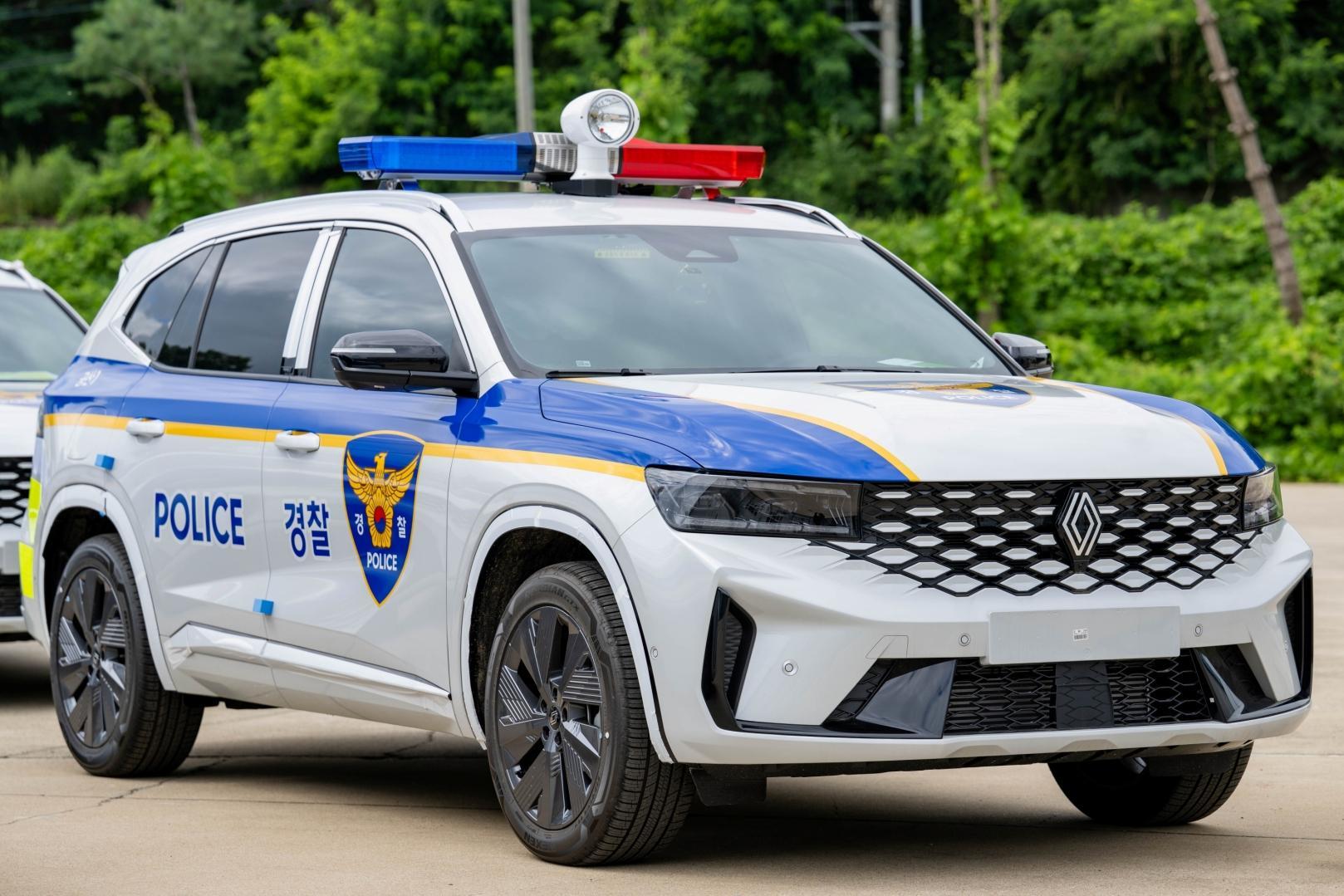
Barring certain special-purpose vehicles, South Korea says its goal is to transition all newly purchased or leased police vehicles to electric and hydrogen models by the deadline. The government expects the superior performance and quiet operation of these zero-emission vehicles to significantly improve the operational response capabilities of its police force. It also says that software-defined vehicles (SDVs) could improve the perceived quality of public safety services.
As part of the pilot project, the government will replace 22 ICE-powered vehicles operated by police substations under Gangnam Police Station with EVs. It will also install nine 200 kW fast chargers across six substations: two each at Yeoksam, Nonhyeon, and Cheongdam, and one each at Samseong A, Samseong B, and Sinsa.