Researchers in Indonesia developed a nano-enhanced phase-change material cooling approach for PV-powered electric bicycle charging stations, combining meta-analysis, experimental testing, and artificial neural network forecasting.
Researchers from Indonesia’s Sebelas Maret University have investigated the use of nano-enhanced phase-change materials (NePCMs) for the passive cooling of PV modules used in electric bicycle charging stations. The study combines a systematic meta-analysis, experimental evaluation, and artificial neural network (ANN)-based forecasting.
“In tropical regions such as Indonesia, ambient temperatures frequently exceed 30 C while solar irradiance levels reach approximately 4.76 kWh/m²/day, creating conditions that intensify thermal accumulation in PV modules,” the team said. “As a consequence, thermal management has become a critical aspect for maintaining stable PV performance, particularly in solar-powered charging infrastructure.”
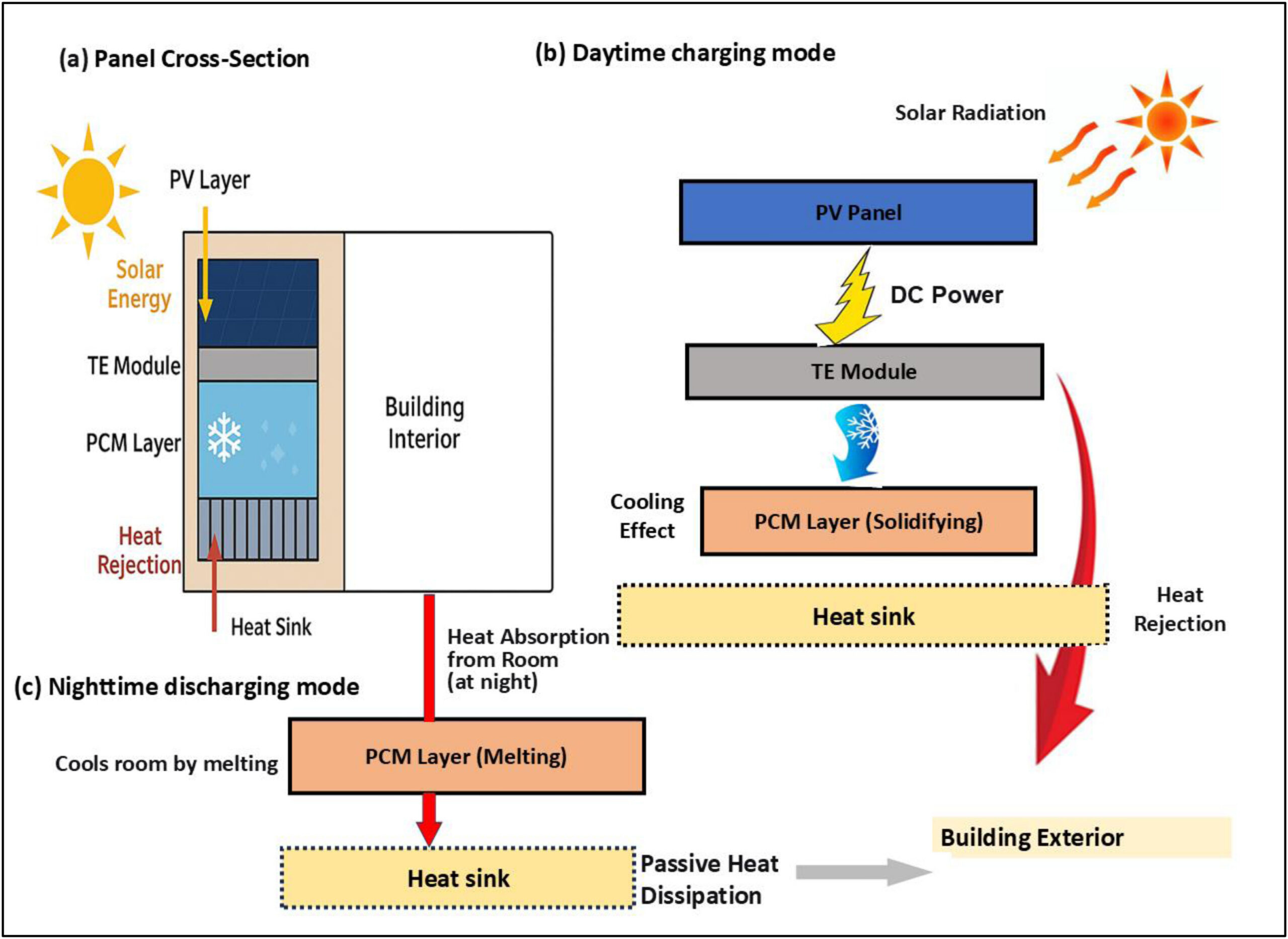
Schematic of the system | Image: Universitas Sebelas Maret, Next Energy, CC BY 4.0
They added that, unlike previous studies that primarily focused on individual experimental evaluations, their work integrated quantitative evidence synthesis to guide material selection before experimental implementation. They said that the findings provided a structured foundation for designing advanced PV–PCM hybrid cooling systems specifically for solar-powered public electric vehicle charging station (PEVCS) infrastructure.