Researchers have designed a system that incorporates PV power generation, thermoelectric cooling, and latent heat storage using waste cooking oil. They have simulated an optimized it using an array of models. Results suggest that a single panel can deliver approximately 6–15 kWh/day of cooling.
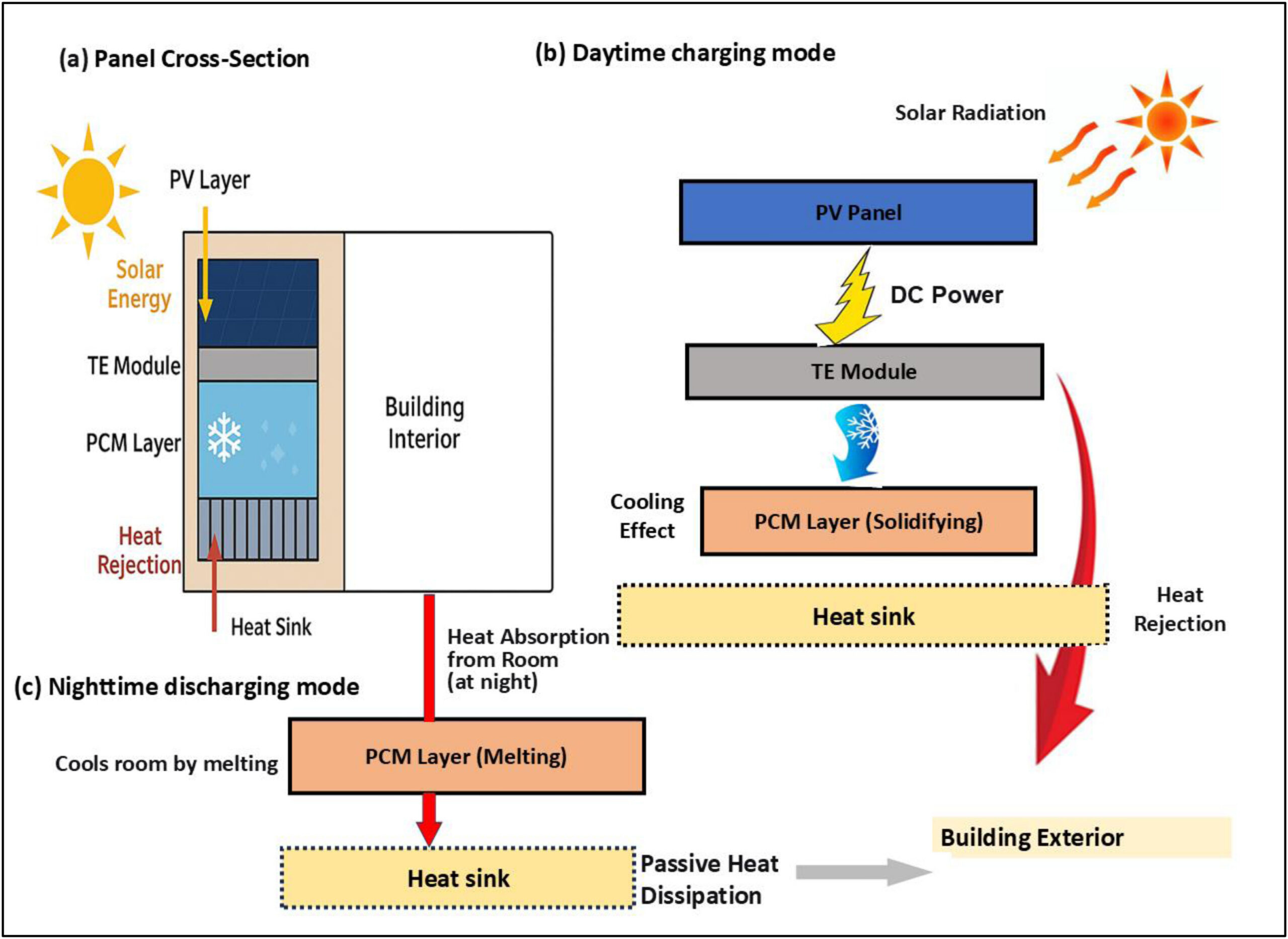
A research team from India’s Aarupadai Veedu Institute of Technology has simulated the performance of cooling panels that combine PV power generation, thermoelectric (TE) cooling, and latent heat storage. The system uses waste cooking oil as a bio-based phase change material (PCM).
Cooling panels for homes are building-integrated systems that absorb and remove heat from indoor spaces, helping lower temperatures and reduce air conditioning demand. They can use technologies such as circulating water, thermoelectric devices, or phase change materials to store and release thermal energy. When combined with PV modules, they can use solar-generated electricity to provide cooling with lower energy consumption.
“Our study introduces a multi-fidelity modeling approach for solar-driven hybrid cooling panels using waste cooking oil as a phase change material,” corresponding author Keerthi Palraj told pv magazine. “The novelty lies in converting a waste resource into a low-cost thermal energy storage material for sustainable cooling applications.”