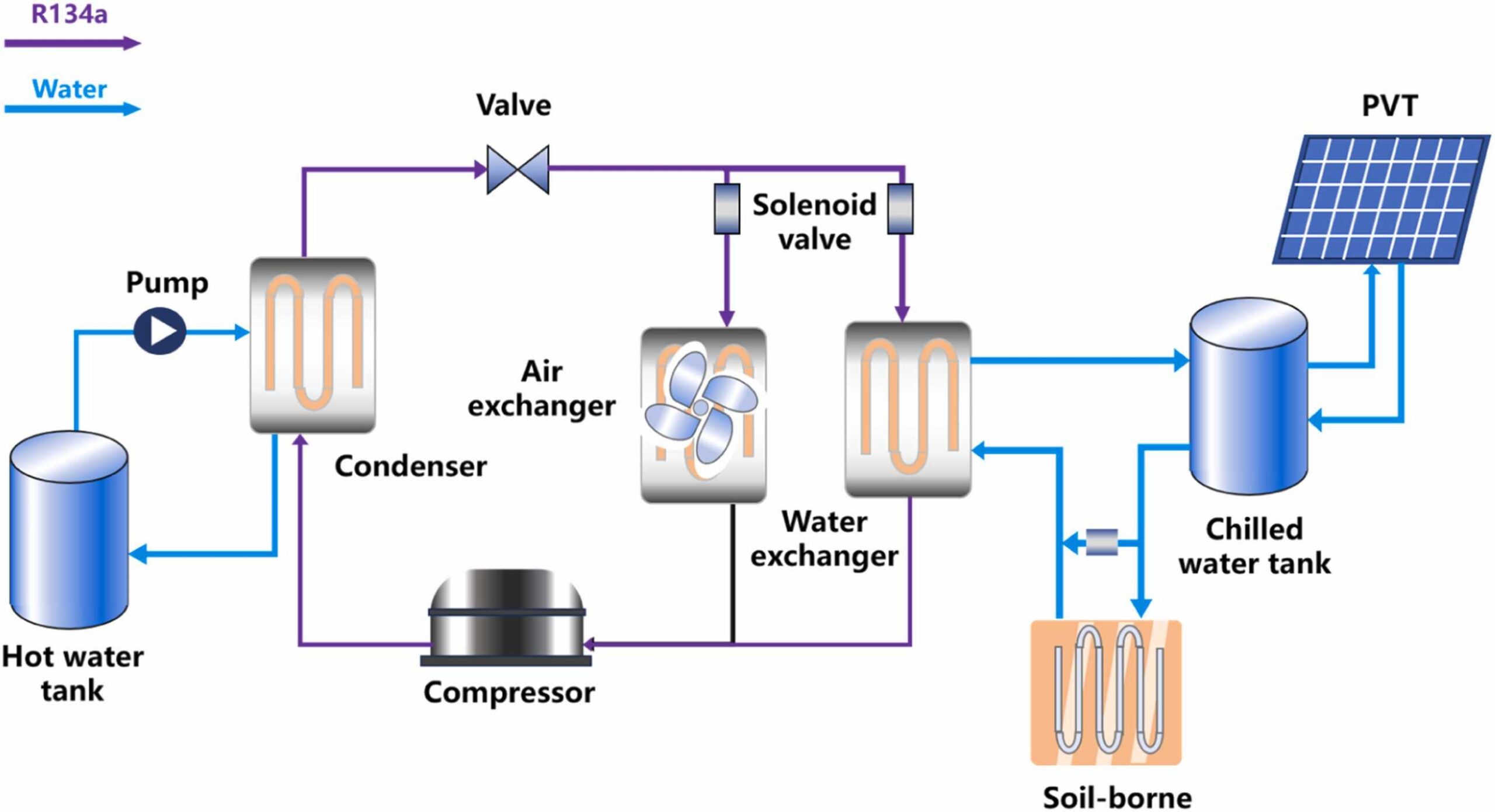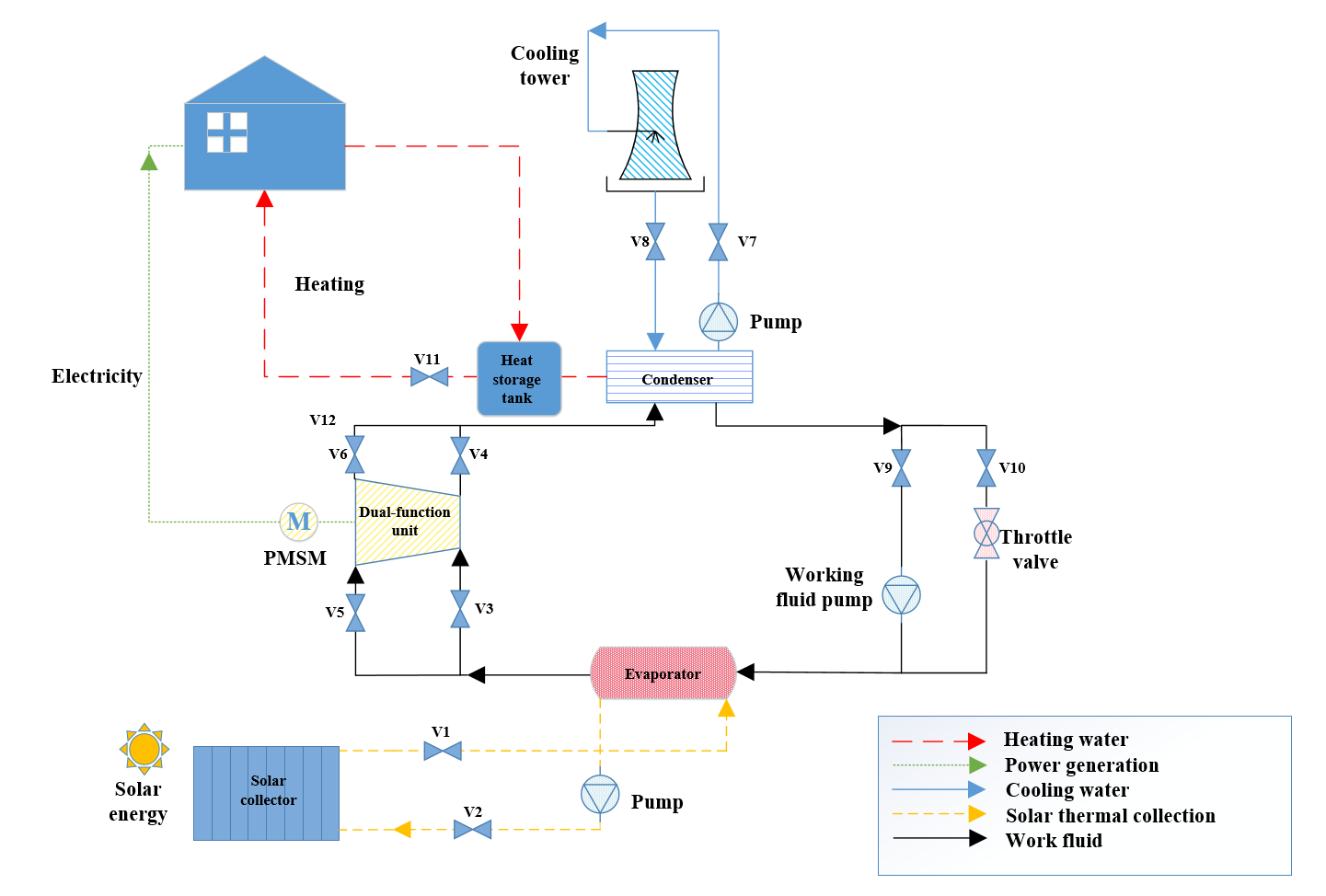
Researchers in China proposed a solar-driven integrated system that combines reversible heat pump and organic Rankine cycle (ORC) technologies, enabling flexible switching between heating, cooling, and electricity generation for buildings. Simulation results show strong performance dependence on solar irradiance and temperature, with COP rising up to 4.1 and optimal operation achieved at 600–850 W/m² irradiance.
Researchers from Hebei University of Technology in China have proposed an integrated energy system that combines solar-driven reversible heat pumps with organic Rankine cycle (ORC) technology to provide efficient and flexible energy supply for buildings.
Their concept leverages the complementary operation of both systems: the reversible heat pump can deliver heating or cooling depending on seasonal demand, while the ORC system enables the recovery and conversion of low-grade thermal energy into electricity.
ORC is a thermodynamic process that generates electricity by using an organic working fluid with a low boiling point to convert low-temperature heat sources into mechanical work, which is then transformed into electrical power. Compared with the conventional Rankine cycle, it is better suited for low- and medium-grade heat recovery applications because the working fluids can efficiently vaporize at relatively low temperatures, enabling effective energy conversion from waste heat sources such as industrial exhaust, geothermal energy, or solar thermal systems.