Academia
As the boundaries that once separated sectors become blurred, prosperity increasingly depends on how economies build the ecosystems that sustain technological progress and nurture new productive capacity.
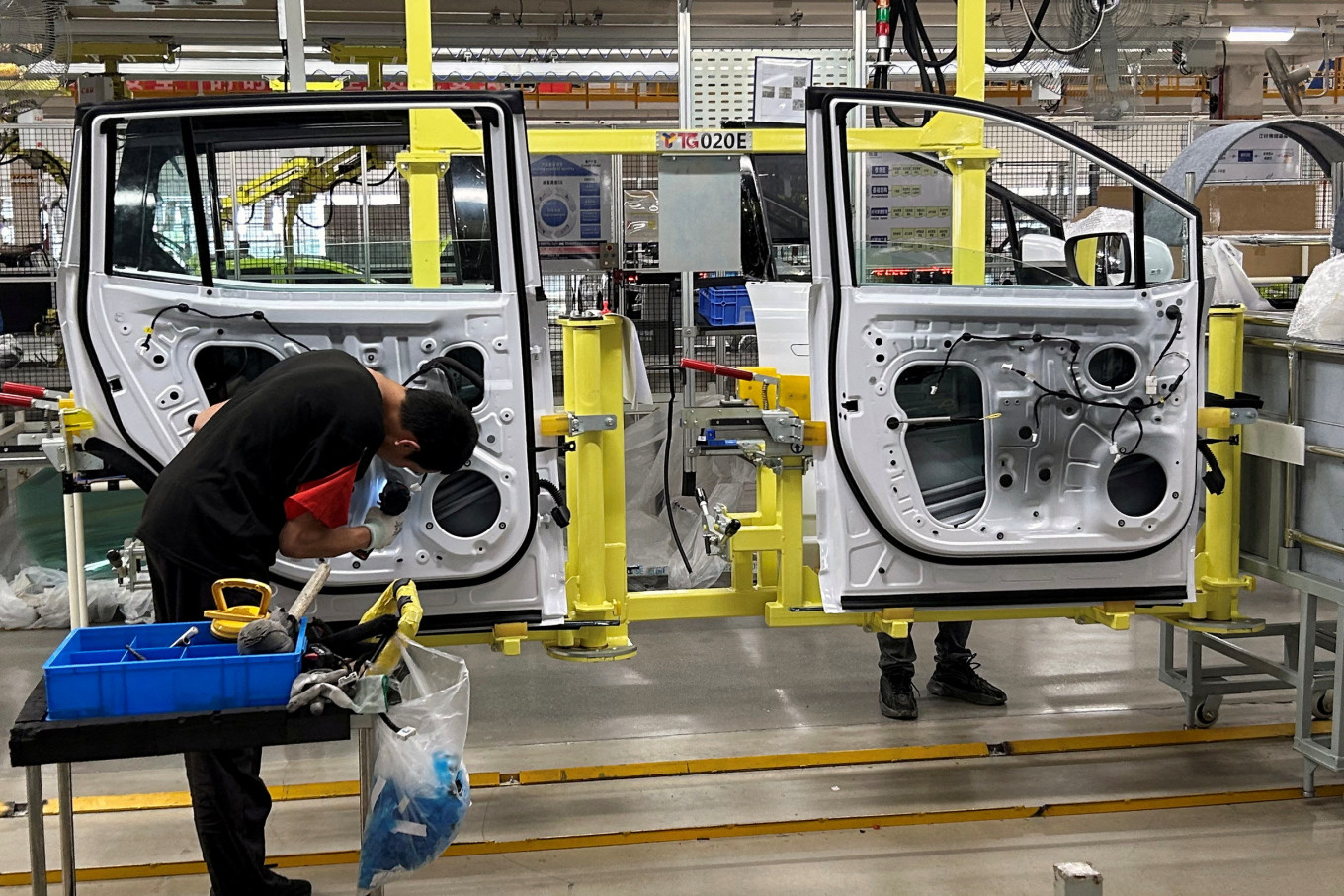
Employees work on an electric vehicle production line during an organized media tour to a factory under Jiangling Group Electric Vehicle (JMEV), in Nanchang, Jiangxi province, China, on May 22, 2024. (Reuters/Kevin Krolicki)
The economist Dani Rodrik recently reopened one of development economics’ most enduring debates, arguing that developing countries should shift their attention from manufacturing to productivity-enhancing services. In doing so, he has challenged the long-held assumption that manufacturing remains the primary engine of development.But the deeper issue is not whether services should replace manufacturing. It is whether structural transformation should still be understood primarily as the movement of resources between sectors. That framework, which guided development economics for more than half a century, is increasingly out of step with how modern economies actually create value.
From W. Arthur Lewis and Raúl Prebisch to Albert Hirschman and Nicholas Kaldor, structural transformation was understood as the reallocation of labor and capital from low-productivity activities to more productive ones. Manufacturing occupied center stage because it combined economies of scale, technological learning and sustained productivity growth. But that framework reflected the realities of an era in which factories were at the heart of technological progress and income growth.