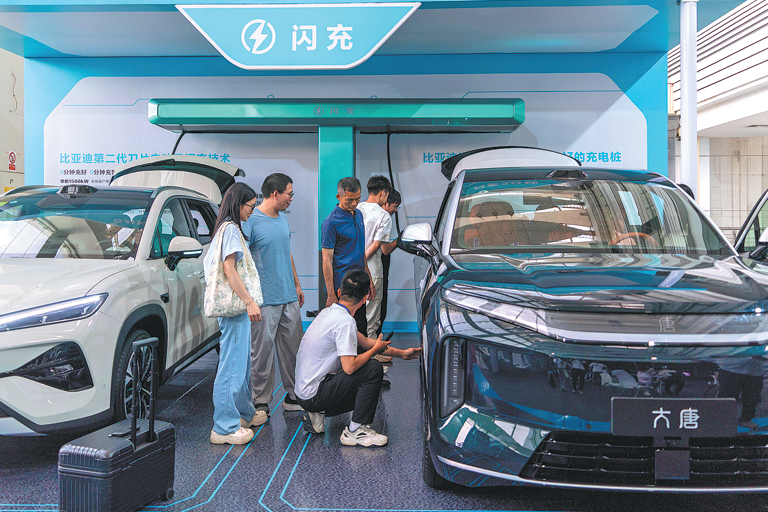
Customers inspect BYD models at an ultrafast charging station in Guangzhou, Guangdong province, on May 1. QIN ZIHANG/FOR CHINA DAILY
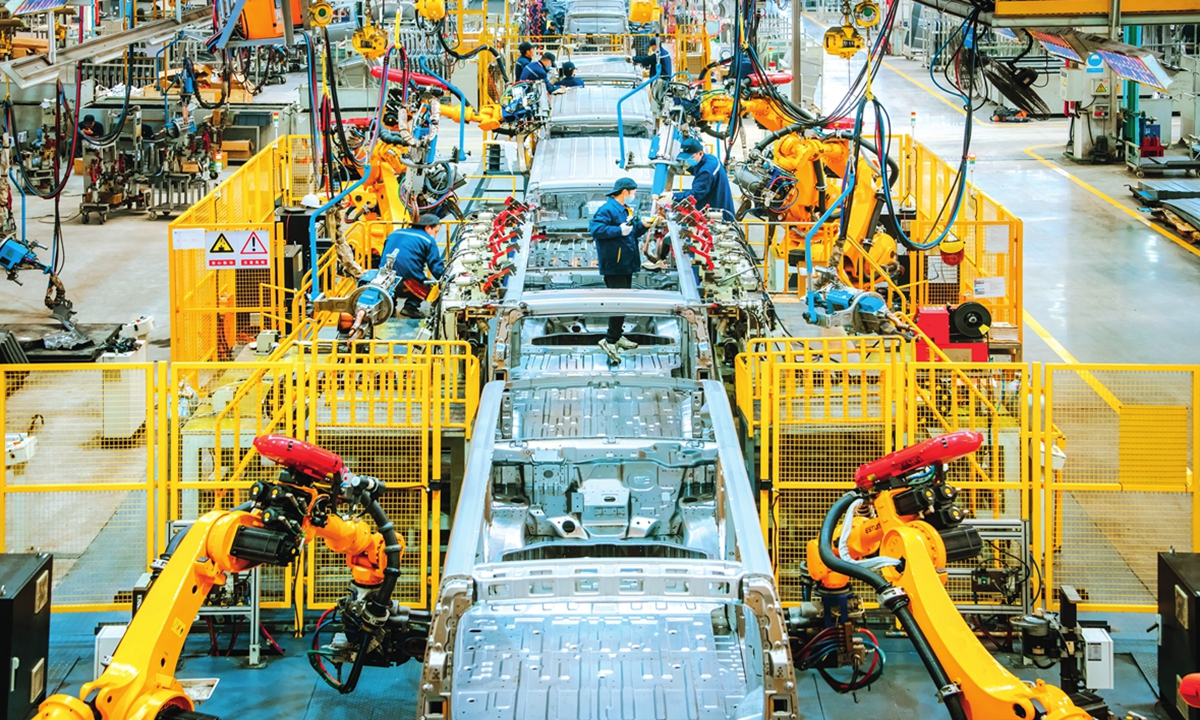
The shift reflects a broader convergence between the automobile and energy sectors, as the rapid growth of electric vehicles creates new opportunities for renewable energy utilization, grid management and digital technologies.
"Energy revolution and automobile revolution are no longer two parallel lines. They are now moving toward deep integration and moving in the same direction," Wu Yin, former deputy head of the National Energy Administration, said at a forum on vehicle-energy integration in Xi'an, capital of Shaanxi province.
Wu said electrification, low-carbon development and digitalization had become common trends for both the automobile and energy industries.
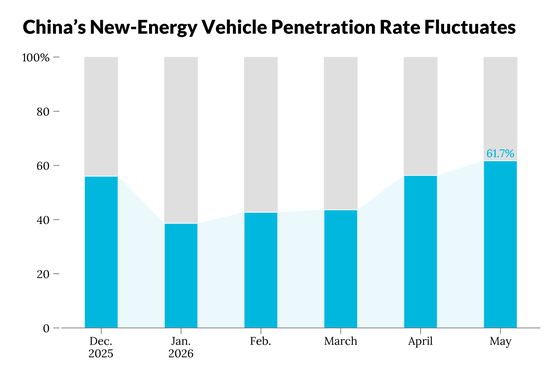
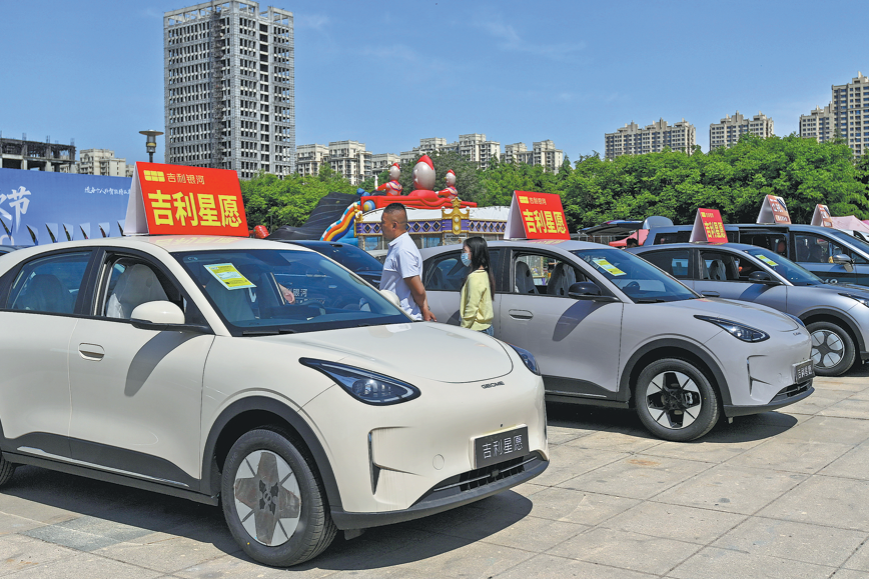
China's new energy vehicle sector has expanded rapidly. In the first half of 2026, the country's NEV production and sales both exceeded 7.4 million units, with pure electric vehicles accounting for about two-thirds of sales, Wu said.