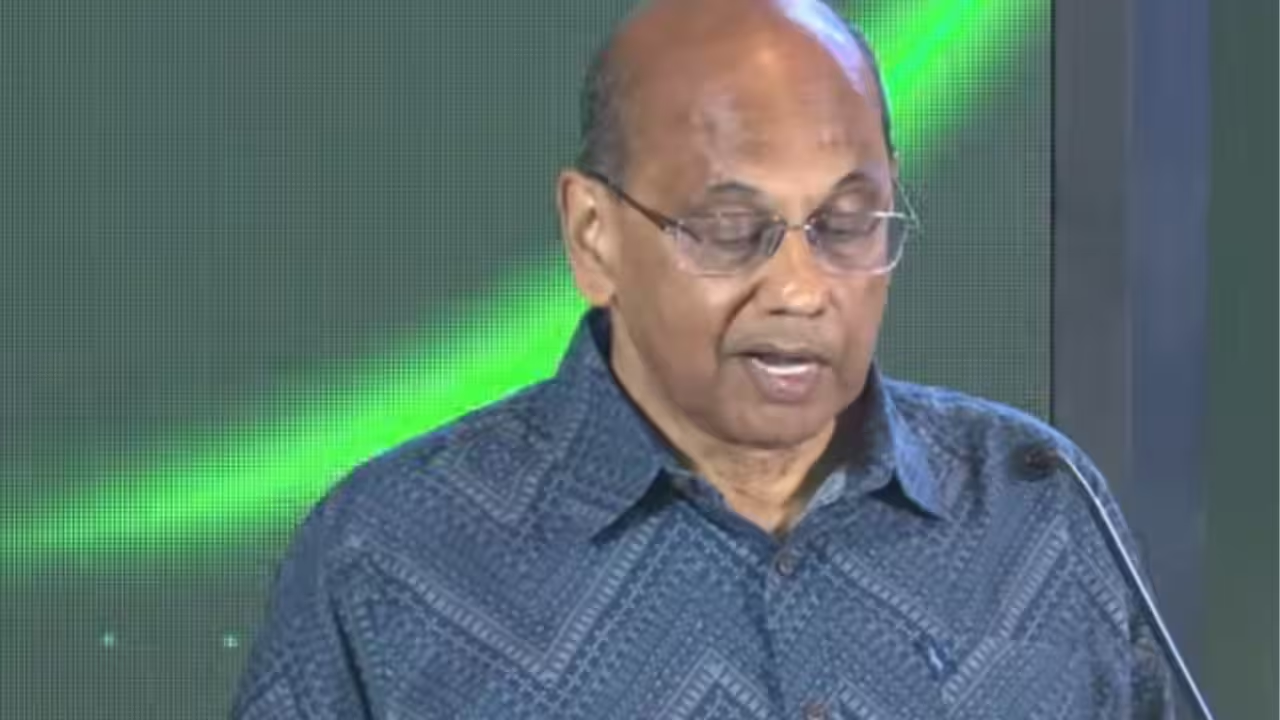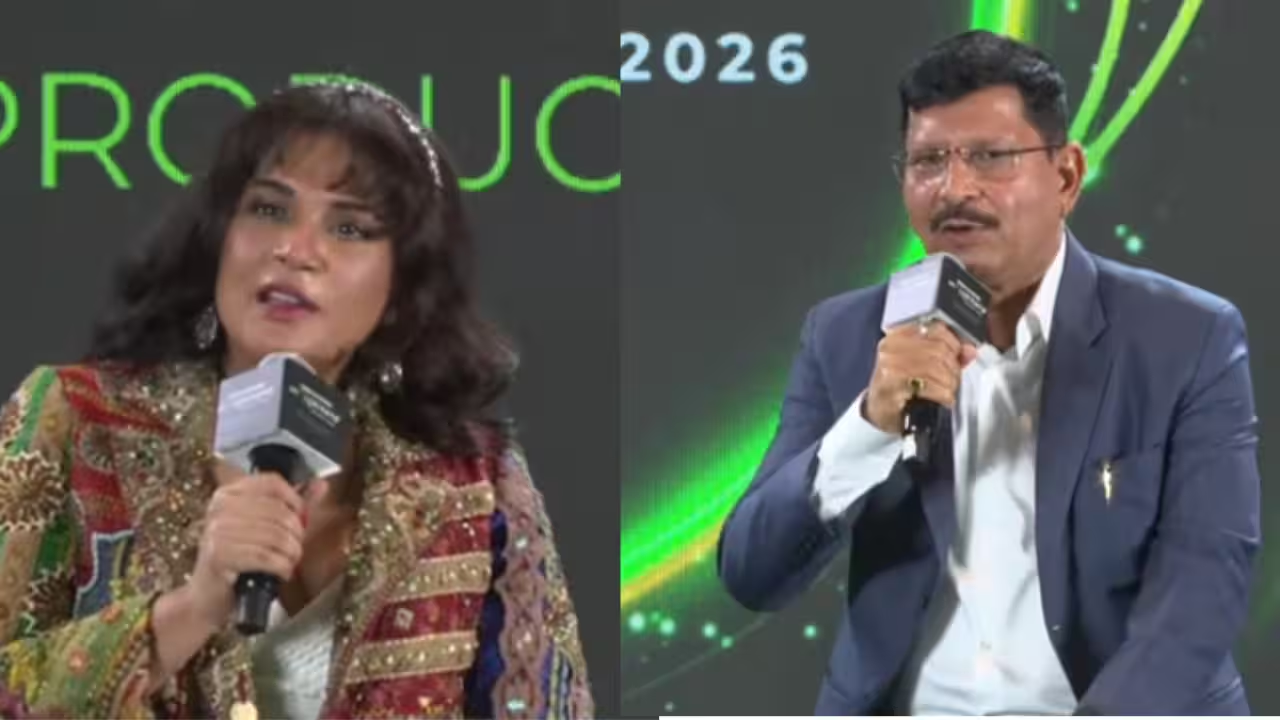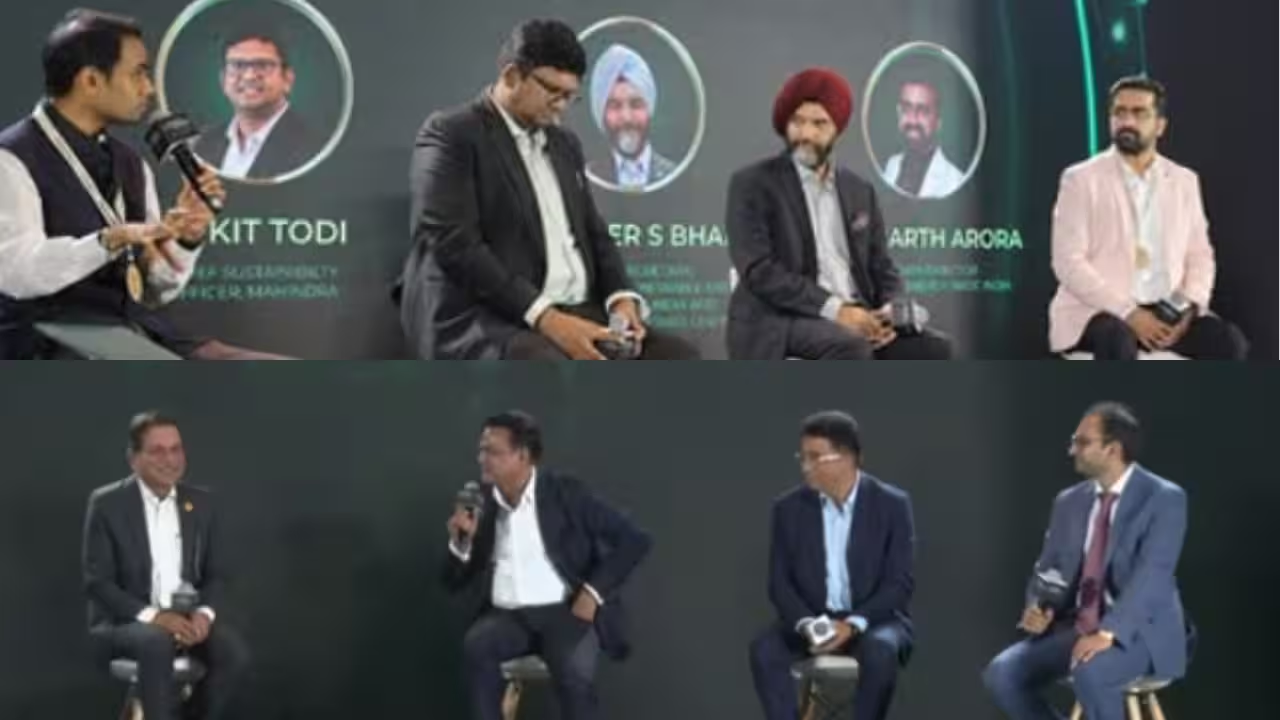
The guests of the two panel discussionsNEW DELHI: India's transition towards a greener economy and the energy mix needed to power a developed India by 2047 were the focus of two panel discussions at the Times Internet Ecopreneur Awards 2026, with policymakers, industry leaders and sustainability experts highlighting the need for policy reforms, technological innovation and stronger collaboration between government and industry.The first panel, "Green Growth 2035: Can Sustainability Become India's Biggest Economic Opportunity?", featured Bhupinder S Bhalla, former secretary, ministry of new & renewable energy and chair, governance board, GH2 India; Abhishek Jain, Director – green economy & impact innovations, CEEW; Ankit Todi, Chief sustainability officer, Mahindra; and Siddharth Arora, associate director – renewable energy, NRDC India.Speaking on India's progress towards becoming a global renewable energy leader and achieving net-zero emissions by 2070, Bhalla said the country is moving in the right direction. "I think we're on the right path. We've done quite a bit. The world knows we have arrived. The world knows we are among the fastest-growing economies as far as renewable energy is concerned," he said.Highlighting the pace of expansion, Bhalla also said India spoke about how India added around 54 GW of renewable energy capacity last year, compared with about 15 GW annually just about four years ago. However, he added, "From now till 2070, we not only have to increase renewables in electricity generation, we also have to increase electrification of the economy."Meanwhile, on India's potential to emerge as a sustainable exporter, Jain said the country has already begun signing contracts to export green fuels such as green ammonia and green methanol to countries including Japan and Germany. However, he cautioned that India continues to depend on imported technologies for several critical components and stressed the need to strengthen domestic research, innovation and entrepreneurship. "There are some areas where we are doing well, but we need to look over the horizon," Jain said, adding that sustainability should be viewed as an economic opportunity rather than merely an environmental responsibility.Addressing whether sustainability is becoming a boardroom priority, Mahindra's chief sustainability officer Ankit Todi said businesses must move beyond treating sustainability as a trade-off against profitability. "It's not a choice between profitability and sustainability. We need to break this notion and say sustainability is good for business," he said, citing cost savings, supply chain resilience and long-term competitiveness.Siddharth Arora of NRDC India said improving the utilisation of existing renewable energy systems deserves as much attention as developing new technologies. "For me, it's not about technology. It's not about building wind turbines or more efficient solar panels. It's more about how the existing system is being utilised," he said.Looking beyond 2030, the panellists agreed that while India has made significant progress in renewable energy, the next phase of the transition would require greater focus on industrial decarbonisation, climate adaptation, policy support and entrepreneurship.The discussions on sustainaiblity continued with a second panel, "Powering Viksit Bharat: The Energy Mix That Will Define India's Future," with Ayush Gupta, director (HR), GAIL (India) Ltd; Deepak Ballani, director general, Indian Sugar & Bio-energy Manufacturers Association (ISMA); Akshat Goel, managing director, Ambashakti Group; and Devesh Garg, Chief commercial & sales officer, Gruner Renewable Energy.The panellists highlighted how achieving the vision of Viksit Bharat by 2047 would require a diversified energy mix, greater energy security, stronger policy support and closer collaboration between the government and industry.Goel said environmental sustainability and "energy self-reliance must remain central to India's development journey." He highlighted the untapped potential of converting agricultural residue and municipal solid waste into energy, saying it could reduce methane emissions while strengthening the rural economy. He also called for supportive policies on feedstock availability, project financing and greater awareness.Ayush Gupta described energy security as one of the "key pillars" of Viksit Bharat, adding that achieving the vision would require not only technological progress but also a change in mindset towards self-reliance and inclusive development.Ballani said "We have both the opportunity and the responsibility" to become energy secure and energy independent by leveraging its manufacturing capabilities and abundant biomass resources. He called for complementary policies that support biofuels alongside electric mobility and other clean energy solutions.Then, emphasising the need for coordinated action, Garg said the government and industry must work together under a clear long-term policy roadmap to accelerate India's clean energy transition. The panellists also stressed the importance of attracting more young people to the sustainability sector by showcasing it as a future-oriented industry with significant opportunities for innovation and growth.Across both discussions, speakers agreed that sustainability is no longer solely an environmental objective but an economic opportunity that can strengthen India's energy security, create jobs, attract investments and help position the country as a global leader in the green transition.
TIL Ecopreneur Awards 2026: Experts discuss roadmap for India's green growth, Viksit Bharat
NEW DELHI: India's transition towards a greener economy and the energy mix needed to power a developed India by 2047 were the focus of two panel discussions at the Times Internet Ecopreneur Awards 2026, with policymakers, industry leaders and sustainability experts highlighting the need for policy reforms, technological innovation and stronger collaboration between government and industry.
787 words~4 min read