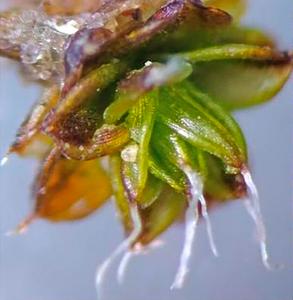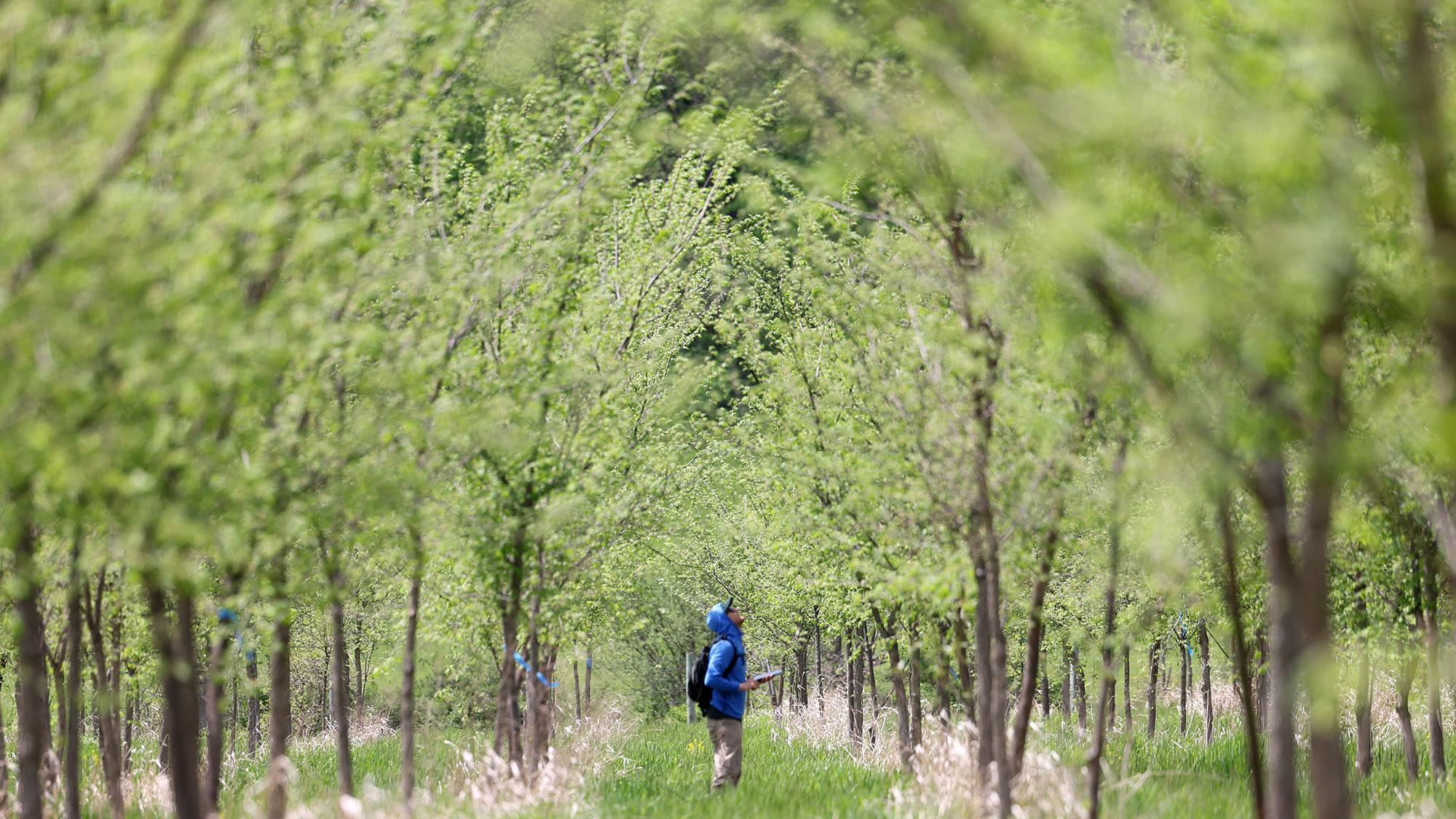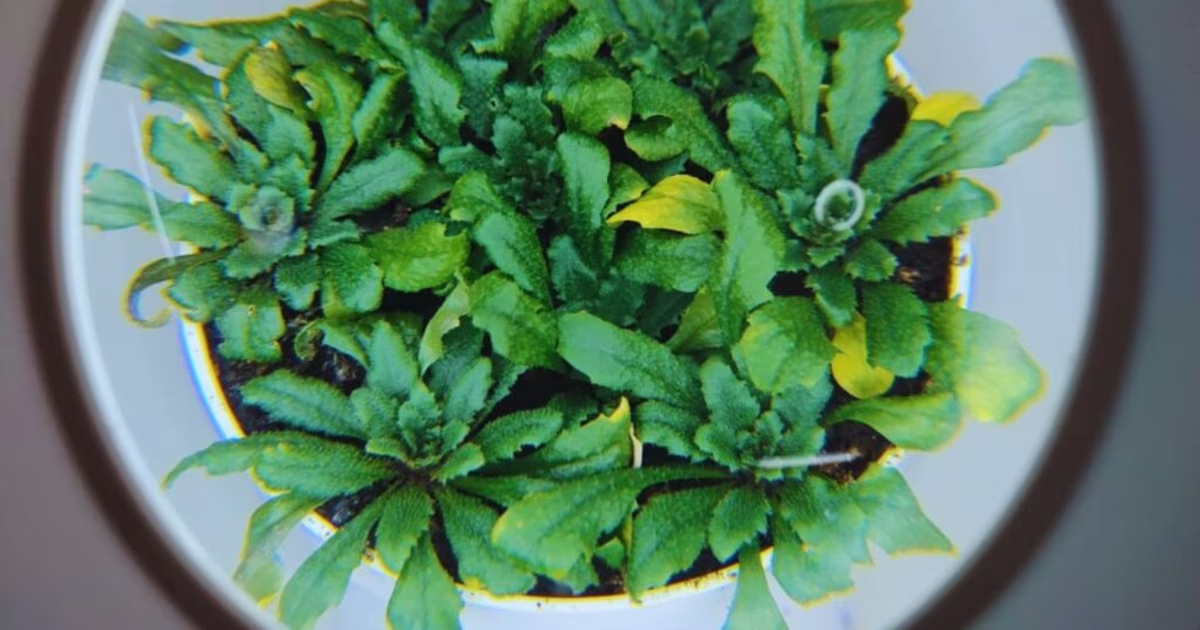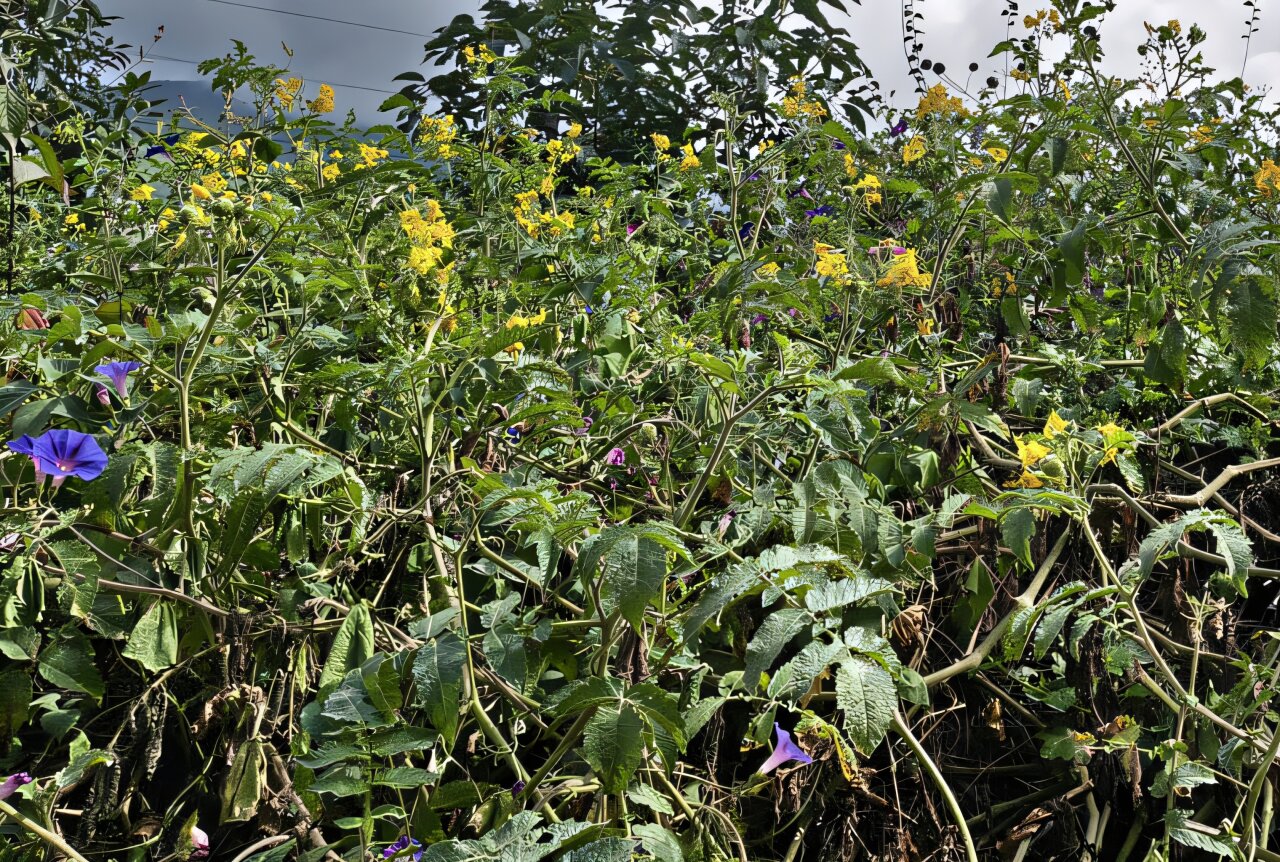
Wild tomato species Solanum habrochaites shows symptoms of infection by a fungal pathogen. This photo was part of a special issue on wild plant disease organized by a WashU plant scientist and her collaborators. Credit: Remco Stam
St. Louis is a plant science powerhouse, but outside the neatly tended rows of crops and gleaming greenhouses sits another treasure trove of biological data: The wild plants tucked into yards, sidewalk cracks, ditches and fields have much to reveal. WashU's plant scientists are also among the most skilled in the country at teasing out their secrets.
"Wild plants and their pathogens are important on their own because plants form the foundation of ecosystems," said Rachel Penczykowski, an associate professor of biology in WashU Art & Sciences. "They are also ideal systems for testing fundamental questions about disease, and there's a lot of applicability to improving crops."
Penczykowski's lab studies plant-pathogen interactions across geographic regions and climate zones. The scientists are exploring how environmental variation shapes infection risk, transmission and evolutionary change. What they learn in that lab can be applied to many other fields of science: crop and agricultural research, disease ecology and ecosystem science, just for starters. Penczykowski and a small team of collaborators recently were invited to compile a special issue on the topic of wild plant diseases, now published in Philosophical Transactions of the Royal Society B.