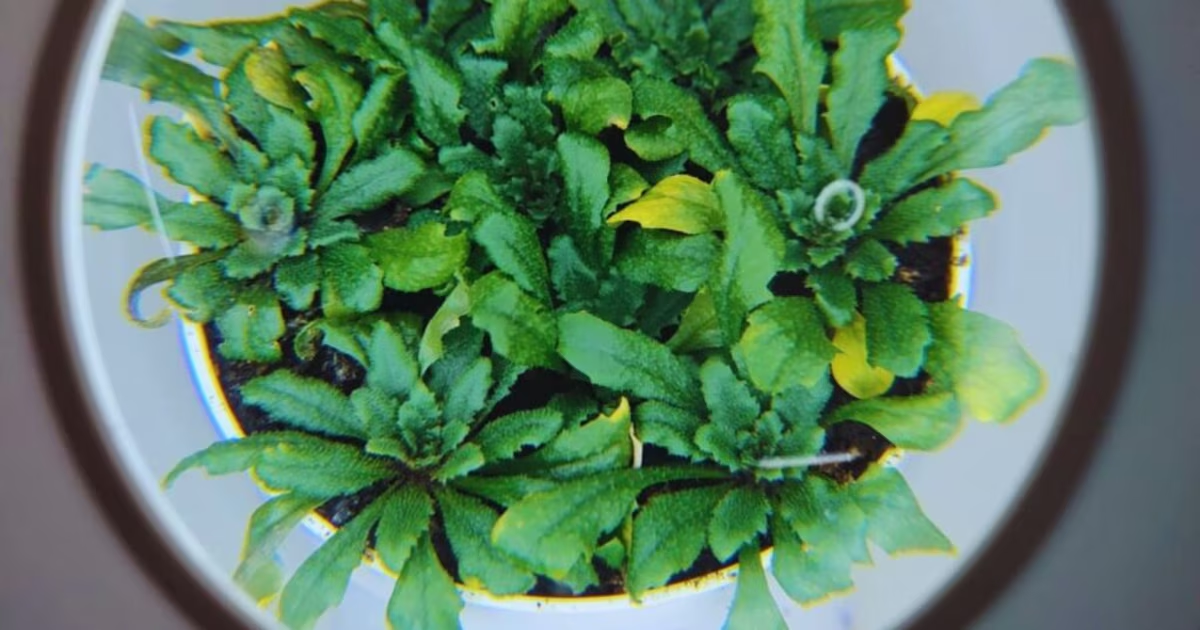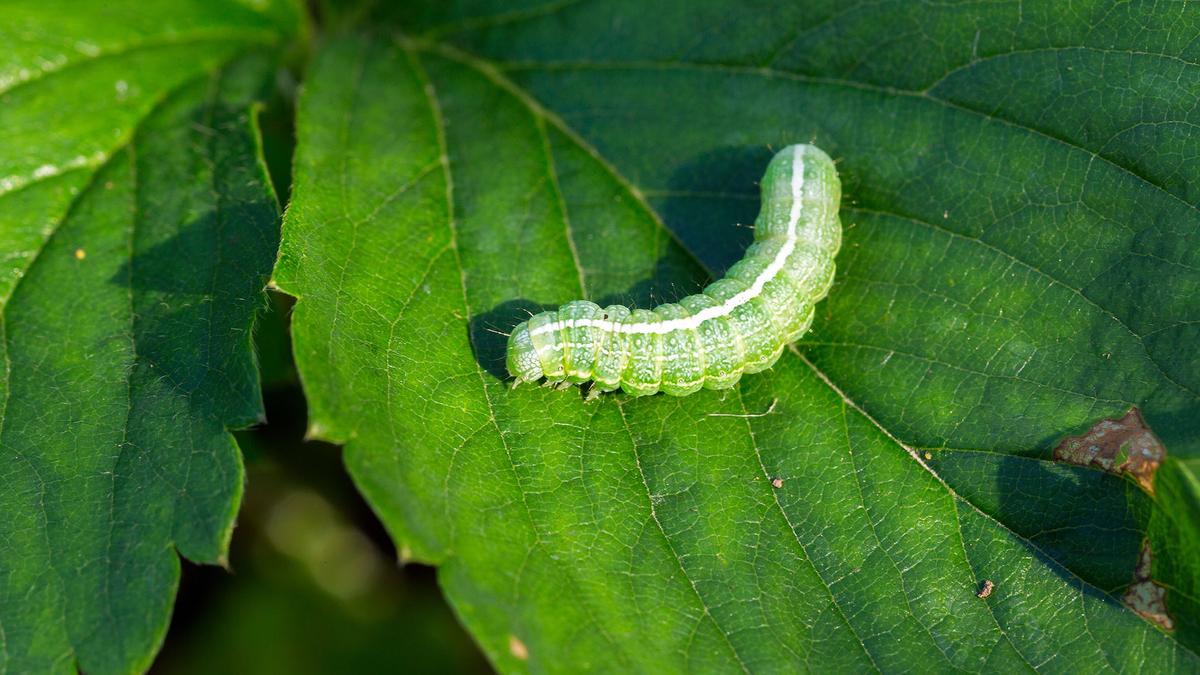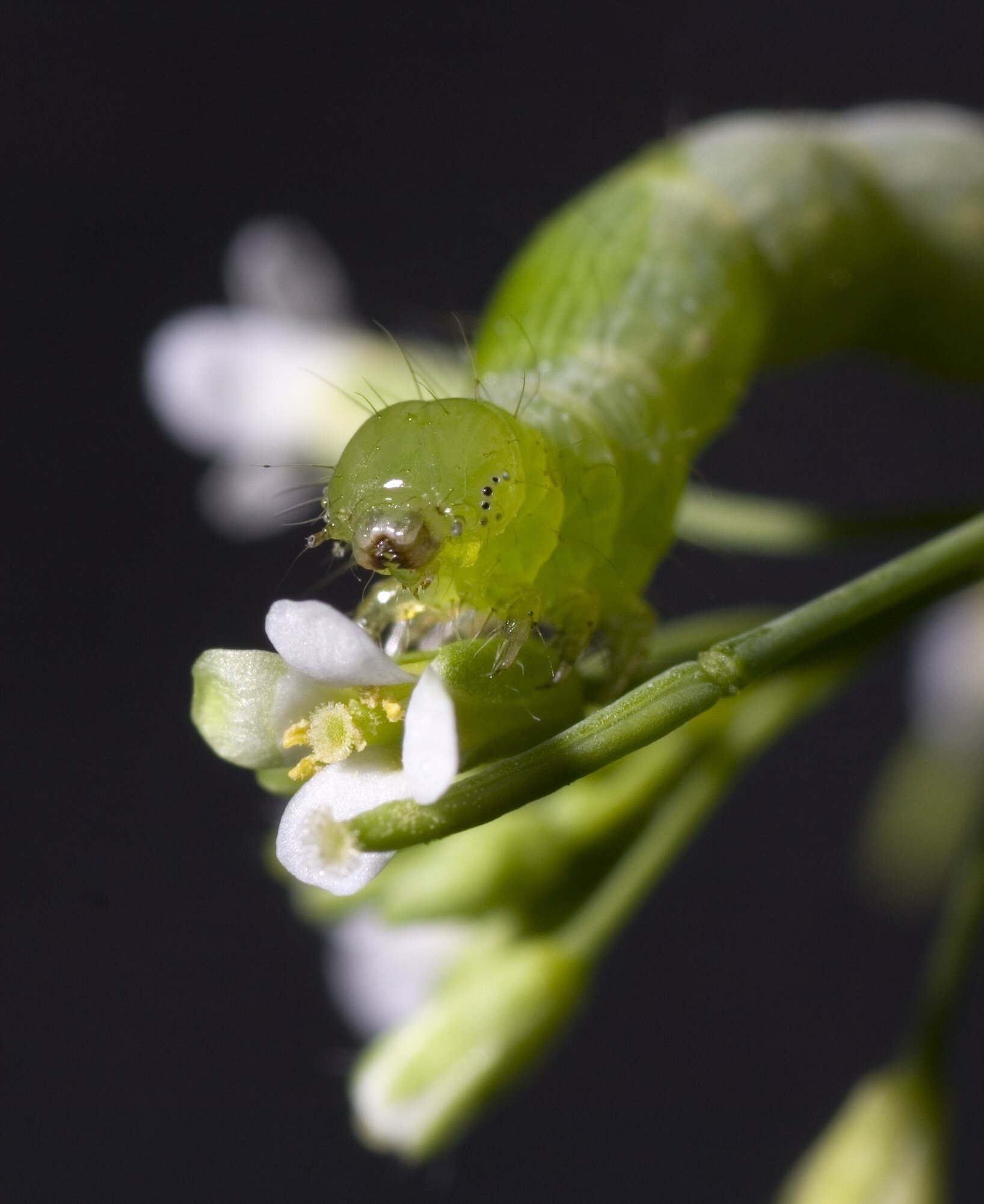
Plants' sulfur-based defenses help repel herbivorous insects; without CDK8, Arabidopsis specimens were found to be more vulnerable to attacks from Cabbage looper larvae. Credit: Kurt Stepnitz.
As sulfur becomes increasingly scarce in soils worldwide, scientists are studying how plants decide whether to invest limited resources in growth or defense.
New research points to a mechanism that helps plants reprogram their molecular machinery to budget sulfur—a critical nutrient used for both functions.
Michigan State University researchers published a study in the Proceedings of the National Academy of Sciences detailing how this adaptive allocation strategy allows plants to allocate sulfur without dropping their defenses.
A molecular "dimmer switch"—a protein called CDK8—regulates the use of sulfur in plants' defenses, allowing them to turn production of sulfur-containing defense compounds up or down, rather than strictly on or off.