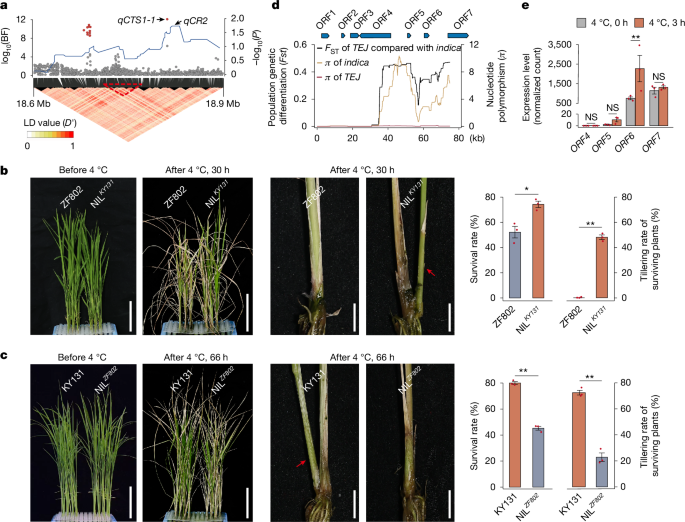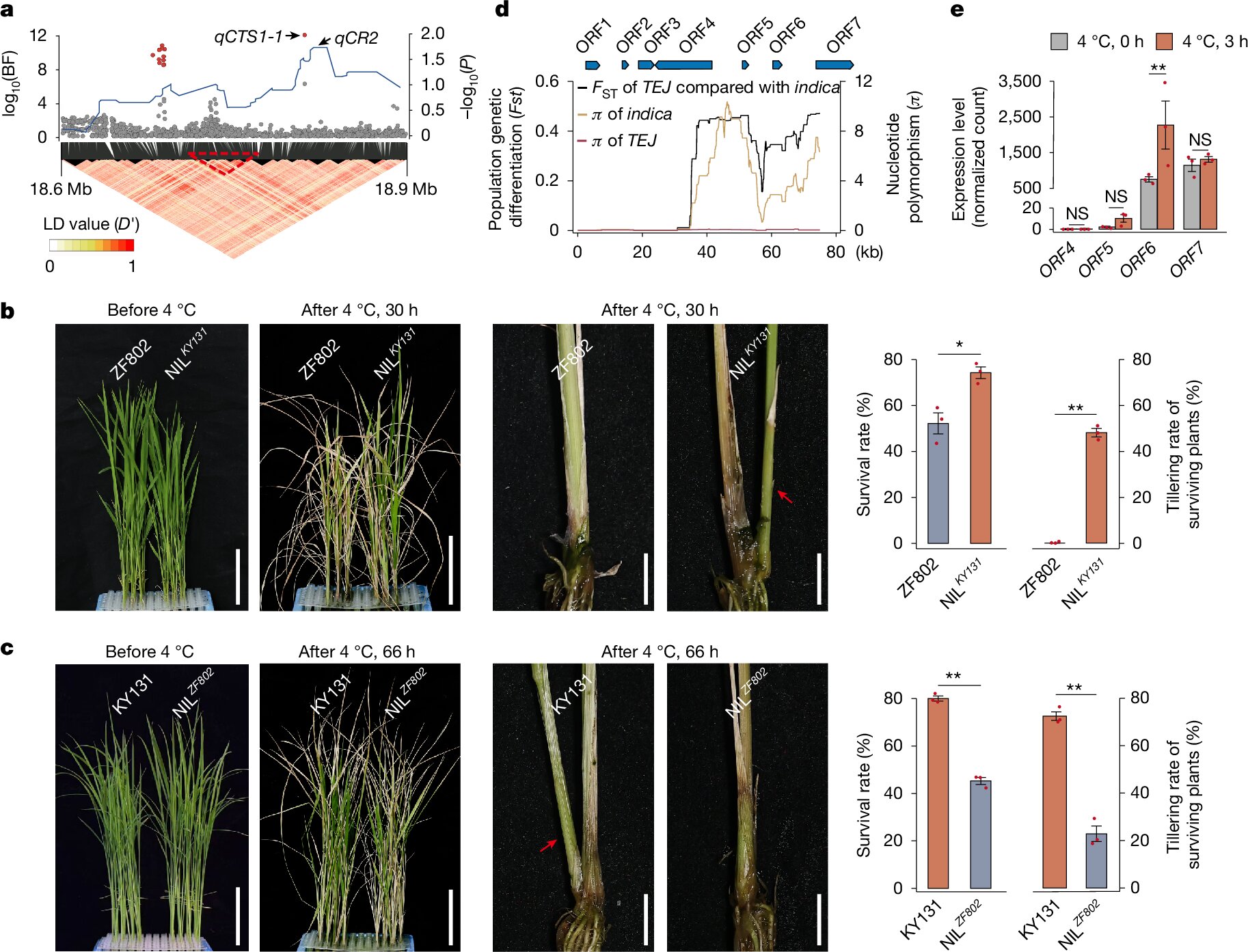
qCR2 is associated with chilling tolerance and resilience. Credit: Nature (2026). DOI: 10.1038/s41586-026-10682-6
Global climate change has increased the frequency of regional cold spells, causing substantial yield losses and even crop failure. Meanwhile, excessive nitrogen fertilizer use in agriculture has increased non-point-source pollution. Improving both stress resilience and nitrogen use efficiency has therefore become a major challenge for sustainable crop production.
In rice production, farmers commonly apply nitrogen fertilizer after chilling stress to stimulate tiller regeneration and reduce yield loss. Although this practice is widely used, it increases production costs and environmental impacts. Furthermore, the molecular mechanism linking post-chilling recovery with nitrogen utilization has not been well understood.
Now, a team led by Prof. Chong Kang from the Institute of Botany of the Chinese Academy of Sciences has identified what it calls an "intelligent molecular module," Chilling Phoenix (CHPO), which coordinates chilling resilience and nitrogen use in rice by automatically changing its function depending on environmental conditions. During chilling stress, CHPO enhances chilling tolerance. Conversely, when temperatures return to normal, CHPO promotes nitrogen uptake and tiller regeneration during recovery.