This story was produced by Grist and co-published with VT Digger.
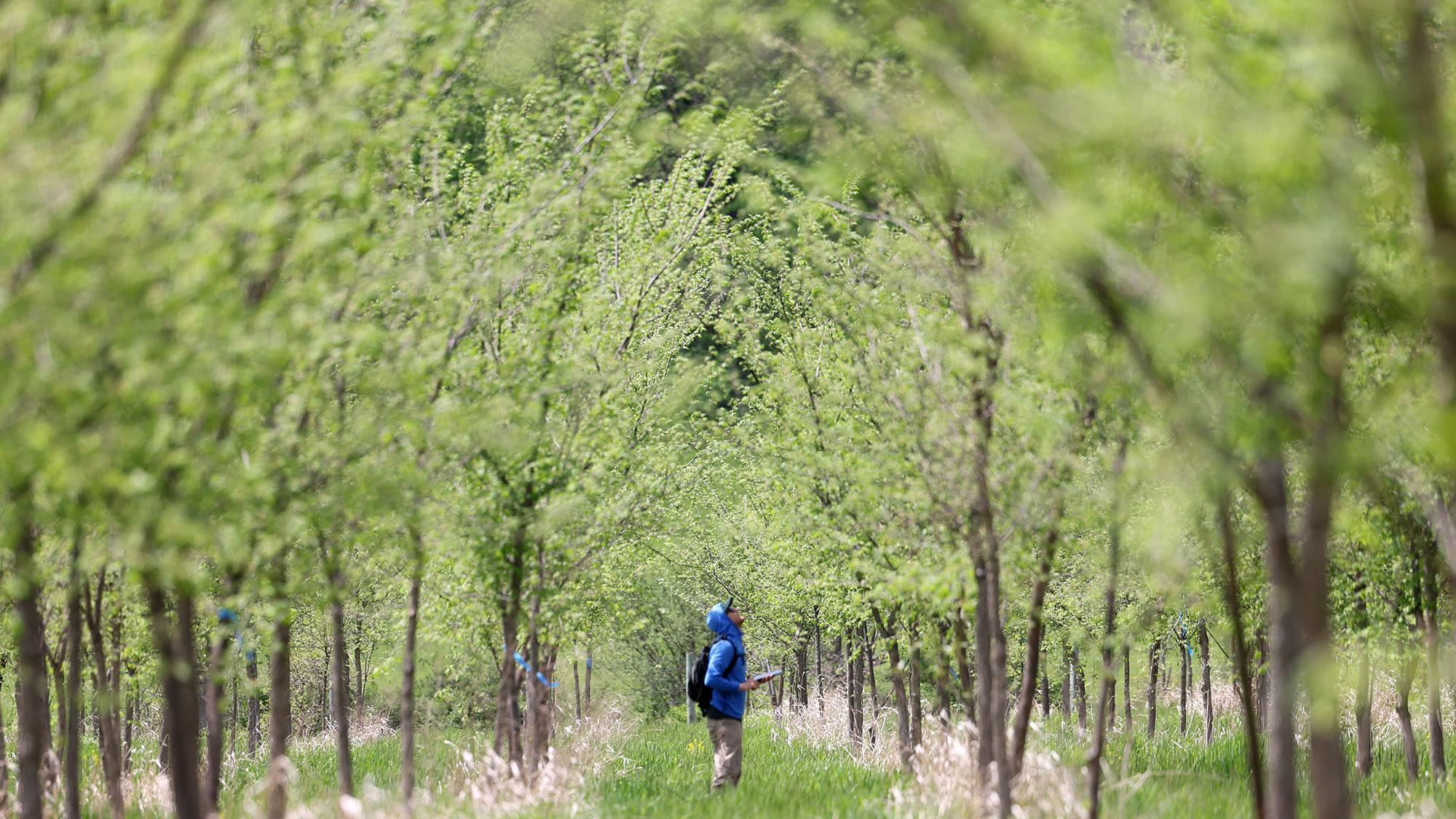
After more than a decade of nurturing, it had come time to infect this 28-acre grove of American elms with a disease that would almost certainly kill them. Dressed in hunter-green muck boots, grey pants, and a brown Nature Conservancy T-shirt, Gus Goodwin knelt down to give the first tree its shot. Using a bamboo stake marked at 12 inches as a gauge, he measured that far off the ground, held his drill at a slight downward angle, and pulled the trigger.
“We need to create a wound,” Goodwin, the conservancy’s director of science and technology advancement in Vermont, said as the tool began to whir. He bore an inch-deep hole into the tree, the bit sending shavings spiraling out behind it. Putting the drill aside, he took a blue pipette from his tool box and injected 2 teaspoons of a clear solution containing roughly 100,000 spores of the fungus that causes Dutch elm disease.
“That’s it,” he said. “Pretty simple.”
One by one, row by row, the plan was to stick nearly all of the 5,300 or so elms at the sprawling site in southern Vermont, save the few that received a squirt of water as a control. In the coming weeks, most of the trees would doubtlessly succumb to the pathogen that has already killed tens of millions of their ancestors and made Ulmus americana an endangered species. The ones that live, however, could help save the species.