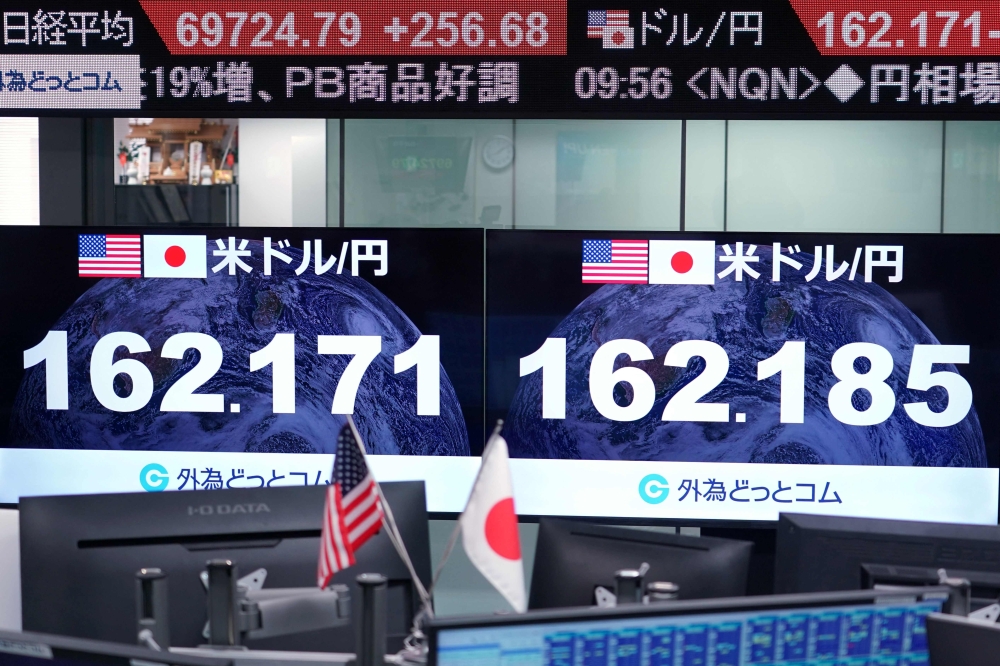
The Japanese yen just hit its weakest level in four decades, touching 162.83 per US dollar in early July 2026. The Bank of Japan raised its benchmark interest rate to 1%, the highest since 1995, and the currency fell anyway.
The core problem is that monetary policy is not just about interest rates. It’s about the money supply, and Japan’s money supply dynamics haven’t reversed course simply because the benchmark rate ticked up. Rate differentials between Japan and the US remain enormous, making the yen a losing hold for yield-seeking investors regardless of the BOJ’s incremental moves.
Japanese authorities didn’t sit still. From April to May 2026, the government spent approximately 11.7 trillion yen, roughly $73.5B, on direct currency market intervention. That’s a serious commitment of reserves. It didn’t hold.
The yen carry trade is one of the most significant and least-discussed sources of leverage in global financial markets. Investors borrow yen at low interest rates, convert it into dollars or other currencies, and park the proceeds in higher-yielding assets. For years, those assets included US Treasuries and equities. Increasingly, they’ve included Bitcoin and other crypto assets.