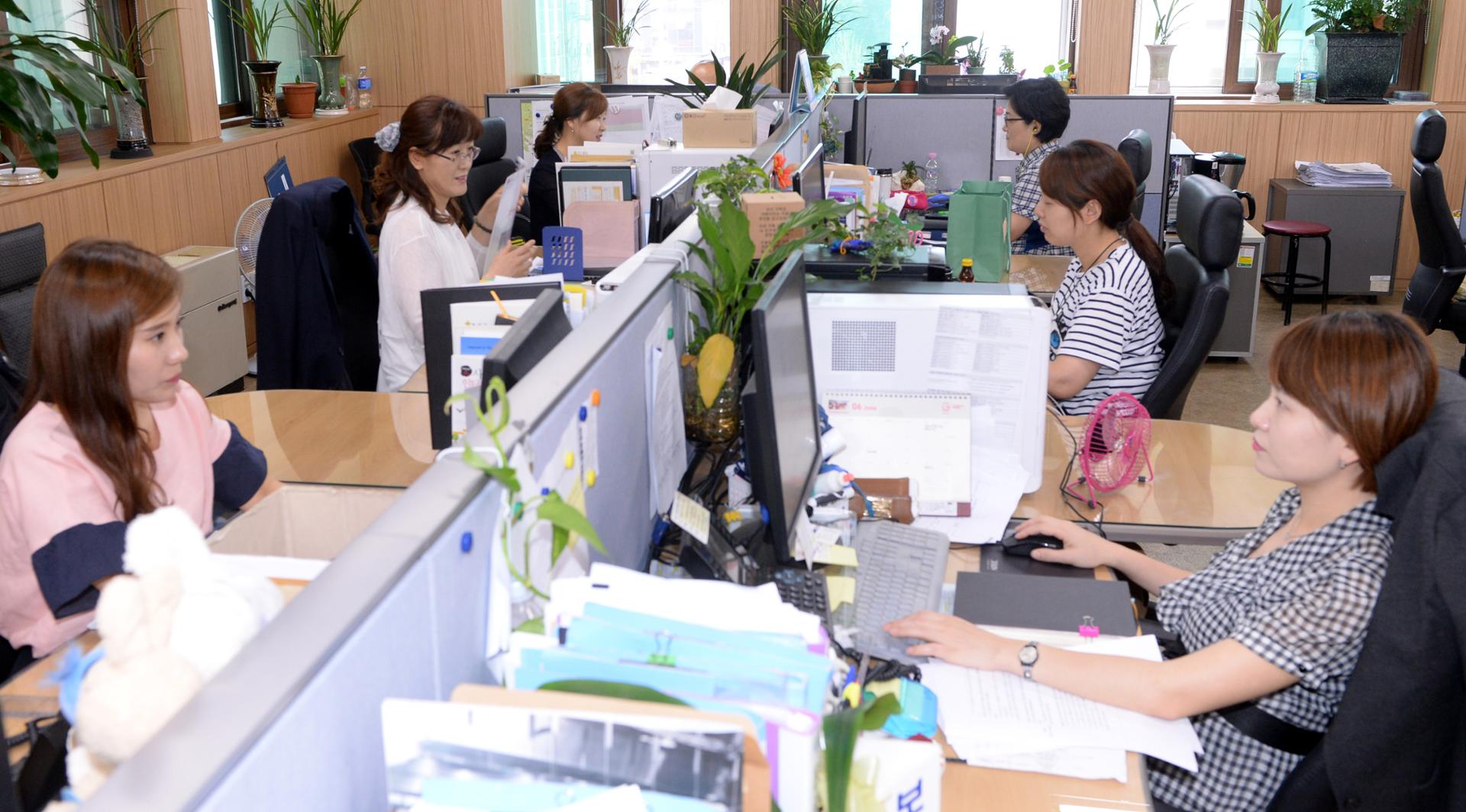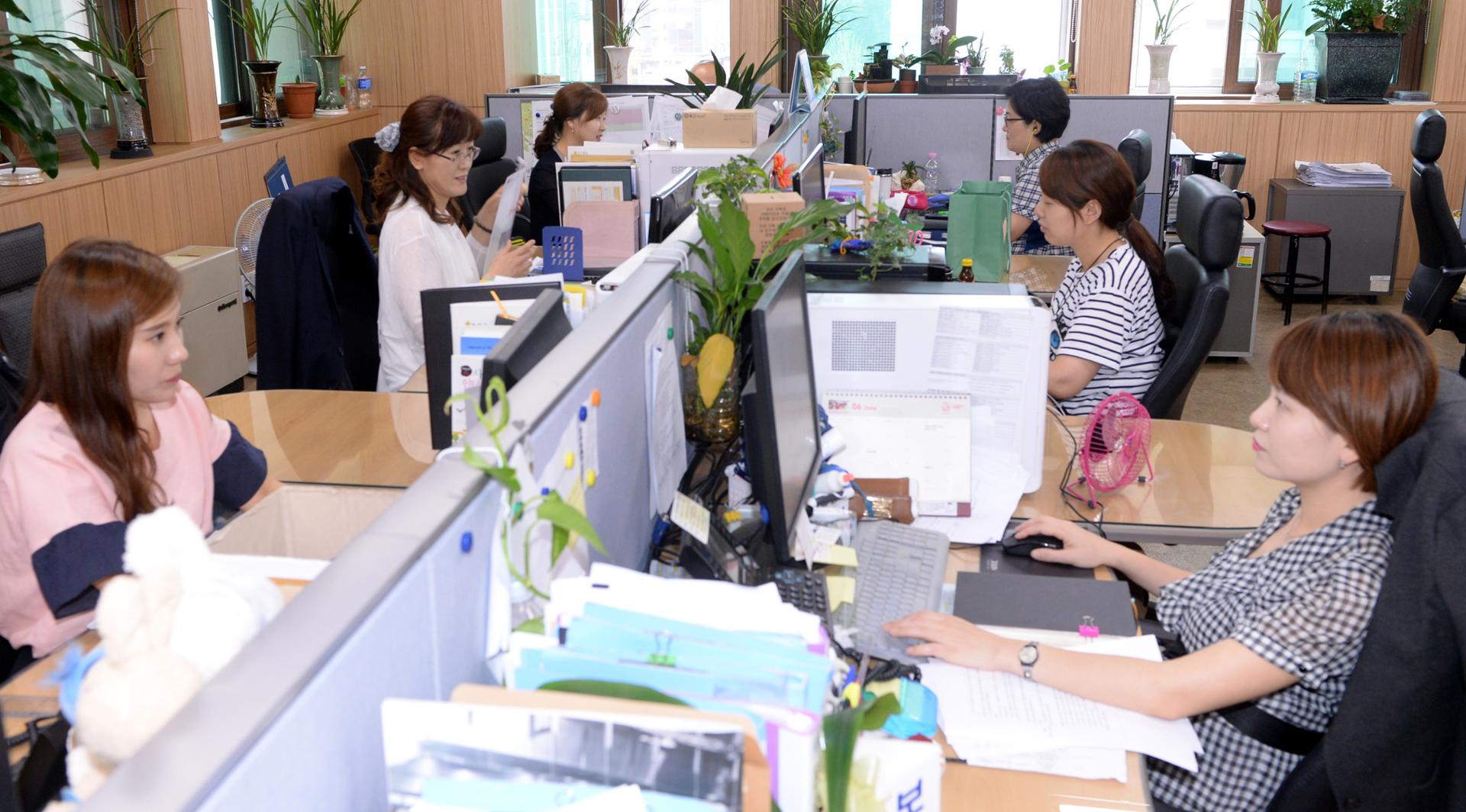
The gender gap at higher levels of the Civil Service is closing, with a 10 per cent jump in women holding senior management positions in the past five years.However, there remains a divide at the very top, with male secretaries general, the heads of departments, still outnumbering female counterparts two to one.For decades the ranks of senior Civil Service managers were heavily populated by men – not helped by the marriage bar which meant women had to leave their jobs when they got married.Though abolished in 1973, the effects of this policy reverberated on gender balance at senior levels for many years afterwards. Former secretary general of the Department of Enterprise Orlaigh Quinn told The Irish Times that when she began her career in the 1980s “you didn’t see women [at senior management level]”. By 2016, when she landed the secretary general job, Quinn was only the eighth woman to lead a Government department in Ireland. There are currently seven women at the secretary general pay grade level across 18 Government departments. At the same time, there are 16 men at the same level either leading departments or in other roles, such as the most senior ambassadors.There is therefore some distance to go to achieve gender balance “across leadership levels”, a goal set out in the Civil Service Renewal 2030 strategy.On this remaining disparity, Quinn says “it’s always a disappointment when you don’t have proper gender balance”, but progress towards closing the gap at other management levels is a “fantastic achievement” that she suspects outpaces the private sector.Quinn, recently appointed interim director general of international affairs think tank the Institute of International & European Affairs (IIEA), said she expects the numbers at secretary-general level to move towards gender balance in the future. The Irish Times surveyed the 18 Government departments, seeking the gender breakdown of staff in the three most senior grades: assistant secretary, deputy secretary general, and secretary general for 2021 and 2026.In 2021 those holding senior management roles were about 66 per cent men and 34 per cent women. Five years later and it is now approximately 56 per cent men and 44 per cent women, a significant improvement in five years. The proportion of women deputy secretaries general stands at almost 46 per cent now, up from 20 per cent in 2021. Women at assistant secretary level increased from just under 37 per cent in 2021 to 46 per cent this year. There has been research over the years on the historic reasons for gender disparity in the Civil Service and barriers women faced even in recent decades. Trinity College Dublin emeritus professor Evelyn Mahon did early research on fledgling attempts to foster equal opportunities in the Civil Service including the introduction of career breaks from 1983 onwards. By 1987 it remained the case that just one per cent of civil servants at assistant secretary level were women.[ Ireland has 10th smallest gender equality gap in the worldOpens in new window ]Mahon said the current gender breakdown in the Civil Service is “vastly better” and put some of this down to “high-achieving” women graduates applying for jobs who are “highly confident in a credentialist way of being equal to anybody”. Credentialism refers to using formal qualifications to determine merit.Prof Helen Russell, the head of the social research division at the Economic & Social Research Institute (ESRI), co-authored more recent studies. One of these, a 2017 report entitled “A study of gender in senior Civil Service positions in Ireland”, highlighted potential barriers to promotion particularly likely to impact on women.These included a “sink or swim” approach common for those newly promoted to senior roles and how “in a context where women typically have lower self-confidence levels than men ... a higher position may appear daunting, something that might discourage women from applying for promotion.”The report also said “perhaps the most crucial issue” was a “lack of flexible working arrangements at senior grades” which “was viewed as a significant barrier.”Data showed that women were “much more likely to avail of such arrangements than men but that very few staff at senior grades work less than full-time hours”.The report said “women can be deterred from, or delay, applying for promotion because of the potential loss of the ability to combine paid work and child or elder care.”Russell told The Irish Times that this study preceded the Covid-19 pandemic and the working-from-home arrangements that arose at the time.She said that working-from-home statistics now, post-Covid, “show that basically there’s the same uptake from men and women”.Russell described this as “a bit of a game-changer” adding: “It will be interesting to see whether that does give people with caring responsibilities more of an opportunity to advance as well.”That is not to say that issues around flexible working hours have been fully resolved post-pandemic.The Association of Higher Civil and Public Servants (AHCPS) represents about 4,500 members across the civil and public service at assistant principal and principal officer levels, the grades just below the most senior Civil Service management starting at assistant secretary level. Of its membership 54 per cent are women and 46 per cent are men, a reverse of the gender breakdown at the more senior grades. A statement from the union said its most recent delegate conference passed motions relating to “family-friendly workplace policies” including stronger supports for maternity, paternity and surrogacy leave, as well as measures aimed at improving flexibility and supporting gender equality in career progression.One motion related to the situation that sees many assistant principals unable to accrue flexible working hours due to austerity measures brought in by government after the economic crash. The union wants to see this prohibition removed in the next public service pay deal. AHCPS general secretary Ciarán Rohan said the gender balance in the grades his union represents has flipped “quite dramatically” over the last decade, adding: “I think that’s because there are probably greater opportunities for women to go forward for promotion.”However, on progressing to higher levels, he said he did not have “concrete evidence” but “certainly the flexibility issue exists just as much” at assistant secretary level and above as it does for the grades his union represents. Rohan added: “I think the additional hours that need to be worked for a job like that could well be the barrier for people who have kids, particularly women.”Before becoming a secretary general, Quinn was an assistant secretary at the Department of Public Expenditure and Reform (DPER). She was in charge of delivery of the 2014 Civil Service Renewal Plan, which included initiatives to improve gender balance. She said that the Civil Service has “invested quite strongly” in leadership training in the years since. Quinn also said she does not think there is a preference for hiring women now but there is “a very strong push to get women to compete for the positions”.Data from the Top-Level Appointments Committee (TLAC) – which puts forward candidates to Government for the most senior jobs in the Civil Service – shows that between 2015 and 2024 a total of 51 per cent of those recommended for appointments were men and 49 per cent were women.[ Can the EU Pay Transparency Directive close the gender pay gap?Opens in new window ]Asked about the increased proportion of women at senior levels in the Civil Service, a DPER statement said the 2014 renewal plan “pledged to improve gender representation at every grade”. It said the 2017 ESRI report “provided an evidence base for further action, highlighting barriers to progression and identifying measures to support greater representation of women in leadership”.The statement said that since then a range of initiatives have been implemented including leadership and talent development programmes; mentoring and networking opportunities; measures to support flexible and blended working; and the promotion of inclusive recruitment and selection processes. The department said that, at secretary-general level, female representation has increased from just under 19 per cent in 2016 to over 33 per cent in 2025.“This reflects a long-term commitment to creating a Civil Service where leadership opportunities are accessible to all and where progression is based on talent, capability and merit.”The DPER also said: “There is strong evidence that the Civil Service has become a more supportive environment for employees balancing career progression with family and caring responsibilities,” citing “flexible and blended working arrangements” and “enhanced family-friendly leave policies”.Meanwhile, of the progress in the last five years, with more women in senior management roles, Quinn said: “Sometimes if you can see it, you can be it.”
The gender gap among senior civil servants is closing, but not at secretary general level
Women in senior management roles have jumped 10% but there is some way to go to achieve gender balance at the top
1,416 words~6 min read