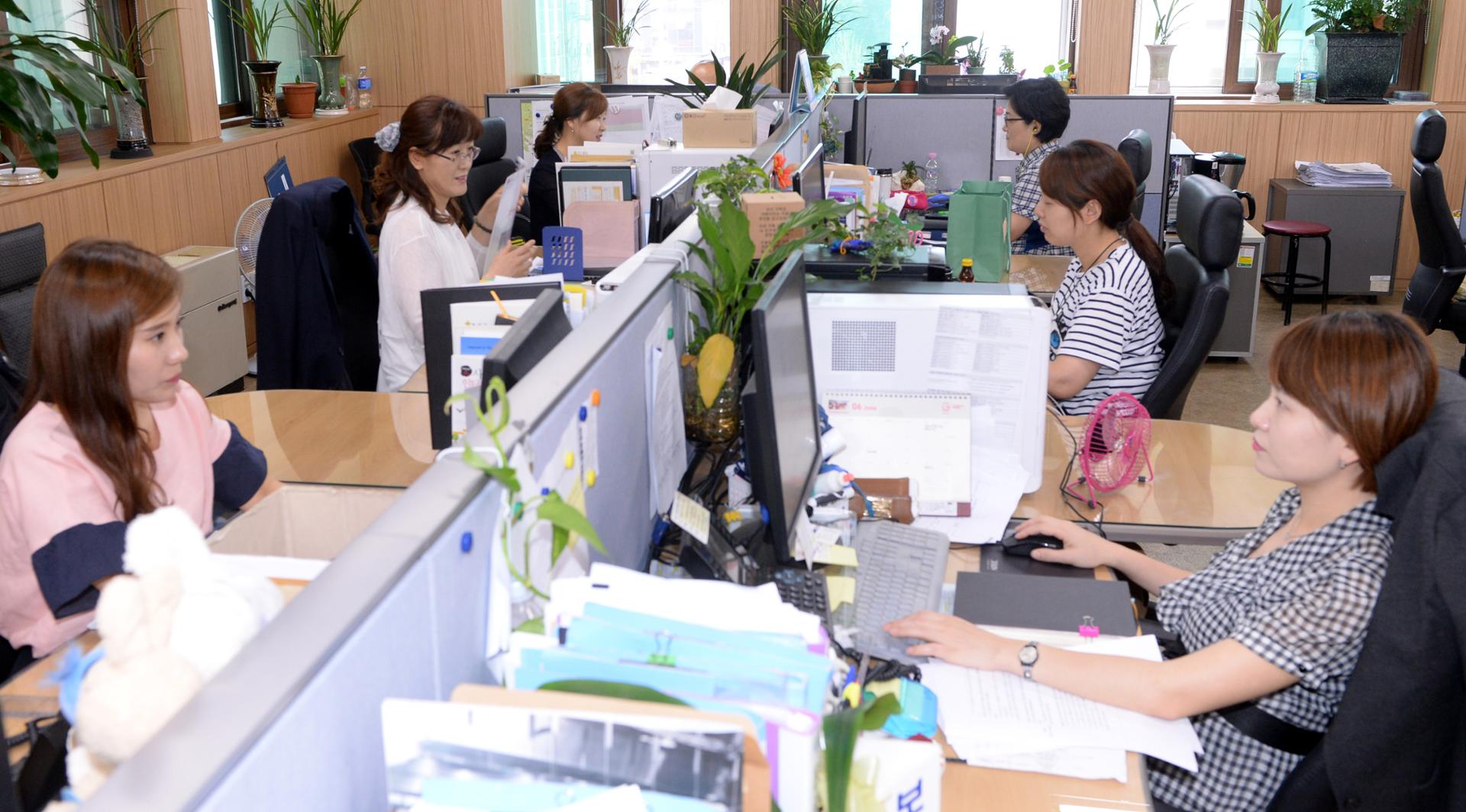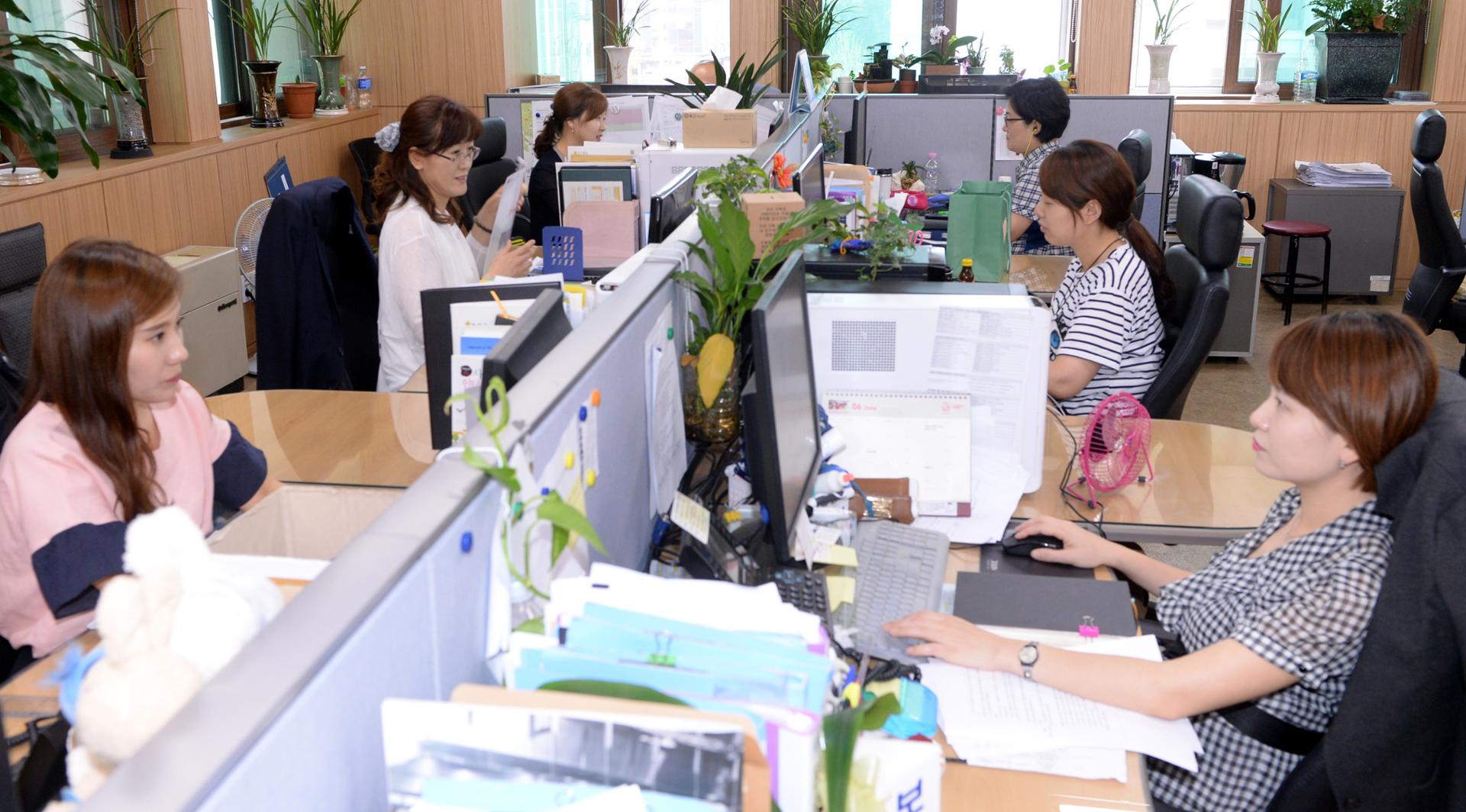
Female civil servants work inside Jongno District Office in Seoul, July 1, 2015. Korea Times file
Korea’s traditionally rigid, male-dominated bureaucracy is undergoing a quiet shift. Long criticized for structural glass ceilings and punishing corporate habits, the administrative branch is seeing a historic influx of women in upper-middle management, alongside an unprecedented surge of fathers taking paternity leave.
According to statistics released Thursday by the Ministry of Personnel Management, the number of female civil servants at the Grade 3 level, or director division chiefs, has surpassed 200 for the first time. Women now occupy 205 out of 913 Grade 3 positions, up more than 56 percent from four years ago.
This expanding pipeline is beginning to reshape the executive ranks, a senior tier known as "director-general level and above" that encompasses bureau chiefs, assistant ministers and vice ministers who direct national agency agendas. Women now make up 14.3 percent of this senior leadership, numbering 210 officials and reach the government’s 2027 representation target ahead of schedule.
Equally striking is a cultural revolution unfolding at home.