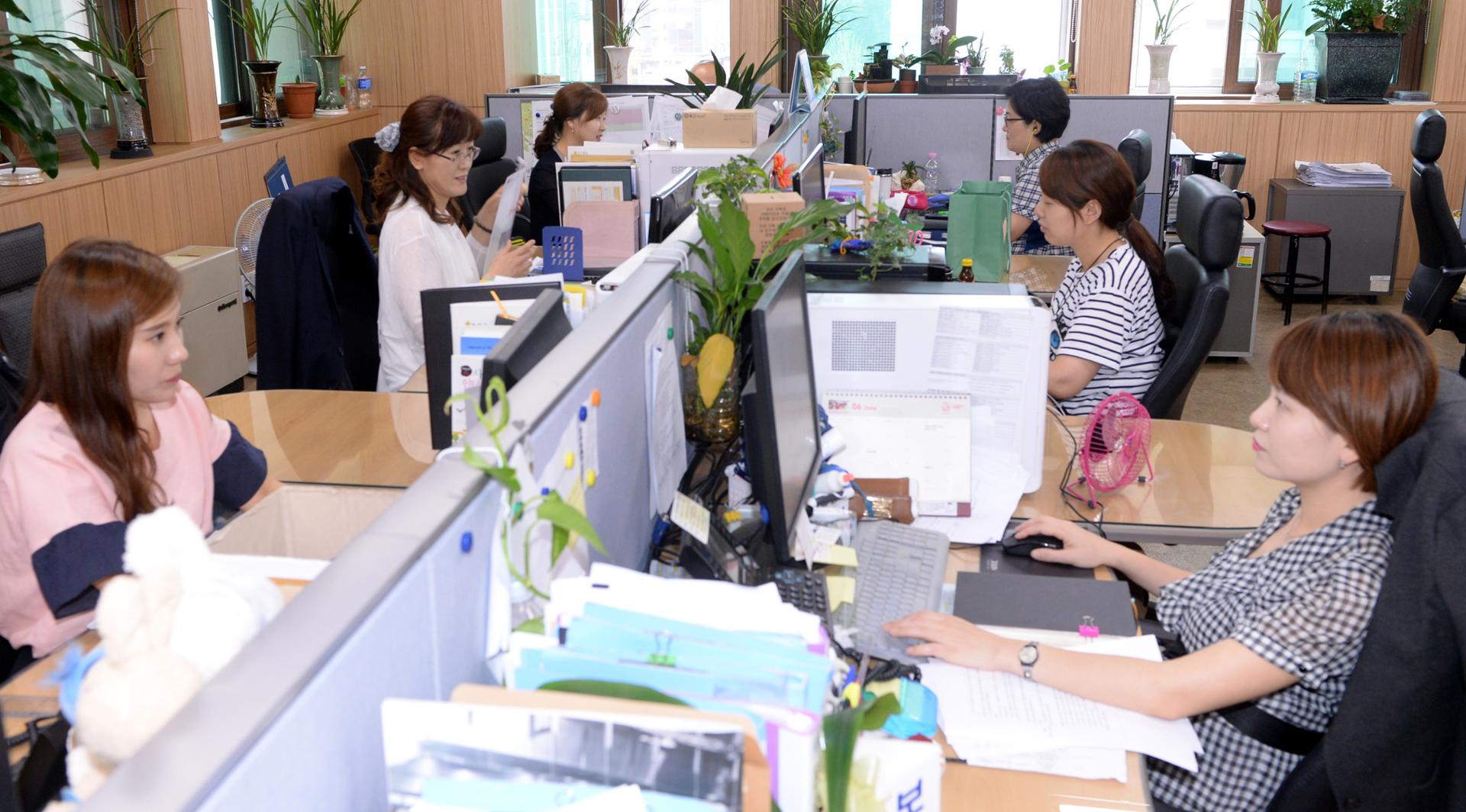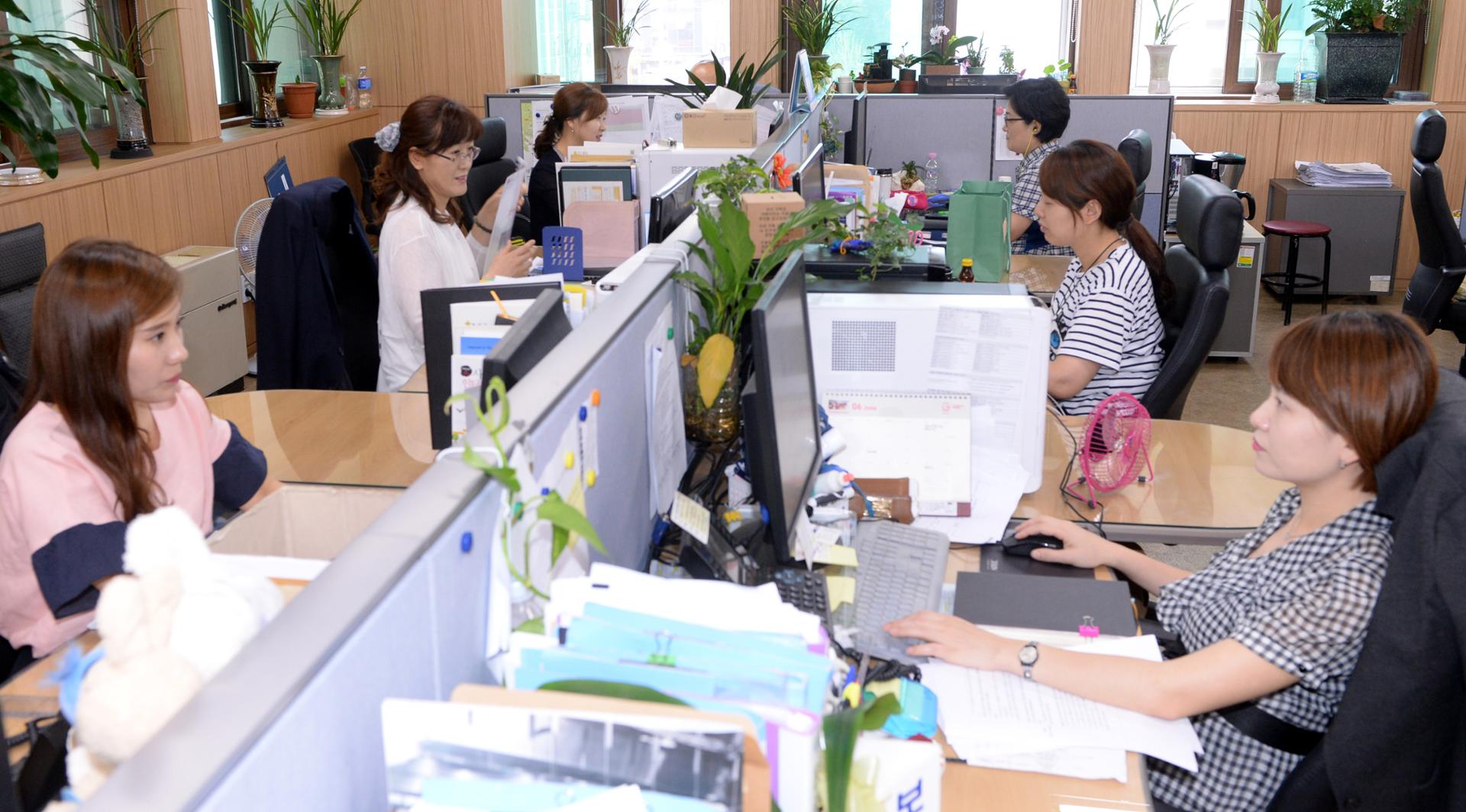
Female civil servants work inside Jongno District Office in Seoul, July 1, 2015. Korea Times file Korea’s traditionally rigid, male-dominated bureaucracy is undergoing a quiet shift. Long criticized for structural glass ceilings and punishing corporate habits, the administrative branch is seeing a historic influx of women in upper-middle management, alongside an unprecedented surge of fathers taking paternity leave.According to statistics released Thursday by the Ministry of Personnel Management, the number of female civil servants at the Grade 3 level, or director division chiefs, has surpassed 200 for the first time. Women now occupy 205 out of 913 Grade 3 positions, up more than 56 percent from four years ago.This expanding pipeline is beginning to reshape the executive ranks, a senior tier known as "director-general level and above" that encompasses bureau chiefs, assistant ministers and vice ministers who direct national agency agendas. Women now make up 14.3 percent of this senior leadership, numbering 210 officials and reach the government’s 2027 representation target ahead of schedule.Equally striking is a cultural revolution unfolding at home. For the first time since the state introduced parental leave in 1994, male civil servants are taking more leave than their female counterparts. Of the roughly 19,000 public sector workers who took parental leave last year, 56 percent were men — a sevenfold increase over the past decade.This domestic shift appears intertwined with another notable trend: a sharp drop in voluntary resignations among junior and field-level bureaucrats. After hitting a high of 59 percent of total departures two years ago, the proportion of public servants quitting of their own accord fell to 50.6 percent. Ministry officials attribute the retention to aggressive state efforts to overhaul workplace culture, improve work-life balance, and raise base salaries and allowances for lower-tier personnel.While the total administrative workforce ticked up slightly to 764,336 — driven by the recruitment of police officers, firefighters, and tax and frontline safety inspectors — schoolteacher positions were trimmed due to a shrinking student population."These objective data points serve as the foundation for future policy design," said Kim Sung-hoon, deputy minister of personnel management. For an administration navigating a demographic crisis, the latest numbers offer rare evidence that institutional reforms can successfully disrupt deeply entrenched workplace norms.This article was published with the assistance of generative AI and edited by The Korea Times.
Women claim 14% of senior civil servant posts, reaching diversity targets ahead of schedule - The Korea Times
Korea’s traditionally rigid, male-dominated bureaucracy is undergoing a quiet shift. Long criticized for structural glass ceilings and punishing co...
383 words~2 min read