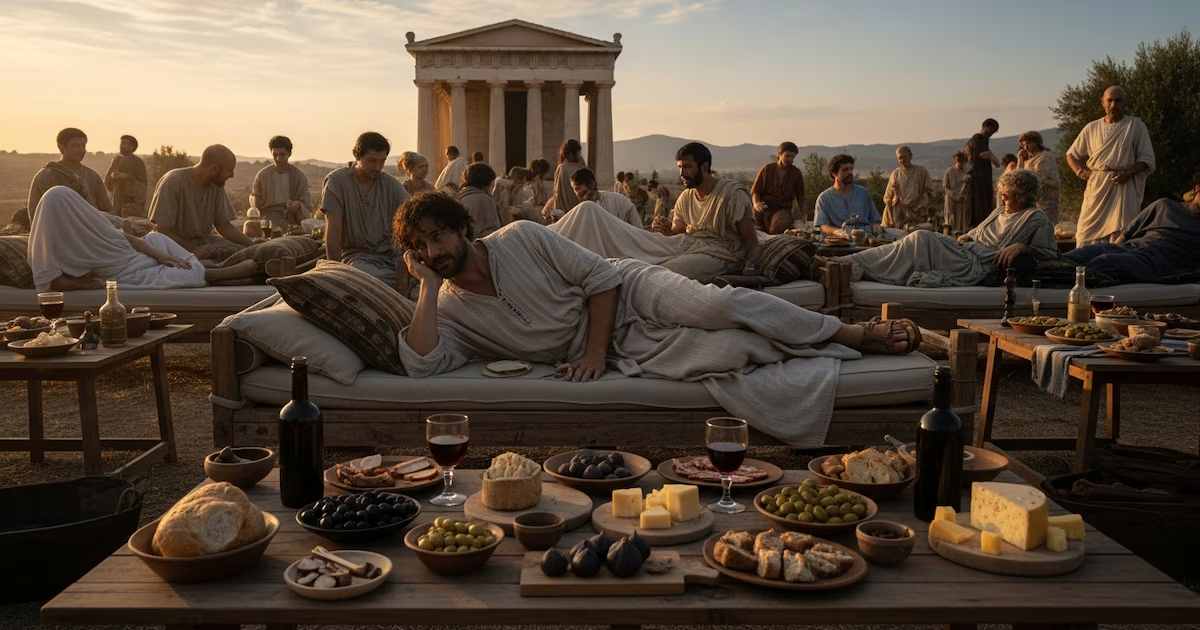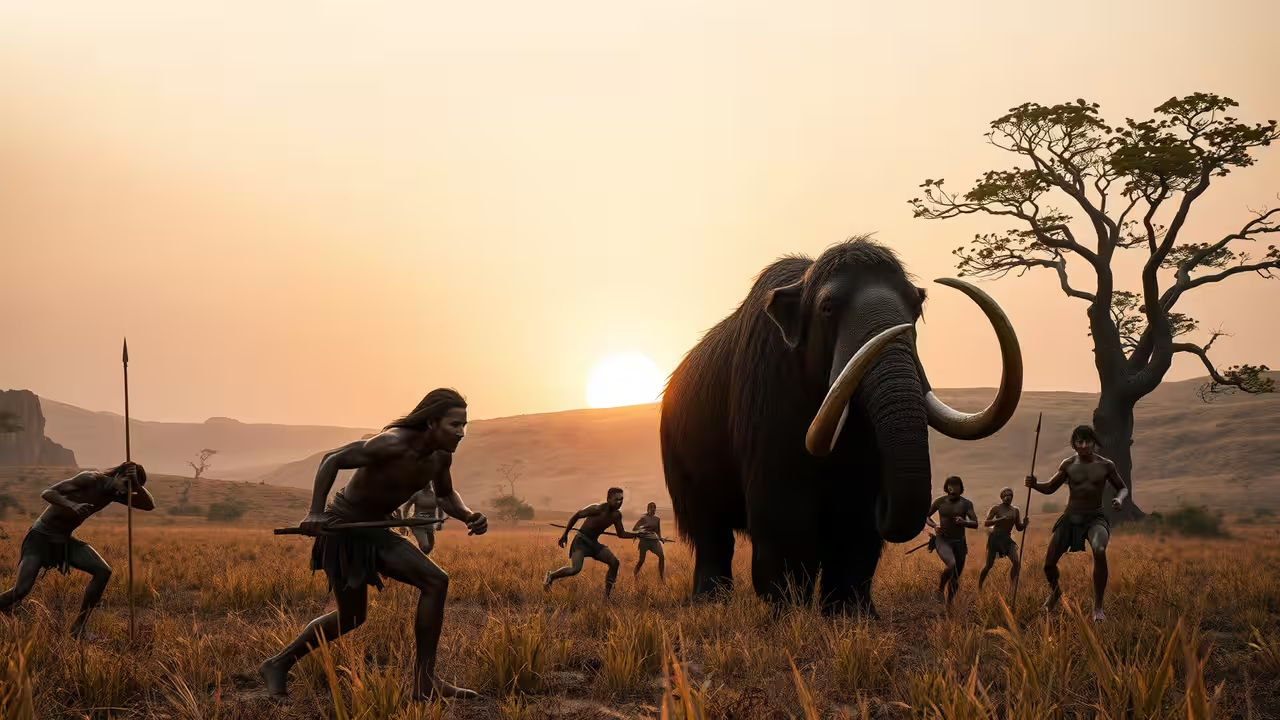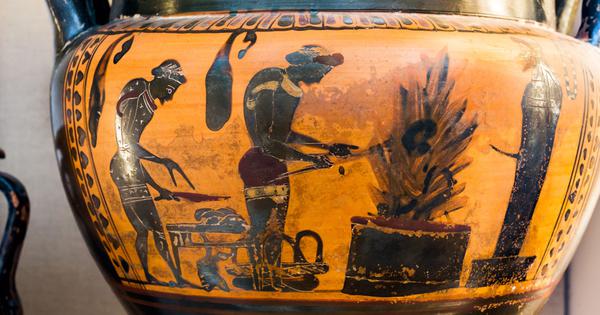
The agricultural economy was the backbone of wealth in ancient Greece. Food brought people together, whether in smaller groups at a wine-drinking symposium, or the entire community in a sacrificial feast of epic proportions. In The Odyssey, the ancient Greek epic poem, Odysseus’s son joins one of these early feasts – a community barbecue of 100 cattle.Researchers have long recognised the economic, political and social importance of food in ancient Greece. But one key question has never been fully settled: how were animals actually raised within this system?For nearly a century, academics have been locked in a debate over the organisation of ancient Greek animal husbandry. At one extreme is the idea of large, semi-nomadic herds moving seasonally across the landscape in search of pasture. At the other is a more intimate picture: smaller herds integrated into everyday farm life, feeding on local fields and crop by-products. In other words, were animals part of a mobile pastoral system, or woven tightly into mixed crop-and-livestock farms?
Play
Along with an interdisciplinary team of archaeologists and scientists, I have analysed one of the largest assemblages of animal remains in the ancient Greek world from the site of Azoria on Crete to address this debate. We published our findings in a recent article.When early historians first addressed the question of how animals were reared and plants cultivated in ancient Greece, large herds of sheep and goats managed by semi-nomadic groups were a common sight in the modern Greek landscape. These herds moved from summer uplands to winter lowlands, searching for seasonal pastures.American geographer Ellen Churchill Semple’s book The Geography of the Mediterranean Region: Its Relation to Ancient History was the first to suggest this seasonal husbandry also existed in ancient Greece.However, another school of thought has suggested a different model for the economy. Based on interviews with elderly shepherds and farmers, archaeologist Paul Halstead has suggested in several articles and in his 2014 book Two Oxen Ahead. Pre-Mechanized Farming in the Mediterranean, that animals were mostly reared in smaller herds attached to farmsteads. They largely grazed on fallow fields or nearby rough pasture, he argued, or consumed fodder crops grown for them. In this model, plants and animals were integrated.Over the decades, academics have lined up on either side of this debate. But until recently, it was impossible to directly assess the diet and mobility of ancient Greek animals and settle this debate.Science meets historyThe application of stable isotope analysis – a technique that measures forms of the same chemical element, called isotopes, which have slightly different weights – has given researchers their first opportunity to test these competing ideas using the remains of animals from ancient Greek sites.By measuring the mix of isotopes preserved in ancient bones and teeth, scientists can work out what an animal or person ate and drank, and even gain clues about where it lived. This is because food and water leave chemical signatures that become locked in the body over time.Atoms have multiple isotopes that vary their mass due to the number of neutrons. So, stable isotope analysis, which examines the amounts of different isotopes in archaeological remains, can answer questions about the sources (food, water, air) that contributed to the makeup of an animal (or human).The ratios of carbon and nitrogen isotopes provide evidence for the sorts of food consumed by ancient animals. The ratios of oxygen stable isotopes provide a seasonal signature for the growth of tooth enamel. By combining analyses of these different isotopes, it’s possible to directly address the agropastoral debate and assess the seasonal diet of animals.The first applications of these techniques to ancient Greek animals only served to complicate the situation. Due to expense and availability of samples, only a handful of animals were tested at sites like Knossos on Crete or Argilos in northern Greece. Rather than one model, a range of different animal husbandry strategies were identified in the samples analysed from these sites. However, the small samples size meant researchers could not draw firm conclusions, other than confirming that animals in ancient Greece were raised using a mix of different farming method. Unfortunately, how this mix showed up in the ancient economy was unclear.Our study at the site of Azoria on Crete is the first designed to explicitly test these two competing hypotheses in an analysis of 50 sheep and goats.Testing the competing hypothesesAzoria is, in many ways, the ideal site for examining the economy that underpinned the early development of city-states. It was suddenly abandoned right before the start of the classical period (around 510–323BC), in the early 5th century BC. This abandonment provides a snapshot of life at this moment, as the people left behind their trash (including plentiful animal and plant remains) and also their bulky pottery. The intact ceramic assemblages have helped us assess the function of different buildings and rooms.