A research team at Tsinghua University just figured out how to 3D-print complex optical structures in 0.6 seconds. The previous benchmark? Hours. That’s not an incremental improvement. That’s the difference between developing film at a photo lab and snapping an iPhone picture.
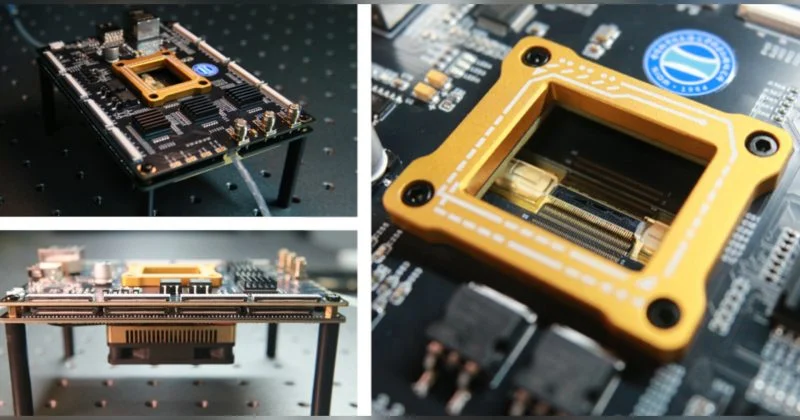
The technology, called DISH (digital incoherent synthesis of holographic light fields), was published in Nature and led by academician Dai Qionghai. It achieves printing rates of up to 333 cubic millimeters per second with a minimum feature size of 12 micrometers, which is roughly one-eighth the width of a human hair.
How DISH actually works
Traditional 3D printing at this scale works like an old dot-matrix printer. It builds structures point by point, layer by layer, painstakingly crawling across surfaces. DISH throws that entire paradigm out the window.
In English: instead of drawing a sculpture one dot at a time, DISH projects the entire 3D shape simultaneously using computational optics and holographic light-field manipulation. Think of it like a projector that doesn’t just throw an image on a screen but actually solidifies a three-dimensional object in one flash.