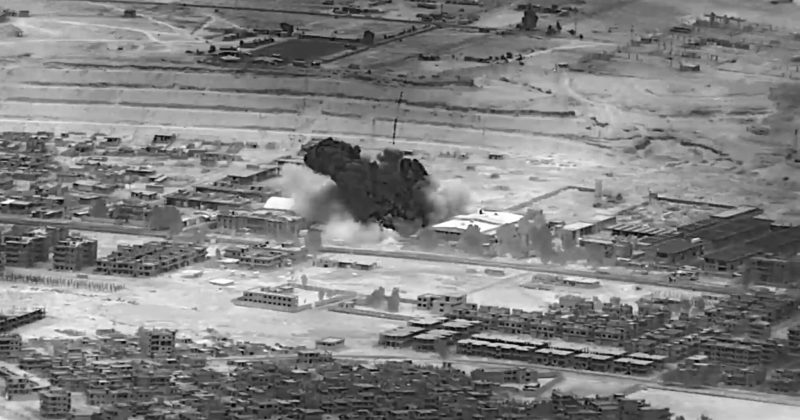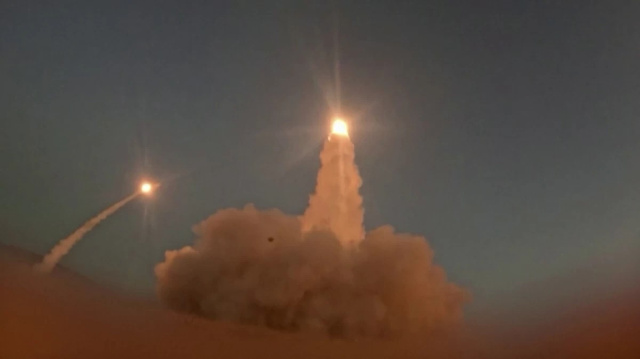
The U.S. military has conducted airstrikes targeting facilities used by Iran’s Revolutionary Guard, aiming to restrict their operational movement. This development marks the sixth consecutive night of U.S. military actions against Iran, following the breakdown of a ceasefire agreement last month. The strikes are part of a broader strategy to impede Iran’s maritime capabilities, particularly in the strategically vital Strait of Hormuz. These actions come amidst escalating tit-for-tat engagements between U.S. and Iranian forces, with no diplomatic resolution in sight.
The ongoing hostilities have implications for international monitoring activities, notably those conducted by the International Atomic Energy Agency (IAEA). Market activity suggests a decrease in the likelihood of IAEA visits to Iranian nuclear sites by the end of the year. This is reflected in recent market data, where the probability of an IAEA visit by December 31 has seen fluctuations, currently standing at 26.5% YES, down from a week ago.
Key Takeaways
The U.S. military’s recent strikes on Iranian Revolutionary Guard facilities appear to be part of a strategy to limit Iran’s operational capabilities in the region.
Market pricing suggests a reduced likelihood of IAEA visits to Iranian nuclear sites, with probabilities currently lower compared to last week.